



Page 8
Page 8

Eco-and ground bio-engineering : The use of vegetation to improve slope stability ; Proceedings of the 1st International Conference on Eco-Engineering 13-17 September 2004
In an era where climate change, natural catastrophes and land degradation are major issues, the conservation of soil and vegetation in mountainous or sloping regions has become an international priority. How to avoid substrate mass movement through landslides and erosion using sustainable and ecologically sound techniques is rapidly becoming a scientific domain where knowledge from many different fields is required. These proceedings bring together papers from geotechnical and civil engineers, biologists, ecologists and foresters, who discuss current problems in slope stability research, and how to address those problems using ground bio- and eco-engineering techniques.

Earth Observation of Global Change : The Role of Satellite Remote Sensing in Monitoring the Global Environment
Global Change is increasingly considered a critical topic in environmental research. Remote sensing methods provide a relevant tool to monitor global variables, since they offer a systematic coverage of the Earth Surface, at different spatial, spectral and temporal resolutions. The data provided by Earth Observation Satellites are being operationally used for monitoring atmospheric conditions, ice sheets and glaciar movements, crop dynamism and land use changes, deforestation and desertification processes, as well as water conditions. The book includes an analysis of the leading missions in global Earth observation, and then reviews the main fields in which remote sensing methods are providing vital data for global change studies.

Designing green landscapes
This book presents the latest thinking in adaptive management for forest ecosystems. Based on the ‘multiple path’ principle, this approach links species choice and silvicultural methods with changing demands and changing environmental conditions, to ensure continuous adaptation, often several times within the lifetime of a tree. The ‘multiple path’ principle at the core of this approach represents a robust theoretical framework for designing forested landscapes. It provides a logical basis both for coordinating spatial objectives and for integrating varied forms of expertise; it limits planning horizons to realistic timeframes; and it allows for forecasts based on current real attributes of spatially explicit land parcels. This is in stark contrast with traditional forestry practices which simply assess the forest resource at regular time intervals and prescribe standard management schedules for specific forest types.

Deepfake detection = اكتشاف التزييف العميق
In the rapidly evolving era of artificial intelligence, addressing the escalating threats of deepfake technology becomes a necessity because of the increasing sophistication of AI algorithms in generating deceptive content, and since it threatens the integrity of information across diverse data. The main objective is to build a sophisticated AI-driven system to detect different types of deepfake in text, audio, and images. In English text deepfake detection, multiple pre-trained tokenizers have been used, but XLNET and BERT stand out with identifying objects outside the dataset with an accuracy of 0.9809 and both have been generalized & trained using LSTM. In Arabic text deepfake detection, Arabert has been trained using LSTM which led with an accuracy of 99.53% by generalizing the model. Both English and Arabic datasets have been generated to enhance the accuracy and effectiveness of the models. Audio deepfake detection has been generalized too, using Random Forest with an accuracy of 98.259%.

Decision Support for Forest Management
While earlier books concerning forest planning have tended to focus on linear programming, economic aspects, or specific multi-criteria decision aid tools, this book provides a much broader range of tools to meet a variety of planning situations. The methods themselves cover a range of decision situations – from cases involving single decision makers, through group decision making, to participatory planning. They include traditional decision support tools, from optimization to utility functions, as well as methods that are just gaining ground in forest planning – such as problem structuring methods and social choice theory. Including examples which illustrate the application of each technique to specific management planning problems, the book offers an invaluable resource for both researchers and advanced students specializing in management and planning issues relating to forestry.

Decision science for future earth : Theory and practice
Provides a theoretical framework and case studies on decision science for regional sustainability by integrating the natural and social sciences. The cases discussed include solution-oriented transdisciplinary studies on the environment, disasters, health, governance and human cooperation.

Computer Applications in Sustainable Forest Management : Including Perspectives on Collaboration and Integration
Computer Applications in Sustainable Forest Management presents state-of-the-art computer applications in a variety of specialty areas of forestry, including inventory, remote sensing, information management, modelling and visualization, biometrics, forest and harvest planning, bioeconomics and marketing, and decision science for management. This book emphasizes integration, or collaborative use, of computer technologies across different disciplines through interdisciplinary research and development in North America, China, and Europe. It also offers important new insights on how to continue advancing computational technologies in forest management to better achieve the basic goal of sustainable forest management. Case studies demonstrate integration of, or collaboration among, multiple computer applications for sustainable forest management.

Combinatorial Stochastic Processes : Ecole d'Eté de Probabilités de Saint-Flour XXXII - 2002
This volume contains the course “Combinatorial stochastic processes” of Professor Pitman. We cordially thank the author for his performance in Saint-Flour and for these notesThere is particular focus on the theory of random combinatorial structures such as partitions, permutations, trees, forests, and mappings, and connections between the asymptotic theory of enumeration of such structures and the theory of stochastic processes like Brownian motion and Poisson processes.
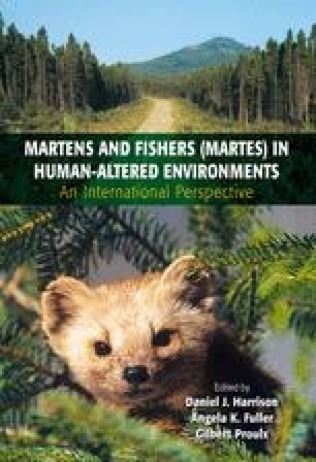
Martens and Fishers (Martes) in human-altered environments : An international perspective
Examines the conditions where humans and martens are compatible and incompatible, and promotes land use practices that allow Martes to be representatively distributed and viable. All Martes have been documented to use forested habitats and 6 species (excluding the stone marten) are generally considered to require complex mid- to late-successional forests throughout much of their geographic ranges. All species in the genus require complex horizontal and vertical structure to provide escape cover protection from predators, habitat for their prey, access to food resources, and protection from the elements. Martens and the fisher have high metabolic rates, have large spatial requirements, have high surface area to volume ratios for animals that often inhabit high latitudes, and often require among the largest home range areas per unit body weight of any group of mammals. Resulting from these unique life history characteristics, this genus is particularly sensitive to human influences on their habitats, including habitat loss, stand-scale simplification of forest structure via some forms of logging, and landscape-scale effects of habitat fragmentation. Given their strong associations with structural complexity in forests, martens and the fisher are often considered as useful barometers of forest health and have been used as ecological indicators, flagship, and umbrella species in different parts of the world. Thus, efforts to successfully conserve and manage martens and fishers are associated with the ecological fates of other forest dependent species and can greatly influence ecosystem integrity within forests that are increasingly shared among wildlife and humans.We have made great strides in our fundamental understanding of how animals with these unique life history traits perceive and utilize habitats, respond to habitat change, and how their populations function and perform under different forms of human management and mismanagement.
Managing Forest Ecosystems : The Challenge of Climate Change
With climate change now charging up the political agenda, there are three issues commonly making the headlines: carbon budgets, renewable energy, and the anticipated impacts of climate change. Equally important, though currently less well covered, is the issue how these effects might be mitigated. Given the significant role that forests play in the climate system – as sources, sinks, and through carbon trading – this book discusses the current scientific evidence on the relationships between climate, forest resources and forest management practices around the world. Drawing on expertise from forest scientists from several continents, the book presents both in depth analysis of the current knowledge, and a series of case studies which assess the biological and the economic impacts of climate change. It includes sections on forest responses to climate change, monitoring and modeling changes, economic and management implications, and carbon sequestration under specific management systems.

Managed Ecosystems and CO2 : Case Studies, Processes, and Perspectives
Managed ecosystems cover a large part of the Earth's land surface, provide almost all of our food and most of our wood and fibre, and are increasingly a source of renewable energy. Forecasting the ability of managed ecosystems to continue these vital roles in a globally changing environment is an inter-disciplinary challenge. To elucidate the complex responses of managed systems to elevated [CO2], several free air carbon dioxide enrichment (FACE) facilities were established. These FACE systems allow large areas to be exposed to the elevated [CO2] we expect by the middle of the century. This volume summarizes the main findings from 13 experiments with annual crops, permanent pastures and plantation forests at 11 sites throughout the world during the past ten years. The results significantly alter our perception of how rising [CO2] will directly affect these managed ecosystems, with implications for policy, plant-breeding objectives and adaptation.

Machine learning for biomedical application
Biomedicine is a multidisciplinary branch of medical science that consists of many scientific disciplines, e.g., biology, biotechnology, bioinformatics, and genetics; moreover, it covers various medical specialties. In recent years, this field of science has developed rapidly. This means that a large amount of data has been generated, due to (among other reasons) the processing, analysis, and recognition of a wide range of biomedical signals and images obtained through increasingly advanced medical imaging devices. The analysis of these data requires the use of advanced IT methods, which include those related to the use of artificial intelligence, and in particular machine learning. It is a summary of the Special Issue “Machine Learning for Biomedical Application”, briefly outlining selected applications of machine learning in the processing, analysis, and recognition of biomedical data, mostly regarding biosignals and medical images.
Long-Term Ecosystem Changes in Riparian Forests
Presents and analyzes the results of more than 30 years of long-term ecological research in riparian forest ecosystems with the aim of casting light on changes in the dynamics of riparian forests over time.
Land-Use and Land-Cover Change : Local Processes and Global Impacts
The book presents recent estimates of the rates in changes of major land classes such as forest, cropland and pasture. Among the causative mechanisms behind land change, synergetic factor combinations are found to be more common than single key factor explanations. Aggregated globally, multiple impacts of local land changes are shown to significantly affect central aspects of Earth System functioning. Innovative developments and applications in the fields of modeling and scenario construction are presented. Finally, conclusions are drawn about the most pressing implications for the design of appropriate intervention policies, and on new directions and frontiers of research.

Landscapes, Genomics and Transgenic Conifers
What is the future of genetically modified (or transgenic) conifer plantations? The content of this edited volume Landscapes, Genomics and Transgenic Conifers addresses this question directly - and indirectly - using language drawn from policy, forest history, genomics, metabolism, pollen dispersal and gene flow, landscape ecology, evolution, economics, technology transfer and regulatory oversight. Although the book takes its title from a Nicholas School Leadership forum held November 17-19, 2004 at Duke University, its de novo contents move past the forum’s deliberations. The result is a trans-disciplinary book composed of 14 chapters written by a total of 31 authors working in North America, South America, Europe and Africa.
Land-Change Science in the Tropics : Changing Agricultural Landscapes
Land use and land-cover change research over the past decade has focused mainly on contemporary primary land-cover conversions in the tropics and sub-tropics, with considerable resources dedicated to the explanation and prediction of tropical deforestation and often ignoring the dynamism in the world’s agro-pastoral landscapes. This collection integrates cutting-edge research in the social, biogeophysical, and geographical information sciences to understand the human and environmental dynamics that change the type, magnitude and location of land uses and land covers in the changing countryside.This book describes the monitoring of land-cover changes, explains the processes through which land is altered, and describes the development of spatially-explicit models to predict land change. This book illustrates how practitioners have integrated knowledge from the three scientific realms - social, biophysical, and GIScience - that underpin land-change science.

Lamto : Structure, Functioning, and Dynamics of a Savanna Ecosystem
Known as "a dream place for scientists," the Lamto savannas, located on the edge of the Cote d'Ivoire rain forests, are one of the only savannas in the world where ongoing ecological research has endured for more than forty years. Drawing from and synthesizing this abundance of research, the book examines the structure, functioning, and dynamics of the Lamto humid savanna. Beginning with the history of the Lamto ecology station and an overview of the major environmental conditions of the site, this exacting work specifically examines the integrative view of energy and nutrient fluxes relative to the dynamics of the savanna's vegetation.

Knowledge for Governance
Focuses on theoretical and empirical intersections between governance, knowledge and space from an interdisciplinary perspective. The contributions elucidate how knowledge is a prerequisite as well as a driver of governance efficacy, and conversely, how governance affects the creation and use of knowledge and innovation in geographical context.

Competition in Marketing : Two Essays on the Impact of Information on Managerial Decisions and on Spatial Product Differentiation
In her first essay Vera Magin uses primary experimental data to explore the effects of information on marketing decisions, performance, and competition. In her second essay the author discusses several approaches to measure product differentiation in spatial contexts. In doing so, she refers to the measurement of diversity and also applies methods from disciplines like spatial statistics, forestry, and geography.
Climate-Smart Forestry in Mountain Regions
This book offers a cross-sectoral reference for both managers and scientists interested in climate-smart forestry, focusing on mountain regions. It provides a comprehensive analysis on forest issues, facilitating the implementation of climate objectives. CLIMO has provided scientific analysis on issues including criteria and indicators, growth dynamics, management prescriptions, long-term perspectives, monitoring technologies, economic impacts, and governance tools.
