



Page 8
Page 8

LMI Approach to Analysis and Control of Takagi-Sugeno Fuzzy Systems with Time Delay
A fuzzy system is, in a very broad sense, any fuzzy logic-based system where fuzzy logic can be used either asthebasisfor the representation of different forms of system knowledge or the model for the interactions and relationships among the system variables. Fuzzy systems have proven to be an important tool for modeling complex systems for which, due to complexity or imprecision, classical tools are unsuccessful. There have been diverse fields of applications of fuzzy technology from medicine to management, from engineering to behavioral science, from vehicle control to computational linguistics, and so on. Fuzzy modeling is a conjunction to understand the s- tem’s behavior and build useful mathematical models. Different types of fuzzy models have been proposed in the literature, among which the Takagi-Sugeno (T-S) fuzzy model is a rule-based one suitable for the accurate approximation and identi?cation of a wide class of nonlinear systems.
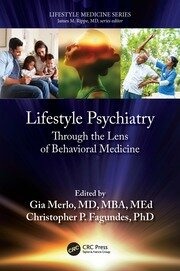
Lifestyle psychiatry through the lens of behavioral medicine
Lifestyle medicine is a practice which adopts evidence-based lifestyle interventions as a primary modality to prevent, treat, and reverse chronic diseases. The six main pillars of this specialty include physical activity, nutrition, stress resilience, cessation or risk reduction of substance use, quality sleep, and connectivity. Lifestyle psychiatry is a rapidly emerging area within healthcare informed by rigorous research within the social and biological sciences, public health, and medicine. A volume in the Lifestyle Medicine series, this book uses a comprehensive biopsychosocial approach to prevent and treat psychiatric disorders and promote mental and physical well-being through evidence-based lifestyle interventions.
Lifestyle medicine
Contains extensive sections on the treatment and prevention of coronary heart disease,stroke, cancer, diabetes, obesity, substance abuse, dementia, and many other clinical conditions. Key lifestyle modalities such as physical activity, nutrition, weight management, sleep, stress reduction, and positive connections with other humans are supported by detailed discussion and state-of-the-art evidence. The expanded section on behavioral medicine provides an important framework for these discussions. Every chapter has been completely revised and many new topics added, such as lifestyle medicine for nursing, psychiatry, and preventive neurology.
Les vérités du cancer : Partager l'information, installer la relation = The truths about cancer : Sharing information, building the relationship
Les médecins et les équipes soignantes perçoivent comme une nouvelle pression la nécessité de transmettre le diagnostic de cancer et de discuter des options thérapeutiques avec un patient qui n’est pas toujours prêt à s y confronter. Bien que l’on puisse saluer le partage de l’information et encourager la transparence, le médecin prend le risque du blocage de dialogue, d’une indifférence, au pire d’un traumatisme. L’idée d’une diminution d’un certain pouvoir médical s’insinue dans le « dispositif » d’annonce qui renvoie la clinique à des apprentissages techniques. Au contraire, certains médecins cherchent à s’inscrire dans un mouvement plus démocratique. Ils constatent que pour le malade, savoir n’est pas choisir, et que dans les cas difficiles, ils restent encore décideurs. Cet ouvrage fait le point sur les changements obtenus par les lois et leurs conséquences sur les pratiques et incite à une réflexion philosophique sur la vérité et les vérités des interlocuteurs de la scène médicale.

Lemurs : Ecology and Adaptation
In this comprehensive volume, written by experts in the field, information gathered on lemur ecology and adaptation over the past 15 years is presented by both seasoned and newer lemur researchers, and provides us with further knowledge concerning both well-studied and rarely studied extant species, as well as insights into the ecology and adaptation of some of the recently extinct lemurs.
Learning to Diagnose with Simulations : Examples from Teacher Education and Medical Education
Presents 8 novel approaches to measure and improve diagnostic competences with simulation. The book compares the effects of interventions on these diagnostic competences in both teacher and medical education. It includes analyses showing that important aspects of diagnostic competences and effects of instructional interventions aiming to facilitate them are comparable for teachers and doctors.
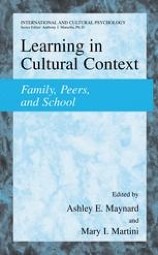
Learning in cultural context : Family, peers, and school
What events take place at the intersection of cultural identity, education, and experience? How can they be measured, replicated? How can teachers use such personal phenomena to enhance student performance?
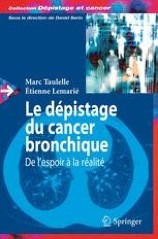
Le dépistage du cancer bronchique : De l'espoir à la réalité = Lung cancer screening : From hope to reality
An ambitious program has been launched in terms of research, diagnosis, prevention, and screening. Among cancers, the leading cause of cancer death is lung cancer. This disease, so closely linked to behavioral habits, both focuses and encapsulates the problem. Despite constant progress in treatment, the prognosis remains bleak, explaining the fatalistic impression left by the last decade. While significant efforts were being made in screening for other cancer sites, lung cancer remained in the shadows, with studies showing limited effectiveness in this approach. The advent of spiral CT scanning has revolutionized the field, giving rise to new hope alongside anti-smoking campaigns. Autofluorescence endoscopy, by enabling the diagnosis of pre-neoplastic lesions, completes an arsenal that finally allows us to envision an effective, combined strategy. This book brings together all the elements relating to screening and early diagnosis. The road from hope to reality is long, but we must acknowledge that, for the first time, we know it exists.
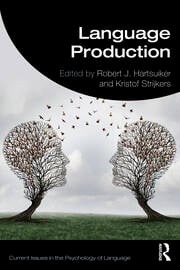
Language Production
This comprehensive text presents an up-to-date overview of the key topics in the field, providing important theoretical and empirical challenges to the traditional and accepted modal view of language production. Each chapter explores in detail a different aspect of language production, covering traditional methods including written and signed production alongside emerging research on joint action production. Emphasizing the neurobiological underpinnings of language, chapter authors showcase research that moves from a monologue-only approach to one that that considers production in more ecologically valid circumstances.
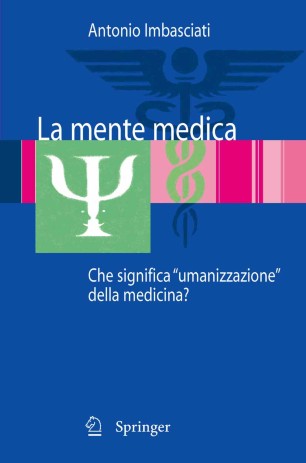
La mente medica : Che significa "umanizzazione" della medicina? = The Medical Mind : What does "humanization" of medicine mean?
Il presente testo intende chiarire misconoscimenti e riduzionismi che paralizzano il pur auspicato mutamento della medicina e le sue articolazioni in differenti professionalità. La Psicologia Clinica si pone come chiave per leggere la mentalità collettiva che sottende l’attuale cultura sanitaria medicalizzante, che si scontra con le esigenze della persona umana, negando, oltretutto, quanto la psicosomatica oggi ci dice circa la costante modulazione psichica di tutti i processi organici, nella salute così come in tutte le malattie. L’umanizzazione della medicina non è un surplus eticamente giusto per il malato: è un indispensabile agente terapeutico. La sua mancanza è iatrogena.
L’esprit de l’aiguille : L’apport du Yi Jing à la pratique de l’acupuncture = The Spirit of the Needle: The contribution of the Yi Jing to the practice of acupuncture
Acupuncture deciphers and heals human beings in all their mutations. The symbolism of Yi Jing joins the humanism of this Traditional Medicine for a dynamic reading of the changes and transformations at work in human beings. The double reflection generates a global vision of the human being and the approach to patients is changed. After an approach to the state of mind, encountered in these two fields, the author sets out to find the oldest roots of the notions of Yin and Yang. This allows him to identify the main strengths of the constitution of a human being and to deepen its symbolic construction. Three fields of application of this approach are then studied. The Extraordinary Meridians are viewed from a descriptive and behavioral perspective, which makes them extremely lively and familiar. Luo points, human being's relationship points with Reality, are also considered on a practical level using a symbolic reading of the links of Heaven, Earth and Man. Many examples shed light on these aspects. The last application is a detailed and comprehensive presentation of the fundamental and symbolic functions of the twelve main meridians through the hexagrams which correspond to their ancient Shu points. This original book is intended for any practitioner of traditional Chinese medicine curious to broaden their field of investigation. Dr M. Vinogradoff has been practicing acupuncture for 25 years. He is a member of the French Acupuncture Association, the French Acupuncture College and the Ricci Institute. After having published the complete translation of Yi Jing, in 2006 he published a novel, the action of which is set in Ancient China.

Knowledge Management In Action ; IFIP 20th World Computer Congress, Conference on Knowledge Management in Action, September 7-10, 2008, Milano, Italy
The IFIP series publishes state-of-the-art results in the sciences and technologies of information and communication. The scope of the series includes: foundations of computer science; software theory and practice; education; computer applications in technology; communication systems; systems modeling and optimization; information systems; computers and society; computer systems technology; security and protection in information processing systems; artificial intelligence; and human-computer interaction. Proceedings and post-proceedings of refereed international conferences in computer science and interdisciplinary fields are featured.
Knowledge and Action
Explores interdependencies between knowledge, action, and space from different interdisciplinary perspectives. Some of the contributors discuss knowledge as a social construct based on collective action, while others look at knowledge as an individual capacity for action. The chapters contain theoretical frameworks as well as experimental outcomes.

Knowing, Knowledge and Beliefs : Epistemological Studies across Diverse Cultures
Bringing together prominent educators and researchers, this book focuses on conceptual and methodical issues and state-of-the-art theoretical understanding on epistemological beliefs from educational and psychological perspectives. It is a critical and specialized source that describes recent advances in conceptualization and epistemological studies across diverse cultures.

Kindling 6
A broad array of themes concerned with research on epilepsy and kindling is covered in the book: Pathogenesis of kindling, including developmental patterns; electrophysiology; anatomy, morphology, and neural circuitry; genes, species, and strains; synaptic pharmacology and neurochemistry ; Behavioral consequences of kindling ; Drugs and interventions against kindling ; Clinical relevance of kindling for our understanding of epilepsy in patients
Complicities : A theory for subjectivity in the psychological humanities
The book examines how we might develop a more socially just psychological theory and practice, which is both systems work and intra-psychological work. In bringing together ways of thinking developed in the humanities with clinical psychotherapeutic practice, this book offers one interdisciplinary take on key questions of social and emotional efficacy in action-oriented psychotherapy work.
Communicating with One Another : Toward a Psychology of Spontaneous Spoken Discourse
In other words, this book is a call for a paradigm shift in the study of oral communication. It is a must read for people interested in language use, as well as for specialists in language studies. "The authors have identified crucial theoretical and methodological assumptions that have hampered scholarship on language use. Their critical assessment is grounded in nuanced theoretical analysis and rigorous empirical studies. As a result, they reveal the complexity, elegance, and moral aspects of day to day dialogical communication."
Clinical Neuroanatomy : A Neurobehavioral Approach
This book begins with a traditional review of the basic internal and external morphology, major nerve and fiber tracts, behavioral correlates, and clinical syndromes associated with spinal cord, brain stem, and cerebellum designed to reacquaint students and practicing clinicians with the functional anatomy of the subtentorial central nervous system. However, as the text was specifically geared to meet the needs of those practitioners whose primary interest is in what might be termed "higher order cognitive-behavioral function," the main focus of the text is on the brain itself. Borrowing heavily from a Lurian tradition, the central chapters reflect an attempt to offer more detailed, integrated, and, at times, theoretical models of cortical systems and their internal organization. Additional chapters highlight vascular anatomy and associated pathology, as well as neurochemical systems and their potential clinical relevance.

Civil Juries and Civil Justice : Psychological and Legal Perspectives
This insightful, multidisciplinary volume provides in-depth case data, empirical findings, and original research, synthesizing a range of seemingly irreconcilable legal and psychological viewpoints. Leading scholars consider the roots of juryphobia, the growth trajectories of damage awards, alternative means of obtaining civil justice

Chronic Pain and Family : A Clinical Perspective
Chronic pain affects every facet of a patient’s life, and nowhere is this more evident than in the complex arena of family life. Chronic Pain and Family: a Clinical Perspective examines typical family issues associated with prolonged illness, offering realistic ways to approach them in therapy. Informed by current practice and his own experience, noted author/clinician Ranjan Roy brings fresh insights to common pain scenarios and therapeutic impasses, and provides a framework for assessing marital and family relationships when chronic pain is a defining factor. Clinicians will get not only a clearer understanding of sensitive issues, but also effective strategies for engaging clients without turning them off.
