


Refine Results
Sort By
From
To

There is a coincidence of the AMAA objectives and those of EPoSS, the European Technology Platform on Smart Systems Integration, contributing intensively to the development of automotive-specific smart systems. You will find a series of the EPoSS items in the programme of the 11th AMAA, which continues to be a unique exchange forum for companies in the automotive value chain. The publication in hand also reflects these issues. It is a cut-out of new technological priorities in the area of microsystems-based smart devices and opens up a mid-term perspective of future smart systems applications in automobiles
Microsystems in many cases provided the key functions for this progress. Although the issues the event concentrated on didn’t change significantly (safety, powertrain, comfort, etc.), considerable shifts of technological paradigms and approaches can be stated. The future of microsystems will consist of integrated smart systems which are able to diagnose a situation, to describe and to qualify it. They will be able to identify and mutually address each other. They will be predictive and therefore they will be able to decide and help to decide. Smart systems will enable the automobile to interact with the environment, they will perform multiple tasks and assist a variety of activities. Smart systems will be highly reliable, often networked and energy autonomous.
The book accompanying the event has demonstrated to be an efficient instrument for the diffusion of new concepts and technology results. The present volume including the papers of the AMAA 2005 gives an overview on the state-of-the-art and outlines imminent and mid-term R&D perspectives. The 2005 publication reflects – as in the past – the current state of discussions within industry. More than the previous publications, the AMAA 2005 "goes back" to the technological requirements and indispensable developments for fulfilling the market needs. The large part of contributions dealing with sensors as well as "sensor technologies and data fusion" is exemplary for this tendency.
The present monograph deals with new advanced materials, including composites, functionally graded materials, materials for high temperature service, advanced approaches to local and non-local analysis of localized damage, new description of crack deactivation, and many more.
Man-machine interaction is the gateway providing access to functions and services, which, due to the ever increasing complexity of smart systems, threatens to become a bottleneck. This book therefore introduces not only advanced interfacing concepts, but also gives insight into the related theoretical background.This refers mainly to the realization of video-based multimodal interaction via gesture, mimics, and speech, but also to interacting with virtual object in virtual environments, cooperating with local or remote robots, and user assistance. this book puts special emphasis on implementation aspects. To this end it is accompanied by software development environments for image processing, classification, and virtual environment implementation. In addition a test data base is included for gestures, head pose, facial expressions, full-body person recognition, and people tracking.
Advanced Magnetic Nanostructures is devoted to the fabrication, characterization, experimental investigation, theoretical understanding, and utilization of advanced magnetic nanostructures. Focus is on various types of 'bottom-up' and 'top-down' artificial nanostructures, as contrasted to naturally occurring magnetic nanostructures, such as iron-oxide inclusions in magnetic rocks, and to structures such as perfect thin films. Industrial and academic researchers in magnetism and related areas such as nanotechnology, materials science, and theoretical solid-state physics will find this book a valuable resource.

The first part of the book contains a careful but rapid discussion of the basics of linear algebra, including vector spaces, linear transformations, quotient spaces, and isomorphism theorems. The author then proceeds to modules, emphasizing a comparison with vector spaces. A thorough discussion of inner product spaces, eigenvalues, eigenvectors, and finite dimensional spectral theory follows, culminating in the finite dimensional spectral theorem for normal operators. The second part of the book is a collection of topics, including metric vector spaces, metric spaces, Hilbert spaces, tensor products, and affine geometry. The last chapter discusses the umbral calculus, an area of modern algebra with many important applications.
Provides a comprehensive monograph on gate stacks in semiconductor technology. The reader will get a clear view of what has been done so far, what is the state-of-the-art and which are the main challenges ahead before we come any closer to a viable Ge and III-V MOS technology.
This book deals with recent developments and applications of environmental monitoring technologies, with emphasis on optical and biological methods that are rapidly progressing through the integration of emerging technologies from various disciplines.
The purpose of the book is to review the fundamentals of displacement based methods, starting from engineering seismology, earthquake geotechnical engineering, to focus on design, analysis and testing of structures with emphasis on buildings and bridges.

Main aim is to provide the reader with a deep analysis of theoretical aspects, modelling, and design strategies of RF high-efficiency power amplifiers. Advanced Design Techniques for RF Power Amplifiers begins with an analytical review of current state of the problem. Then it moves to the theoretical analysis of BJT class-F power amplifier near transition frequency and presents the necessary realization conditions. The next part concerns the practical verification and demonstration of the theoretical results. It is followed by the part devoted to the output networks of high-efficiency power ampifiers. The novel type of photonic band-gap structure providing improved characteristics both in the pass and stop bands is proposed. Finally, the fifth-harmonic peaking class F power amplifier design based on the above structure is presented.

"This volume incorporates authoritative small molecule analytical fluorescence sensing reviews specialized enough to be attractive to professional researchers, yet also appealing to the wider audience of scientists in related disciplines of fluorescence. Advanced Concepts in Fluorescence Sensing Part A: Small Molecule Sensing is an essential reference for any lab working in the analytical fluorescence sensing field. All academics, bench scientists, and industry professionals wishing to take advantage of the latest and greatest in the continuously emerging field of fluorescence sensing will find it an invaluable resource. Advanced Concepts in Fluorescence Sensing Part A: Small Molecule Sensing topics include: Probes for Anion and Cation Sensing / Fluorescent Carbon Dioxide Indicators / Fluorescent Redox-Switchable Devices / PET based Fluorescence Sensors / Oxygen Sensing / Fluorescence Sensing using Charge Transfer Probes / Fluorescence-based Nitric Oxide Detection "
Soft matter science is nowadays an acronym for an increasingly important class of materials, which ranges from polymers, liquid crystals, colloids up to complex macromolecular assemblies, covering sizes from the nanoscale up the microscale. Computer simulations have proven as an indispensable, if not the most powerful, tool to understand properties of these materials and link theoretical models to experiments. In this first volume of a small series recognized leaders of the field review advanced topics and provide critical insight into the state-of-the-art methods and scientific questions of this lively domain of soft condensed matter research.
Computational intelligence paradigms offer many advantages in maintaining and enhancing the field of healthcare. This volume presents seven chapters selected from the rapidly growing application areas of computational intelligence to healthcare systems, including intelligent synthetic characters, man-machine interface, menu generators, analysis of user acceptance, pictures archiving and communication systems.This book will serve as a useful resource for the health professionals, professors, students, and the computer scientists, who are working on or interested in learning healthcare systems, to overview the current stat-of-the-art of diverse applications of computational intelligence to healthcare practice.
This book presents some of the most recent research results on the applications of computational intelligence in healthcare. The contents include: Information model for management of clinical content State-based model for management of type II diabetes Case-based reasoning in medicine Assessing the quality of care in artificial intelligence environment Electronic medical record to examine physician decisions Multi-agent systems for the management of community healthcare Assistive wheelchair navigation Modelling treatment processes using information extraction Neonatal pain detection using face classification techniques Medical education interfaces using virtual patients The book is directed to the computer scientists, medical practitioners, scientists, professors and students of health science, computer science and related disciplines.
Advanced Computational Intelligence (CI) paradigms are increasingly used for implementing robust computer applications to foster safety, quality and efficacy in all aspects of healthcare. This research book covers an ample spectrum of the most advanced applications of CI in healthcare.
This book about Proceedings of the NATO Advanced Workshop “Advanced Combustion and Aerothermal Technologies: Environmental Protection and Pollution Reductions” was held in Kiev (Ukraine) from 15 to 19 May 2006 and was organized by the Institute of Engineering Thermophysics (Ukraine) and Cardiff University (UK). These subjects to cover the critical areas of combustion and aerothermal research and development where rapid progress is needed to improve performance in terms of efficiency, compactness, and emissions. This was a very timely and successful Workshop which brought together experts from the NATO and other countries to discuss increasing concerns about emissions.
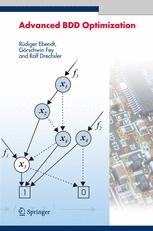
This book gives a modern presentation of the established as well as of recent concepts. Latest results in BDD optimization are given, c- ering di?erent aspects of paths in BDDs and the use of e?cient lower bounds during optimization. The presented algorithms include Branch ? and Bound and the generic A -algorithm as e?cient techniques to - plore large search spaces. ? The A -algorithm originates from Arti?cial Intelligence (AI), and the EDA community has been unaware of this concept for a long time. Re- ? cently, the A -algorithm has been introduced as a new paradigm to explore design spaces in VLSI CAD. Besides AI search techniques, the book also discusses the relation to another ?eld of activity bordered to VLSI CAD and BDD optimization: the clausal representation as a SAT problem.

Handbook of Environmental Engineering, Volume 2, leading pollution control educators and practicing professionals describe how various combinations of different cutting-edge process systems can be arranged to solve air, noise, and thermal pollution problems. Each chapter discusses in detail a variety of process combinations, along with technical and economic evaluations, and presents explanations of the principles behind the designs, as well as numerous variant designs useful to practicing engineers. The emphasis throughout is on developing the necessary engineering solutions from fundamental principles of chemistry, physics, and mathematics. The authors also include extensive references, cost data, design methods, guidance on the installation and operation of various air pollution control process equipment and systems, and Best Available Technologies (BAT) for air, thermal, and noise pollution control. A companion volume, Air Pollution Control Engineering: Handbook of Environmental Engineering, Volume 1 critically surveys the principles and practices involved in basic air pollution control processes.

This book brings together a collection of cutting-edge insights into how action can and is already being taken against climate change at multiple levels of our societies, amidst growing calls for transformative and inclusive climate action. In an era of increasing recognition regarding climate and ecological breakdown, this book offers hope, inspiration and analyses for multi-level climate action, spanning varied communities, places, spaces, agents and disciplines, demonstrating how the energy and dynamism of local scales are a powerful resource in turning the tide.

Daraa Highway - Ghabagheb - Syria
+963-15 2050 - 15 860 380 /1/2/3 - 11 662 3900