


Refine Results
Sort By
From
To


This book is number 15 in this successful series of Analog Circuit Design, providing valuable information and excellent overviews of analog circuit design and related CAD, mainly in the fields of basic analog modules, mixed-signal electronics, AD and DA converters, RF systems, and automotive electronics.
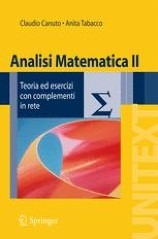
Intends to support a second teaching of Mathematical Analysis according to the principles of the new Didactic Regulations. It is especially designed for those study courses (such as Engineering, Computer Science, Physics) in which the mathematical tool is a significant part of the training. The fundamental concepts and methods of the differential and integral calculus of several variables, the series of functions and the ordinary differential equations are presented with the primary objective of training the student in their operational but critical use. The didactic setting of the text follows the one used for ANALYSIS I. The method of presentation of the arguments allows a flexible and modular use of the text, in order to respond to the various possible didactic choices in the organization of a Mathematical Analysis course.
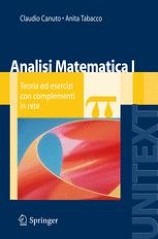
Intends to support a first teaching of Mathematical Analysis according to the principles of the new Didactic Regulations. It is especially designed for Engineering, Computer Science, Physics. The text has three different levels of reading. An essential level allows the student to grasp the essential concepts of the subject and to familiarize himself with the related calculation techniques. An intermediate level provides justifications for the main findings and enriches the presentation with useful observations and complements. A third level of reading, based on numerous references to a virtual text available online, allows the more motivated and interested student to deepen his or her preparation on the subject. Numerous examples and exercises with solutions complete the text. The captivating 2-color graphics make this text a fundamental point of reference for the study of the discipline.

Il testo intende essere di supporto ad un primo insegnamento di Analisi Matematica secondo i principi dei nuovi Ordinamenti Didattici. È in particolare pensato per Ingegneria, Informatica, Fisica. Il testo presenta tre diversi livelli di lettura. Un livello essenziale permette allo studente di cogliere i concetti indispensabili della materia e di familiarizzarsi con le relative tecniche di calcolo. Un livello intermedio fornisce le giustificazioni dei principali risultati e arricchisce l'esposizione mediante utili osservazioni e complementi. Un terzo livello di lettura, basato su numerosi riferimenti ad un testo virtuale disponibile in rete, permette all'allievo più motivato ed interessato di approfondire la sua preparazione sulla materia. Completano il testo numerosi esempi ed esercizi con soluzioni. La grafica accattivante, a 2 colori, fa di questo testo un punto di riferimento fondamentale per lo studio della disciplina.
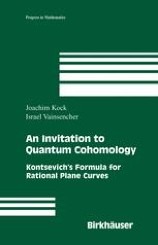
This book is an elementary introduction to stable maps and quantum cohomology, starting with an introduction to stable pointed curves, and culminating with a proof of the associativity of the quantum product. The viewpoint is mostly that of enumerative geometry, and the red thread of the exposition is the problem of counting rational plane curves. Kontsevich's formula is initially established in the framework of classical enumerative geometry, then as a statement about reconstruction for Gromov–Witten invariants, and finally, using generating functions, as a special case of the associativity of the quantum product.
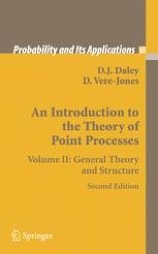
Point processes and random measures find wide applicability in telecommunications, earthquakes, image analysis, spatial point patterns and stereology, to name but a few areas. The authors have made a major reshaping of their work in their first edition of 1988 and now present An Introduction to the Theory of Point Processes in two volumes with subtitles Volume I: Elementary Theory and Methods and Volume II: General Theory and Structure.
The geometric interpretation of gravitation is one of the major foundations of modern theoretical physics. This primer introduces classical general relativity with emphasis on the clarity of conceptual structure and on the basic mathematical methods to build up systematically application skills. The wealth of physical phenomena entailed by the Einstein‘s equations is revealed with the help of specific models describing gravitomagnetism, gravitational waves, cosmology, gravitational collapse and black holes. End-of-chapter exercises complete the main text.
This book gives a mathematical treatment of a novel concept in material science that characterizes the properties of dynamic materials—that is, material substances whose properties are variable in space and time. Unlike conventional composites that are often found in nature, dynamic materials are mostly the products of modern technology developed to maintain the most effective control over dynamic processes. These materials have diverse applications: tunable left-handed dielectrics, optical pumping with high-energy pulse compression, and electromagnetic stealth technology, to name a few. Of special significance is the participation of dynamic materials in almost every optimal material design in dynamics.
This book provides an introduction to the basics of sub-Riemannian differential geometry and geometric analysis in the Heisenberg group, focusing primarily on the current state of knowledge regarding Pierre Pansu's celebrated 1982 conjecture regarding the sub-Riemannian isoperimetric profile.

After publishing an introduction to the Navier–Stokes equation and oceanography (Vol. 1 of this series), Luc Tartar follows with another set of lecture notes based on a graduate course in two parts, as indicated by the title. A draft has been available on the internet for a few years. The author has now revised and polished it into a text accessible to a larger audience.
This book gives an introduction to modern geometry. Starting from an elementary level the author develops deep geometrical concepts, playing an important role nowadays in contemporary theoretical physics. He presents various techniques and viewpoints, thereby showing the relations between the alternative approaches.
The first part of the volume is devoted to the description of scattering processes in the context of relativistic quantum field theory. The use of the semi-classical approximation allows us to illustrate the relevant computation techniques in a reasonably small amount of space. Our approach to relativistic processes is original in many respects. The second part contains a detailed description of the construction of the standard model of electroweak interactions, with special attention to the mechanism of particle mass generation. The extension of the standard model to include neutrino masses is also described. We have included a number of detailed computations of cross sections and decay rates of pedagogical and phenomenological relevance.
This textbook provides a rigorous and lucid introduction to the theory of ordinary differential equations (ODEs), which serve as mathematical models for many exciting real-world problems in science, engineering, and other disciplines.
The subject of this book is operator theory on the Hardy space H2, also called the Hardy-Hilbert space. The goal is to provide an elementary and engaging introduction to this subject that will be readable by everyone who has understood introductory courses in complex analysis and in functional analysis.
An Introduction to Number Theory provides an introduction to the main streams of number theory. Starting with the unique factorization property of the integers, the theme of factorization is revisited several times throughout the book to illustrate how the ideas handed down from Euclid continue to reverberate through the subject. In particular, the book shows how the Fundamental Theorem of Arithmetic, handed down from antiquity, informs much of the teaching of modern number theory. The result is that number theory will be understood, not as a collection of tricks and isolated results, but as a coherent and interconnected theory. A number of different approaches to number theory are presented, and the different streams in the book are brought together in a chapter that describes the class number formula for quadratic fields and the famous conjectures of Birch and Swinnerton-Dyer. The final chapter introduces some of the main ideas behind modern computational number theory and its applications in cryptography.

The Introduction to Navier-Stokes Equation and Oceanography corresponds to a graduate course in mathematics, taught at Carnegie Mellon University in the spring of 1999. Comments were added to the lecture notes distributed to the students, as well as short biographical information for all scientists mentioned in the text, the purpose being to show that the creation of scientific knowledge is an international enterprise, and who contributed to it, from where, and when. The goal of the course is to teach a critical point of view concerning the partial differential equations of continuum mechanics, and to show the need for developing new adapted mathematical tools.
This book aims to present meshfree methods in a friendly and straightforward manner, so that beginners can very easily understand, comprehend, program, implement, apply and extend these methods. It provides first the fundamentals of numerical analysis that are particularly important to meshfree methods. Typical meshfree methods, such as EFG, RPIM, MLPG, LRPIM, MWS and collocation methods are then introduced systematically detailing the formulation, numerical implementation and programming. Many well-tested computer source codes developed by the authors are attached with useful descriptions. The application of the codes can be readily performed using the examples with input and output files given in table form. These codes consist of most of the basic meshfree techniques, and can be easily extended to other variations of more complex procedures of meshfree methods. Readers can easily practice with the codes provided to effective learn and comprehend the basics of meshfree methods.
Biomedical imaging is a fascinating research area to applied mathematicians. Challenging imaging problems arise and they often trigger the investigation of fundamental problems in various branches of mathematics. This is the first book to highlight the most recent mathematical developments in emerging biomedical imaging techniques. The main focus is on emerging multi-physics and multi-scales imaging approaches. For such promising techniques, it provides the basic mathematical concepts and tools for image reconstruction. Further improvements in these exciting imaging techniques require continued research in the mathematical sciences, a field that has contributed greatly to biomedical imaging and will continue to do so.
In this revised and extended version of his course notes from a 1-year course at Scuola Normale Superiore, Pisa, the author provides an introduction – for an audience knowing basic functional analysis and measure theory but not necessarily probability theory – to analysis in a separable Hilbert space of infinite dimension.Starting from the definition of Gaussian measures in Hilbert spaces, concepts such as the Cameron-Martin formula, Brownian motion and Wiener integral are introduced in a simple way. These concepts are then used to illustrate some basic stochastic dynamical systems (including dissipative nonlinearities) and Markov semi-groups, paying special attention to their long-time behavior: ergodicity, invariant measure. Here fundamental results like the theorems of Prokhorov, Von Neumann, Krylov-Bogoliubov and Khas'minski are proved. The last chapter is devoted to gradient systems and their asymptotic behavior.
Numerical weather prediction is receiving increased attention as weather forecasters aim to improve the numerical models used to forecast the weather. This is a textbook on global spectral modeling, which is an important component for global weather forecasts at numerous operational centers. This book covers all areas of model development including numerical analysis, treatment of clouds, mountains, radiation, precipitation processes, and the surface layers over land and the ocean. The objectives of this book are to provide a systematic and sequential background for students, researchers, and operational weather forecasters in order to develop comprehensive weather forecast models. This is designed for a one semester introductory graduate level course on weather prediction methodologies. As a prerequisite it requires a basic background in meteorology, applied mathematics, and numerical analysis.

Daraa Highway - Ghabagheb - Syria
+963-15 2050 - 15 860 380 /1/2/3 - 11 662 3900