



Page 7
Page 7
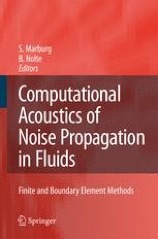
Computational Acoustics of Noise Propagation in Fluids - Finite and Boundary Element Methods
Among numerical methods applied in acoustics, the Finite Element Method (FEM) is normally favored for interior problems whereas the Boundary Element Method (BEM) is quite popular for exterior ones. That is why this valuable reference provides a complete survey of methods for computational acoustics, namely FEM and BEM. It demonstrates that both methods can be effectively used in the complementary cases. The chapters by well-known authors are evenly balanced: 10 chapters on FEM and 10 on BEM. An initial conceptual chapter describes the derivation of the wave equation and supplies a unified approach to FEM and BEM for the harmonic case. A categorization of the remaining chapters and a personal outlook complete this introduction. In what follows, both FEM and BEM are discussed in the context of very different problems.
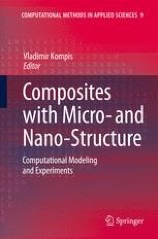
Composites with micro- and nano-structure : Computational modeling and experiments
The book contains atomistic and continuum numerical methods and experimental validation for composite materials reinforced with particles or fibres, porous materials, homogenization and other important topics for research in this field.
Composites for building assembly : connections, members and structures
Pesents buildings developed using modular assembly approaches based on lightweight and corrosion-resistant fiber reinforced polymer (FRP) composites. Construction methods and the choice of building materials offer great opportunities for more productive and environmentally friendly solutions. This book includes valuable experimental data on large-scale structural components (beams, slabs, amd columns), connections (shear connections, wall stud connections, beam-column connections, column-column connections) and structures (composite floor system, structural sandwich assemblies, and full-scale structural demonstrations), supported with detailed numerical modelling and analytical methods.
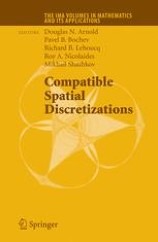
Compatible Spatial Discretizations
Compatible spatial discretizations are those that inherit or mimic fundamental properties of the PDE such as topology, conservation, symmetries, and positivity structures and maximum principles. It offer a snapshot of the current trends and developments in compatible spatial discretizations. The reader will find valuable insights on spatial compatibility from several different perspectives and important examples of applications compatible discretizations in computational electromagnetics, geosciences, linear elasticity, eigenvalue approximations and MHD. The contributions collected in this volume will help to elucidate relations between different methods and concepts and to generally advance our understanding of compatible spatial discretizations for PDEs.
Characteristics Finite Element Methods in Computational Fluid Dynamics
This book details a systematic characteristics-based finite element procedure to investigate incompressible, free-surface and compressible flows. The fluid dynamics equations are derived from basic thermo-mechanical principles and the multi-dimensional and infinite-directional upstream procedure is developed by combining a finite element discretization of a characteristics-bias system with an implicit Runge-Kutta time integration. For the computational solution of the Euler and Navier Stokes equations, the procedure relies on the mathematics and physics of multi-dimensional characteristics. As a result, the procedure crisply captures contact discontinuities, normal as well as oblique shocks, and generates essentially non-oscillatory solutions for incompressible, subsonic, transonic, supersonic, and hypersonic inviscid and viscous flows.
Bone remodeling and osseointegration of implants
Provides an insight into the latest advances in bone fracture healing and remodeling algorithm and their incorporation into patient-specific finite element models and the use of machine learning and artificial intelligence to predict the bone regeneration and osseointegration process with a certain degree of accuracy. It also examines the applications of numerical models to simulate the fracture healing process, which may prove to be advantageous in determining the optimal mechanical-based treatment or reconstruction after an accident or illness.

Biomedical Simulation; 4th International Symposium, ISBMS 2008, London, UK, July 7-8, 2008 Proceedings
This book constitutes the refereed proceedings of the 4th International Symposium on Biomedical Simulation, ISBMS 2008, held in London, UK, in July 2008.
Basics of fluid mechanics and introduction to computational fluid dynamics
Brings together the theoretical basics of fluid dynamics with a systemaic overview of the appropriate numerical and computational methods for solving the problems presented in the book. Also, effective codes for a majority of the examples are included.
Axial flux permanent magnet brushless machines
This book deals with the analysis, construction, design, control and applications of AFPM machines. The authors present their own research results, as well as significant research contributions made by others.
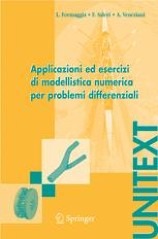
Applicazioni ed esercizi di modellistica numerica per problemi differenziali = Applications and exercises in numerical modeling for differential problems
Contains a collection of exercises related to typical topics in a course on analytical and numerical methods offered in a degree program in Engineering or Mathematics. Starting with exercises in functional analysis and approximation theory, the text develops problems related to the numerical resolution of elliptic, parabolic, and hyperbolic partial differential equations, scalar or vector, in one or more spatial dimensions. Pure diffusion and pure convection problems are therefore addressed, alongside diffusion-transport problems and problems in compressible and incompressible fluid dynamics. Particular emphasis is given to the finite element method for the spatial discretization of the problems considered, although exercises on the finite difference and finite volume methods are also included.
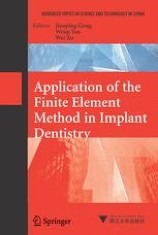
Application of the Finite Element Method in Implant Dentistry
Part of the new series, Advanced Topics in Science and Technology in China, this book is designed to give the necessary theoretical foundation to new users of the finite element method in implant dentistry, and show how both the implant dentist and designer can benefit from finite element analysis.
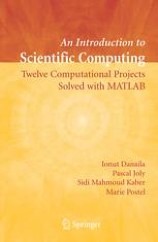
An Introduction to Scientific Computing : Twelve Computational Projects Solved with MATLAB
This book provides twelve computational projects aimed at numerically solving problems from a broad range of applications including Fluid Mechanics, Chemistry, Elasticity, Thermal Science, Computer Aided Design, Signal and Image Processing. For each project the reader is guided through the typical steps of scientific computing from physical and mathematical description of the problem, to numerical formulation and programming and finally to critical discussion of numerical results. Considerable emphasis is placed on practical issues of computational methods. The last section of each project contains the solutions to all proposed exercises and guides the reader in using the MATLAB scripts.
Aging, shaking, and cracking of infrastructures : From mechanics to concrete dams and nuclear structures
Focuses on the safety assessment of existing structures subjected to multi-hazard scenarios through advanced numerical methods. Whereas the focus is on concrete dams and nuclear containment structures, the presented methodologies can also be applied to other large-scale ones. This book is composed of seven sections: Fundamentals: theoretical coverage of solid mechnics, plasticity, fracture mechanics, creep, / seismology, dynamic analysis, probability and statistics / Damage: that can affect concrete structures, such as cracking of concrete, AAR, chloride ingress, and rebar corrosion, / Finite Element: formulation for both linear and nonlinear analysis including stress, heat and fracture mechanics, / Engineering Models: for soil/fluid-structure interaction, uncertainty quantification, probablilistic and random finite element analysis, machine learning, performance based earthquake engineering, ground motion intensity measures, seismic hazard analysis, capacity/fragility functions and damage indeces, / Applications to dams through potential failure mode analyses, risk-informed decision making, deterministic and probabilistic examples, / Applications to nuclear structures through modeling issues, aging management programs, critical review of some analyses, / Other applications and case studies: massive RC structures and bridges, detailed assessment of a nuclear containment structure evaluation for license renewal.

Advances in Meshfree Techniques
In recent years meshless/meshfree methods have gained a considerable attention in engineering and applied mathematics. The variety of problems that are now being addressed by these techniques continues to expand and the quality of the results obtained demonstrates the effectiveness of many of the methods currently available. The book presents a significant sample of the state of the art in the field with methods that have reached a certain level of maturity while also addressing many open issues.The book collects extended original contributions presented at the first ECCOMAS Conference on Meshless Methods held in 2005 in Lisbon. The list of contributors reveals a mix of highly distinguished authors as well as quite young but very active and promising researchers, thus giving the reader an interesting and updated view of different mesh reduction methods and its range of applications. The material presented is appropriate for researchers, engineers, physicists, applied mathematicians and graduate students interested in this active research area.
Advances in Mechanics of Materials for Environmental and Civil Engineering
Deals with both mathematical modeling and experimental studies related to systems relevant for various civil engineering fields. The book addresses several key topics, including artificial intelligence applied to the control and monitoring of construction site personnel, finite element models for endplate beam-to-column connections under various load conditions, random functionally graded micropolar beams, and many others. The book explores the design and study of microstructures aimed at increasing the toughness and durability of novel materials in building and construction, based also on the re-utilization of residues and wastes of metallurgical industry produces.
Advances in Computational Multibody Systems
Contains versions of selected communications presented at the ECCOMAS Thematic Conference in Multibody Dynamics 2003 that took place in Lisbon, Portugal, which have been enhanced in their self-containment and tutorial aspects by the authors. This comprehensive text constitutes a useful reference for researchers and design engineers.
Advanced structural mechanics : An introduction to continuum mechanics and structural mechanics
In recent years an increasing emphasis has been placed on numerically based methods of structural analysis. This has been reflected in the production of structural mechanics texts that are orientated towards particular numerical methodologies, especially the finite element method. Whilst this approach serves the needs of potential research' engineers, a concentration on the numerical analysis aspects of structural mechanics is of less relevance to professional' engineers, who are likely to be concerned with the use and interpretation of numerical analyses, but not in the development of the methodologies.

Advanced computational methods and geomechanics
Helps readers comprehensively grasp the intrinsic features of typical advanced computational methods. These methods are created in recent three decades for the understanding of the post-failure of geo-materials accompanied with discontinuous and finite deformation/dislocation, as well as the violent fluid-structure interaction accompanied with strong distortion of water surface. The strong points and weak points of the formalisms for governing equations, the discretization schemes, the nodal interpolation /approximation of field variables, and their connectivity (via support domains, covers, or enrichments), the basic algorithms, etc., are clarified.
