


Refine Results
Sort By
From
To


Stresses in plants caused by salt, drought, temperature, oxygen, and toxic compounds are the principal reason for reduction in crop yield. For example, high salinity in soils accounts for large decline in the yield of a wide variety of crops world over; ~1000 million ha of land is affected by soil salinity. Increased sunlight leads to the generation of reactive oxygen species, which damage the plant cells. The threat of global environment change makes it increasingly demanding to generate crop plants that could withstand such harsh conditions. Much progress has been made in the identification and characterization of the mechanisms that allow plants to tolerate abiotic stresses.
Based on material assembled by Dr Jaap HR Schoen who was one of the few neuroanatomists to apply the Nauta method to human material. Gaining insight in the consequences of longitudinal damage to the human spinal cord is necessary before reimplantation of the avulsed rootlets or an autologous transplant can be performed in man.

The authors address the future role of atmospheric CO2 and its likely effects on ecosystems. This book incorporates the advances of various earth science, environmental, and ecological fields into an overall account of global change and the changing dynamics of life on Earth.

Written primarily for researchers and advanced students in environmental and social sciences, this latest book in Springer’s Landscape Series looks at some of the emerging fields and new challenges in landscape research. These include: the role of value systems in perceiving, appreciating, and managing landscapes the ‘space’ and ‘place’ concept in landscape research GIS and remote sensing techniques for gathering and processing spatially and temporally explicit land cover, vegetation, and land use data methods of landscape history landscape genetics and genetic methods to test landscape connectivity and dispersal of plant and animal species

When Don Swanson hypothesized a connection between Raynaud’s phenomenon and dietary fish oil, the field of literature-based discovery (LBD) was born. During the subsequent two decades a steady stream of researchers have published articles about LBD and the field has made steady progress in laying foundations and creating an identity. LBD is an inherently multi-disciplinary enterprise where collaborations between the information and biomedical sciences are readily encountered. It is the hope and intention that this volume will plant a flag in the ground and inspire new researchers to the LBD challenge.

Embedded systems are ubiquitous. They appear in cell phones, microwave ovens, refrigerators, consumer electronics, cars, and jets. Some of these embedded s- tems are safety- or security-critical such as in medical equipment, nuclear plants, and X-by-wire control systems in naval, ground and aerospace transportation - hicles. With the continuing shift from hardware to software, embedded systems are increasingly dominated by embedded software. Embedded software is complex. Its engineering inherently involves a mul- disciplinary interplay with the physics of the embedding system or environment. Embedded software also comes in ever larger quantity and diversity. The next generation of premium automobiles will carry around one gigabyte of binary code. The proposed US DDX submarine is e?ectively a ?oating embedded so- ware system, comprising 30 billion lines of code written in over 100 programming languages. Embedded software is expensive. Cost estimates are quoted at around US$15– 30 per line (from commencement to shipping). In the defense realm, costs can range up to $100, while for highly critical applications, such as the Space Shuttle, the cost per line approximates $1,000. In view of the exponential increase in complexity, the projected costs of future embedded software are staggering.
While the problems of long-term stability and biocompatibility are being addressed, several promising prototypes are starting to emerge for managing patients with acute diabetes, for treatment of epilepsy and other debilitating neurological disorders and for monitoring of patients with chronic cardiac diseases. Despite the technological developments in sensing and monitoring devices, issues related to system integration, sensor miniaturization, low-power sensor interface circuitry design, wireless telemetric links and signal processing still have to be investigated.
Focuses on the materials used for dental applications looking at the fundamental issues and the developments that have taken place the past decade. While it provides a broad overview of dental materials, the chemicals that are used for the preparation and fabrication of dental materials are explained as well. Also, the desired properties of these materials are discussed and the relevance of the chemical, physical, and mechanical properties is elucidated. Methods for the characterization and classification, as well as clinical studies are reviewed here. In particular, materials for dental crowns, implants, toothpaste compositions, mouth rinses, as well as materials for toothbrushes and dental floss are discussed. For example, in toothpaste compositions, several classes of materials an chemcials are incorporated, such as abrasives, detergents, humectants, thickeners, sweeteners, coloring agents, bad breath reduction agents, flavoring agents, tartar control agents, and others. These chemicals, together with their structures, are detailed in the text.
Provides a comprehensive overview of the oral and maxillofacial subjects in dentistry that students will need in order to pass their final exams. This invaluable adjunct to exam preparation provides a practical synthesis of core information, reflecting real-life case scenarios. Information is structured to enhance understanding and clinical decision making, and a variety of self-assessment methods prepare students for success. Comprehensively updated, the book covers a range of essential topics in the field of contemporary oral and maxillofacial subjects, including surgical flap design, state-of-the-art surgical techniques, zygomatic implants, molecular pathology, current imaging applications and pain management. The text is integrated and evidence based throughout. Covers oral and maxillofacial surgery, radiology, pathology and oral medicine subjects Brand new chapter on facial skin broadens diagnostic ability Range of self-assessment tasks to support learning Aligns to dental school curricula globally Concise and easy to follow Designed to support recall for examination purposes Practical guidance on examination preparation and skills Perfect for BDS exam preparation and candidates taking the MFDS, MJDF, ORE or other post-graduate exams
Explains the core procedures in dentistry, how to do them, and the rationale that underpins them. Full of useful and easy-to-access information, it acts as a compendium of practical procedures in primary dental care, supporting students and dental practitioners in their daily professional and academic lives. This manual is a complete, practical guide to the delivery of effective, state of the art oral healthcare—the ‘what, when, and how’ of clinical practice. It compiles chapters written by expert clinicians on topics such as dental imaging, the management of dental pain, conscious sedation, operative dentistry, implant dentistry, oral medicine and surgery, paediatric dentistry, periodontics, prosthodontics, special care dentistry, dental trauma, aesthetic dentistry, and much more.
Combines up-to-date clinical and research information that will help clinicians to advance their theoretical and clinical knowledge on mandibular implant overdentures. Furthermore, it describes treatment considerations for geriatric populations, covering all relevant aspects from physiology to treatment planning and patient management in the surgical and prosthetic phases.
Presents clear and consistent guidance on all aspects of both common and less common, minor and major complications encountered in oral and maxillofacial surgery (OMS) practice. In-depth chapters provide thorough descriptions of each complication and recommend treatment strategies for associated complications of anesthesia, implant surgery, maxillofacial trauma, and more, using easy to read algorithms.
Provides an introduction to anatomy, including periodontal tissues, the edentulous ridge, the mucosa at teeth and implants, and osseointegration Discusses the epidemiology of periodontal and peri-implant diseases Explores the microbiology, including dental biofilms and calculus, periodontal infections, peri-implant infections, the pathogenesis of gingivitis and periodontitis, and the genetic susceptibility to periodontal disease Includes the latest perio- and peri-implant disease classifications Contains updated evidence-based preventive and treatment modalities for the treatment of periodontal and peri-implant diseases Features the latest evidence-based therapeutic alternatives on the use of dental implants to rehabilitate the lost dentition
Provides information on the basic science and tissue interactions of dental lasers and documents the principal current clinical uses of lasers in every dental discipline. The applications of lasers in restorative dentistry, endodontics, dental implantology, pediatric dentistry, periodontal therapy, and soft tissue surgery are clearly described and illustrated. Information is also provided on laser-assisted multi-tissue management, covering procedures such as crown lengthening, gingival troughing, gingival recontouring, and depigmentation.
Provides information on the basic science and tissue interactions of dental lasers and documents the principal current clinical uses of lasers in every dental discipline. The applications of lasers in restorative dentistry, endodontics, dental implantology, pediatric dentistry, periodontal therapy, and soft tissue surgery are clearly described and illustrated.

Allows a clinician to shape dental treatment and elevate patient smiles. Based on scientific research, clinical evidence, and the practical experience of the authors, this book is a practical approach to esthetic dentistry.
This book offers up-to-date guidance in the diagnosis and management of the various complex complications that may be encountered during or after the placement of dental implants. The aim is to raise the awareness of clinicians regarding such complications and to equip them with the knowledge needed in order to deal with complications promptly and effectively.
The book has been well received internationally by a wide audience of clinicians, including general dentists, oral surgeons, otolaryngologists, primary care physicians, nurse practitioners, dental hygienists, physician assistants, and dermatologists, and sales have been strong among students and post-graduate residents training in medical, dental, and allied health fields, supporting the versatility of this work and serving as testimony to its value in both the academic and private practice arenas. Several key updates and improvements have been made to the second edition. All informational content has been updated to ensure accuracy and relevance, particularly in the rapidly evolving fields of oncology and pharmacology. A new chapter has been added entitled "Oral Sequelae of Cancer and Cancer Therapy" which better organizes and consolidates previous content while expanding on topics such as targeted therapies and hematopoietic stem cell transplantation. Additional clinical images have been included throughout the book so that the full clinical spectrum of any given condition is well-represented. Furthermore, the print quality, as well as the positioning and layout of the clinical images has been improved for optimal utility. Lastly, the summary boxes that follow each condition have been reconfigured with color-coded icons for improved definition, ease of use and cross-referencing.

Dr. Kao and a team of experts begin by discussing anatomy, radiographic image applications and limitations, and then provide step-by-step clinical procedures for the lateral window technique, including piezosurgery, and the trans-alveolar methods, including balloon and controlled hydostatic sinus elevation. Also included are chapters on post-operative care and complication management.
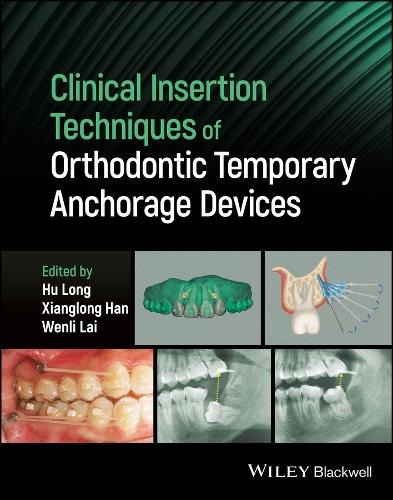
Clinical Insertion Techniques of Orthodontic Temporary Anchorage Devices is the first comprehensive guide to the clinical insertion techniques for temporary anchorage devices (TADs) and the clinical applications of TADs according to different anatomic regions. It provides detailed clinical insertion instructions and applications, as well as guidance on choosing an optimal insertion site, detailed insertion techniques, and potential complications and their solutions.

Daraa Highway - Ghabagheb - Syria
+963-15 2050 - 15 860 380 /1/2/3 - 11 662 3900