



Page 6
Page 6

Herbal antibiotics : Natural alternatives for treating drug-resistant bacteria ; 2nd ed.
Health care providers have discovered many new resistant strains of bacteria, researchers have added to the growing body of knowledge about herbs, and the need for antivirals to treat emerging infections like SARS and West Nile Encephalitis has become urgent. Within ten years, according to sources cited in the book, pharmaceutical antibiotics will begin to fail at epidemic rates. There are, in fact, no new antibiotics currently in planning or development at any of the major pharmaceutical companies. Most notably, there is none for Gram-negative bacteria, which are emerging as the most dangerous pathogens.

Hepatitis C Virus Disease
Emphasizes the most recent advances on the Hepatitis C virus infection (HCV) moving from basic research to clinical application. In spite of the numerous studies on HCV infection, its pathogenesis and medical treatment have not been fully explained. The first chapters of this volume analyize the full spectrum of immune responses to HCV taking into account either innate or adoptive immunity involvement. The volume also includes a series of contributions which explain the state of art of IFN-alpha treatment in HCV patients and the effectiveness of therapy also in relation to HCV genotypes. The use and applications of pegylated IFNs will also be discussed as well as the complicated HCV disease and its treatment. Hepatitis C Virus Disease: Immunobiology and Clinical Applications is an ideal volume for researchers, scientists, professionals, clinicians, physicians and graduate students in the fields of infectious disease, immunology, virology, microbiology, pharmacology and medicine.

Health research in developing countries : A collaboration between Burkina Faso and Germany
Health research in developing countries has many facets. On one side, malaria and AIDS as main causes of morbidity and mortality are a focus for clinical and epidemiological studies. On the other side, the need for improving the health care system in general cannot be overestimated. The book offers a survey of current and important topics of health research in developing countries. Special emphasis is placed to show that cooperation of different health research areas if of highest importance in future. In addition the CRSN (Burkina Faso) - University of Heidelberg collaboration is given as a model that allows high class research in remote areas of any developing country. An absolutely must for all who are working in clinical, epidemiological and health systems research for and in developing countries.

Group B Coxsackieviruses
This monograph reviews information published since 1997 on the group B coxsackieviruses (CVB), a large and important group of human enteroviruses. The CVB were discovered in the mid-20th century, during the search for other poliovirus types, and within a very few years of this discovery, the CVB had been implicated as causes of human myocarditis and pancreatitis. The study of the CVB is still inextricably linked with the fate of their well-known relatives, the polioviruses, for as poliovirus eradication proceeds around the world, the CVB emerge more prominently as the enteroviruses best suited for continuing studies in enteroviral molecular biology as well as understanding the mechanisms underlying enteroviral pathogenesis. This volume reviews and presents modern views on the spectrum of CVB biologies, from interaction of the virus with its receptor through replication, speciation, and induction of disease.

Glycopeptides and Glycoproteins : Synthesis, Structure, and Application
Their structure, biosynthesis, and mode of action are summarized in the fth chapter. The last chapter covers current methods for the determination of high-resolution structures of glycopeptides and glycoproteins mainly based onNMRspectroscopy, X-raycrystallography,and molecular modeling.This series presents critical reviews of the present position and future trends in modern chemical research Short and concise reports on chemistry.

Glycobiology and Medicine ; Proceedings of the 7th Jenner Glycobiology and Medicine Symposium.
The potential for glycobiology to improve the practice of medicine has been well recognised, which is why biannual meetings concerning the association have been taking place for the last 14 years. The science of glycobiology has matured rapidly, and with it the far reaching clinical implications are becoming understood. The next decade is going to see this final frontier of science conquered. The impact this understanding of glycobiology will have upon our practice of medicine is going to be exciting. The 7th Jenner Glycobiology and Medicine Symposium was designed to reflect these advances. All the major clinical areas were involved, with contributions from pivotal players in science and medicine.

GI Microbiota and Regulation of the Immune System
This book opens with two general reference chapters, which provide an over-view of current knowledge of gastrointestinal immunology and the commensal microbiology of the gut. Next are two chapters dedicated to current methodologies used to investigate the icrobiota and host: molecular analysis of microbial diver-sity and gnotobiotic research. Both positive and negative interactions between the microbiota and the immune system can take place in the gut, with chapters dedicated to probiotics and intestinal diseases associated with unhealthy rnicrobiota.

Genitourinary Pain and Inflamation : Diagnosis And Management
Genitourinary Pain and Inflammation: Diagnosis and Management of GU-ITIS is a compilation of skilled creativity based upon critical review of the literature, consensus reports, and professional experiences. It includes detailed chapters that address iatrogenic causes of GU inflammation, caused by catheters, prosthetics, radiation, or chemotherapy.

Fungal Immunology: From an Organ Perspective
This book will serve as a comprehensive review of all known immune mechanisms for common medically important fungal pathogens. Its novelty lies in the organization: Rather than chapters devoted to specific fungi, chapters are organized by organ system. All other texts in the field, which are now quite old, are arranged according to specific fungi.

Foodborne Microbial Pathogens : Mechanisms and Pathogenesis
The author presents up-to-date information on molecular and cellular mechanism of several major foodborne microbial pathogens, including select agents for bioterrorism, virulence genes and their regulation in the host or the food environment, pathogenicity testing models, clinical symptoms, and prevention and control strategies. In order to understand the disease process, one must have certain understanding about the role of the immune system. Thus this book also covers the host parasite interaction to a level where the readers will have a better appreciation for the disease mechanism.

Focus on bacterial biofilms
Bacterial biofilms are colonies of bacterial cells embedded in their self-produced matrix composed of polysaccharides, DNA, and proteins. They protect bacterial cells against antibiotics, antibacterial agents, soaps and detergents, and shear stress. Some of the most common biofilm-associated infections in humans include urinary tract infections, infection of wounds and surgical sites, diabetic foot ulcers, dental caries (tooth decay) and gingivitis (gum inflammation), ventilator-associated infections, sinusitis, microbial keratitis, secondary infection related to Covid-19 and other viral infections, and so on. Bacterial resistance to common antibiotics (e.g., penicillin, gentamycin, erythromycin, ciprofloxacin, etc.) is driving us to a catastrophic failure of our health systems. Strategies to develop novel antibacterial agents and technology must be prioritized to combat and eradicate biofilms and their associated challenges. This book provides a comprehensive overview of biofilms with chapters on bacterial virulence factors, quorum sensing in bacteria, antimicrobial resistance in bacteria, strategies to develop new antibacterial agents, and much more.
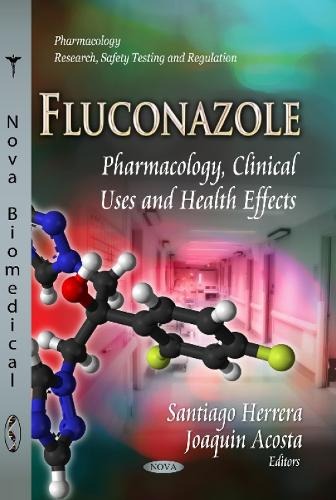
Fluconazole : Pharmacology, clinical uses and health effects
Fluconazole is a triazole antifungal drug used in the treatment and prevention of superficial and systemic fungal infections. In this book, the authors present current research in the study of the pharmacology, clinical uses and health effects of fluconazole. Topics discussed include the utilization of fluconazole in adult intensive care units; the use of fluconazole in veterinary species and a description of variances from the human experience as well as findings in veterinary species which may have applicability in human medicine; common clinical uses and in vitro activity features on fluconazole; and the discovery and development of medically-important antifungal agents, particularly the azole derivatives and the development of fluconazole and its clinical applications.

Financial market imperfections and corporate decisions : Lessons from the transition process in Hungary
The book presents the results of an empirical investigation of the behaviour of Hungarian firms during the transition process focusing in particular on the role of financial market imperfections for corporate capital structure and investment decisions. The results suggest that financial market reforms have succeeded, albeit partially, in hardening firms's budget constraints and improving the efficiency of the credit allocation process. In particular, following the introduction of the banking sector reform and of the new bankruptcy law, budget constraints became more binding for small private firms, while informational costs became less relevant for foreign-owned firms.

Experimental Glycoscience : Glycobiology
The aim of this book is to provide experimental protocols covering many aspects of glycobiology, glycotechnology, and chemistry: biochemistry, molecular and cellular biology, genetics, physiology, and medicine. The protocols are all self-contained descriptions of the equipment and reagents needed, followed by details of the experimental procedure.

Evidence-Based Oral Surgery : A Clinical Guide for the General Dental Practitioner
This book is designed to guide the dental practitioner in the medical and surgical management of the oral surgery patient. It provides dentists and dental professionals with up-to-date, evidence-based information on how to handle any oral surgical problem and how to work up a patient.

Essential oils as antibacterial agents
An alarm increase in the rate of emerging of resistant bacteria have been causing a great public concern worldwide. This problem of increasing resistance has necessitated the search for safe and effective factors that may be used to treat persistent bacterial infections or modify the currently available antibiotics. An experimental approach, using agar diffusion method was used to estimate the antibacterial properties of 5 essential oils (cinnamon, clove, peppermint, rosemary and thyme) each one individually, in pure and commercial form, against 3 of the bacterial strains that cause common skin infections which are gram negative bacteria (Escherichia coli, Pseudomonas aeruginosa) and gram positive bacteria (Staphylococcus aureus), obtained from clinical sources. Only two of the commercial oils had an antibacterial effect on both gram negative bacteria (E. coli) and gram positive bacteria (S. aureus) and in lesser extent on gram negative bacteria (P. aeruginosa).synergy.

Essential microbiology for dentistry
Supports a new generation of dental students in their understanding of microbiom and oral microbiota, basic immunology, oral and systemic infections and cross-infection control. Fully updated throughout with the latest developments in oral microbiology, microbiomics, disease prevention and control, Essential Microbiology for Dentistry will be essential for all undergraduates studying dentistry as well as anyone undertaking postgraduate training.

Essential Infectious Disease Topics for Primary Care
This book provides an easy-to-use, practical, yet comprehensive resource for family practitioners to use in the daily struggle against infectious diseases. It discusses vaccines and preventive measures as well as information on how to reduce the incidence of antimicrobial-resistant organisms by judiciously prescribing antibiotics and informing patients about the appropriate use of these agents.

Ergodic Dynamics : From Basic Theory to Applications
This textbook provides a broad introduction to the fields of dynamical systems and ergodic theory. Motivated by examples throughout, the author offers readers an approachable entry-point to the dynamics of ergodic systems. Modern and classical applications complement the theory on topics ranging from financial fraud to virus dynamics, offering numerous avenues for further inquiry. Starting with several simple examples of dynamical systems, the book begins by establishing the basics of measurable dynamical systems, attractors, and the ergodic theorems. From here, chapters are modular and can be selected according to interest. Highlights include the Perron–Frobenius theorem, which is presented with proof and applications that include Google PageRank. An in-depth exploration of invariant measures includes ratio sets and type III measurable dynamical systems using the von Neumann factor classification. Topological and measure theoretic entropy are illustrated and compared in detail, with an algorithmic application of entropy used to study the papillomavirus genome. A chapter on complex dynamics introduces Julia sets and proves their ergodicity for certain maps. Cellular automata are explored as a series of case studies in one and two dimensions, including Conway’s Game of Life and latent infections of HIV. Other chapters discuss mixing properties, shift spaces, and toral automorphisms.

Emerging Infections in Asia
Emerging Infections in Asia offers a comprehensive overview of well studied and lesser-known infectious syndromes affecting local, regional, and international health, concentrating on their greatest areas of transmission.
