



Page 56
Page 56
Clashes of Knowledge : Orthodoxies and Heterodoxies in Science and Religion
"Clashes of Knowledge" is the first volume of a series called "Knowledge and Space" dealing with spatial disparities of knowledge and the impact of the spatial context on the production and application of knowledge. The contributions in this book explore the conflicts between various types of knowledge, especially between orthodox and heterodox knowledge systems, which range from religious fundamentalism to heresies within the scientific community itself.

Chirurgia addominale d’urgenza : il buon senso di Schein: Guida pratica per sopravvivere nella trincea delle urgenze chirurgiche = Schein's common sense : A practical guide to surviving the trenches of surgical emergencies
This handy, concise, agile text is to be considered a practical guide, essential for the management and treatment of abdominal emergencies. Written and coordinated by a master of world surgery, with great experience in the field of emergency abdominal surgery, the volume is truly, for the surgeon on duty, an essential and life-saving tool, to always keep at hand. How to deal with an abdominal urgency (without wasting time and groping in the dark)? What checks are necessary? Which ones can be avoided? What surgical approach should be undertaken? In a clear, simple and punctual way, any doubts are addressed and clarified here.

Children in Tort Law Part II : Children as Victims
Since children are not as capable as adults to perceive the risks involved in many situations of daily life, they are at a high risk of suffering personal injuries, mainly resulting from home, school and traffic accidents. From the tort law perspective, this requires a specific treatment of children as victims. For the last few decades some legal systems have been trying to find new solutions for a better protection of children, while other legal systems still follow more traditional rules. After having tackled the problems concerning the position of children as tortfeasors in a previous book, in this book the same working team deals with the problems related to the position of children as victims. This book analyses both the traditional solutions found in some legal systems and the newer solutions offered by others and devotes specific attention to damage issues, apportionment of damage and insurance problems when the victim is a child.
Chemistry for the Protection of the Environment 4
This volume is the proceedings of the first CPE conference in the new millennium and the thirteenth in a well-established series of conferences on Chemistry for the Protection of the Environment, first established in 1976. With support of the U.S. EPA, the series of conferences provides an opportunity for interdisciplinary exchange of ideas among international specialists, from diverse fields and backgrounds, on the chemical aspects of environmental protection. Over the years, the CPE conferences have gathered participants from more and more countries, and the scope of interests have been broadened. Held in Hilo, Hawaii, this was the first of these international conferences to take place in the United States. The Organizing Committee attracted to the conference a wide range of talented scientists and engineers who have useful ideas to contribute on how to clean our environment.

Chemistry for pharmacy students : General, organic and natural product chemistry ; 2nd ed.
Opens with an overview of the general aspects of chemistry and their importance to modern life, with emphasis on medicinal applications. The text then moves on to discuss the concepts of atomic structure and bonding and the fundamentals of stereochemistry and their significance to pharmacy in relation to drug action and toxicity. Various aspects of organic functional groups, organic reactions, heterocyclic chemistry, nucleic acids and their pharmaceutical importance are then covered in subsequent chapters, with the final chapter dealing with drug discovery and development, and natural product chemistry. Provides a student-friendly introduction to the main areas of chemistry required by pharmacy degree courses. Written at a level suitable for non-chemistry students in pharmacy, but also relevant to those in life sciences, food science, and the health sciences Includes learning objectives at the beginning of each chapter Focuses on the physical properties and actions of drug molecules
Chemistry and Safety of Acrylamide in Food
Specifically covered are the following aspects: exposure from the environment and the diet; biomarkers of exposure; risk assessment; epidemiology; mechanism of formation in food; biological alkylation of amino acids, peptides, proteins, and DNA by acrylamide and its epoxide metabolite glycidamide; neurotoxicity, reproductive toxicity, and carcinogenicity; protection against adverse effects; and possible approaches to reducing levels in food. Cross-fertilization of ideas among several disciplines in which an interest in acrylamide has developed, including food science, pharmacology, toxicology, and medicine, will provide a better understanding of the chemistry and biology of acrylamide in food, and can lead to the development of food processes to decrease the acrylamide content of the diet.
Chemical Signals in Vertebrates 10
This book also represents the tenth in a series of books on chemical communication, chemical ecology, olfactory and vomeronasal research in vertebrate species. The species covered in the chapters herein range from fish to mammals including humans. By taxonomic breakdown the mammals are the most represented in number of species and chapter contributions. However, the hosts of the meeting endeavored to have some representative contributions covering all of the major vertebrate taxa.
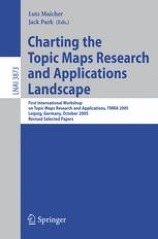
Charting the Topic Maps Research and Applications Landscape ; 1st International Workshop on Topic Map Research and Applications, TMRA 2005, Leipzig, Germany, October 6-7, 2005, Revised Selected Papers
The papers in this volume were presented at the workshop “Topic Map Research and Applications 2005” held on October 6-7, 2005, in Leipzig. TMRA 2005 was the first workshop of an annual series of international workshops dedicated to topic maps in research and industry. As the motto “Charting the Topic Maps Research and Applications Landscape” suggests, the aim of TMRA 2005 was to identify the primary open issues in research, learn about who is working on what, bring together researchers and application pioneers, stimulate the systematic tackling of such issues, and foster the exchange of ideas in a stimulating setting.
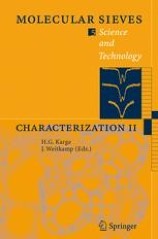
Characterization II
Molecular Sieves - Science and Technology covers, in a comprehensive manner, the science and technology of zeolites and all related microporous and mesoporous materials. Authored by renowned experts, the contributions to this handbook-like series are grouped together topically in such a way that each volume deals with a specific sub-field. Volume 5 complements Volume 4 (Characterization I) in that it is devoted to the characterization of molecular sieves by a variety of non-spectroscopic techniques (Characterization II). Thus, Volume 5 comprises Chemical Analysis, Thermal Analysis, Pore-Size Characterization by Molecular Probes, Characterization by 129Xe NMR, Coke Characterization, Synthesis and Characterization of Isomorphously Substituted Molecular Sieves.
Chaos and fractals : New frontiers of science
Covers the central ideas and concepts of chaos and fractals as well as many related topics including: the Mandelbrot set, Julia sets, cellular automata, L-systems, percolation and strange attractors.
Challenges in Language Testing Around the World : Insights for language test users
This book combines insights from language assessment literacy and critical language testing through critical analyses and research about challenges in language assessment around the world. It investigates problematic practices in language testing which are relevant to language test users such as language program directors, testing centers, and language teachers, as well as teachers-in-training in Graduate Diploma and Master of Arts in Applied Linguistics programs. These issues involve aspects of language testing such as test development, test administration, scoring, and interpretation/use of test results.
CFN Lectures on Functional Nanostructures : Vol.1
This book contains a selection of lectures from the first Summer School organized by the Center for Functional Nanostructures (CFN) at the University of Karlsruhe. The mission of the CFN is to carry out research in the following areas: nanophotonics, nanoelectronics, molecular nanostructures and nanostructured materials. The aim of the summer schools is mainly to exchange new ideas and illustrate emerging research methodologies through a series of lectures. This is reflected by both the selection of topics addressed in the present volume as well as the tutorial aspect of the contributions.
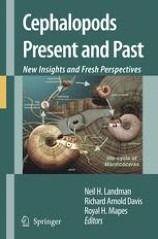
Cephalopods Present and Past : New Insights and Fresh Perspectives
Cephalopods are diverse, highly developed molluscs capable of swimming and jet propulsion. These animals are an important component of present-day marine ecos- tems throughout the world and comprise approximately 900 species. They also have an extraordinary fossil record, extending back to the Cambrian Period, with as many as 10,000 extinct species. Throughout their long history, they have experienced sp- tacular radiations and near-total extinctions. Because of their superb fossil record, they also serve as ideal index fossils to subdivide geologic time. This book touches on many of these themes, and it treats both fossil and present-day cephalopods.
Cell-Cycle Mechanisms and Neuronal Cell Death
This book serves to gain new insights into the molecular determinants of neuronal death and to establish new targets for therapeutic intervention.
Cell-Cell Channels
The biological sciences are dominated by the idea that cells are the functionally autonomous, physically separated, discrete units of life. This concept was propounded in the 19th century by discoveries of the cellular structuring of both plants and animals. Moreover, the ap parent autonomy of unicellular eukaryotes, as well as the cellular basis of the mammalian brain (an organ whose anatomy for a long while defied attempts to validate the idea of the cellular nature of its neurons), seemed to provide the final conclusive evidence for the completeness of *cell theory', a theory which has persisted in an almost dogmatic form up to the present day. However, it is very obvious that there are numerous observations which indicate that it is not the cells which serve as the basic units of biological life but that this property falls to some other, subcellular assemblage. To deal with this intricate problem concerning the fundamental unit of living matter, we proposed the so-called Cell Body concept which, in fact, devel ops an exceedingly original idea proposed by Julius Sachs at the end of the 19th century. In the case of eukaryotic cells, DNA-enriched nuclei are intimately associated with a microtubular cytoskeleton. In this configuration—as a Cell Body—these two items comprise the fundamental functional and struc tural unit of eukaryotic living matter. The Cell Body seems to be inherent to all cells in all organisms.
Cell Stress Proteins
This comprehensive volume, written by experts in the field, provides a current understanding of the molecular properties of the heat shock proteins and their roles in health and disease. Cell Stress Proteins includes advances in several aspects of stress protein research, with chapters ranging from basic studies of the role of heat shock proteins in protein folding to reviews examining the breakdown of stress protein regulation during disease. It also provides analysis of the biochemical and molecular properties of heat shock proteins which can be utilized in evaluating their role in human physiology and pathology. Cell Stress Proteins is an ideal book for researchers, clinicians, physicians, and graduate students in the fields of biochemistry, cell biology, microbiology, immunology, and genetics.
Cell Engineering : Apoptosis
A reference on the development of cellular systems for the production of recombinant glycoproteins, gene and cell therapies, drug screening and tissue engineering. It intends to review the in-depth assessments of this type of programmed cell death. It is suitable for biotechnologists and researchers in apoptosis, cell biology, and cell culture.
CD137 Pathway : Immunology and Diseases
This comprehensive volume, written by experts in the field, covers nearly all aspects of ongoing research related to the CD137 pathway. Recent research has shown that the manipulation of CD137 pathway molecules is very promising in the treatment of cancer, viral infection, transplantation rejection and autoimmune diseases in experimental animal models. The volume includes research related to the identification and understanding of functional consequences of CD137 receptor and ligand molecules which represents a major effort in the field of immunology. CD137 Pathway: Immunology and Diseases is an ideal book for immunologists, microbiologists, cancer researchers, molecular biologists, biochemists, and pharmaceutical and biotechnology company scientists.
Causation, Coherence and Concepts : A Collection of Essays
the papers cover epistemology, general philosophy of science, philosophy of language, and philosophy of mind. The section titles Belief, Causation, Laws, Coherence, and Concepts and the paper titles give a more adequate impression of the topics dealt with.

Cathodic Arcs : From Fractal Spots to Energetic Condensation
Cathodic Arcs: From Fractal Spots to Energetic Condensation is the first book in over a decade dedicated to the physics and technology of cathodic arcs. It includes a detailed account of arc history, a textbook-like introduction to cathode phenomena, and some basic physics of expanding plasmas; it deals with the infamous macroparticle issue and describes a host of practical plasma filter solutions. In contrast to previous books on cathodic arcs, the focus is on the relation of arc plasmas and their properties to surface modification and thin film deposition. The book contains sections on basic plasma physics and thin film materials science. It also deals with practical issues of coatings such as stress control and the often-underrated issue of the coating’s color. By stressing the fractal nature of cathode spots, the theme of fluctuations can be found throughout the book: fluctuations affect all plasma properties and thereby have consequences for plasma-based surface modifications and film growth.
