



Page 42
Page 42

Contemporary Metal Boron Chemistry I : Borylenes, Boryls, Borane Sigma-Complexes, and Borohydrides
With information that will remain valid for years, this series presents critical reviews of the present position and future trends in modern research into chemical structure and bonding. It features concise reports, each written by world-renowned experts.

Contemporary Medical Acupuncture : A Systems Approach
Contemporary Medical Acupuncture aims to bridge the gap between classical acupuncture therapy and contemporary medicine to achieve their ultimate integration. Based on updated reviews and systematic analyses, the meridians are actually systems of physiological and pathological reflexes in the body, and whole body reflex zones is proposed, which may efficiently inherit and clarify the meridian system. The systems methodology, together with the authors’ clinical expertise of 40 years, is applied to raise the reproducibility of effectiveness in treating various indications of acupuncture, especially intractable cases. Outstanding features of the book are its incisive and concrete descriptions about theories and techniques of clinical acupuncture, a novel systems approach, and a great deal of case studies.
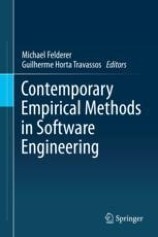
Contemporary Empirical Methods in Software Engineering
This book presents contemporary empirical methods in software engineering related to the plurality of research methodologies, human factors, data collection and processing, aggregation and synthesis of evidence, and impact of software engineering research. The individual chapters discuss methods that impact the current evolution of empirical software engineering and form the backbone of future research.

Consumer Behaviour and Analytics
Consumer Behaviour and Analytics provides a consumer behaviour textbook for the new marketing reality. In a world of Big Data, machine learning and AI, this key text reviews the issues, research and concepts essential for navigating this new terrain. It demonstrates how we can use data-driven insight and merge this with insight from extant research to inform knowledge-driven decision making.

Construction Management
Covers a wide range of subjects, reflecting the breadth of knowledge needed to understand the dynamics of this large and complex industry. This edition includes updated chapters on planning and scheduling, a new chapter addressing linear scheduling methods, material regarding the historical background of construction as a profession, and includes an Instructor Resource of solutions to the end-of-chapter review exercises.

Construction and Analysis of Safe, Secure, and Interoperable Smart Devices ; Vol. 3956 ; Second International Workshop, CASSIS 2005, Nice, France, March 8-11, 2005, Revised Selected Papers
This book constitutes the refereed post-proceedings of the Second International Workshop on Construction and Analysis of Safe, Secure, and Interoperable Smart Devices, CASSIS 2005. The 9 revised full papers presented were carefully selected during two rounds of reviewing and improvement from about 30 workshop talks. The papers are organized in topical sections on research trends in smart devices, Web services, virtual machine technology, security, validation and formal methods, proof-carrying code, and embedded devices.

Construction 4.0 : advanced technology, tools and materials for the digital transformation of the construction industry
Construction 4.0 Advanced Technology, Tools and Materials for the Digital Transformation of the Construction Industry provides readers with a state-of-the-art review of the ongoing digital transformation of the sector within the new 4.0 framework, presenting a thorough investigation of the emerging trends, technologies, and strategies in the fields of smart building design, construction.

Constitutional law : Model problems and outstanding answers
Constitutional law is one of the most engaging and yet challenging first year law classes. At the confluence of history, politics, legal theory, and judicial review, it requires students to learn a new framework for legal interpretation and thought unique from other areas of law. For the first time, Oxford University Press equips students with an accessible guide to acing these challenging constitutional law exams.

Condorcets Paradox
It begins with a historical overview of the discovery of Condorcet's Paradox in the 18th Century, reviews numerous studies conducted to find actual occurrences of the paradox, and compiles research that has been done to develop mathematical representations for the probability that the paradox will be observed.

Condition Monitoring and Control for Intelligent Manufacturing
Manufacturing systems and processes are becoming increasingly complex, making more rational decision-making in process control a necessity. The book presents a wide and comprehensive review of the key areas of research in machine condition monitoring and control, before focusing on an in-depth treatment of each important technique, from multi-domain signal processing for defect diagnosis to web-based information delivery for real-time control.

Concrete-Filled Double-Skin Steel Tubular Columns: Behavior and Design
Concrete-Filled Double-Skin Steel Tubular Columns: Behavior and Design provides a thorough review of the recent advances on the behaviour and design of concrete-filled double-skin steel tubular (CFDST) columns. Drawing on their extensive knowledge and research, the authors cover topics such as different CFDST columns under axial compression, innovative techniques including the use of rubberised concrete, columns with different cross-sections, and steel material envelops and failure modes.

CONCREEP 10 : Mechanics and physics of creep, shrinkage, and durability of concrete and concrete structures
Contains 187 papers invited on the basis of carefully peer-reviewed abstracts. It elucidates the intricacies of concrete, linking atomistic physics to real life civil engineering design. Topics include: microstructures and micromechanics; multiscale creep, shrinkage, fracture, and durability properties; constitutive and numerical modeling; simulation and design of concrete structures; molecular- to lab-scale simulations and characterization of concrete; macroscopic material testing; creep and shrinkage of concrete under extreme conditions; monitoring of concrete structures and exploitation of measurement data; and creep and shrinkage properties of new cementitious materials.

Computer-Aided Highway Engineering
Aimed at developing professional knowledge in the field of highway engineering with adequate skills in planning, designing and implementation of the highway project with an exposure of hands on training of computer software in designing the worldwide road infrastructures. It discusses Digital Terrain Model (DTM) using satellite data including highway geometric, pavement and tunnel design, supported by relevant tutorials. Quantity estimation, cost estimation and production of various types of construction drawings are described in detail with theory and tutorials backed by real project data. Recognizes the role of information and computer technology in various aspects of highway design. Reviews different tasks for feasibility studies and DPR with software applications. Explores topographic survey, Digital Terrain Model (DTM) and highway geometrics and, pavement and drainage design. Discusses project estimations for various revisions of the engineering work. Includes HEADS Pro along with chapter wise tutorials containing design and field data, tutorial guides and various tutorial videos.

Computer vision approaches to medical image analysis ; 2nd International ECCV Workshop, CVAMIA 2006, Graz, Austria, May 12, 2006, Revised Papers
This was the second time that a satellite workshop,solely devoted to medical image analysis issues, was held in conjunction with the European Conference on Computer Vision (ECCV). We received 38 full-length paper submissions to the second Computer Vision Approaches to Medical Image Analysis (CVAMIA) Workshop, out of which 10 were accepted for oral and 11 for poster presentation after a rigorous peer-review process. In addition, the workshop included three invited talks.

Computer Vision - ECCV 2002 ; 7th European Conference on Computer Vision, Copenhagen, Denmark, May 28-31, 2002. Proceedings. Part IV
The privilege of organizing it was shared by three universities: The IT University of Copenhagen, the University of Copenhagen, and Lund University, with the conference venue in Copenhagen. This year’s conference attracted more papers than ever before, with around 600 submissions. Still, together with the conference board, we decided to keep the tradition of holding ECCV as a single track conference. Each paper was anonymously refereed by three different reviewers. For the ?nal selection, for the ?rst time for ECCV, a system with area chairs was used.

Computer Vision - ECCV 2002 ; 7th European Conference on Computer Vision, Copenhagen, Denmark, May 28-31, 2002. Proceedings. Part II
The privilege of organizing it was shared by three universities: The IT University of Copenhagen, the University of Copenhagen, and Lund University, with the conference venue in Copenhagen. This year’s conference attracted more papers than ever before, with around 600 submissions. Still, together with the conference board, we decided to keep the tradition of holding ECCV as a single track conference. Each paper was anonymously refereed by three different reviewers. For the ?nal selection, for the ?rst time for ECCV, a system with area chairs was used.

Computer Vision - ECCV 2002 ; 7th European Conference on Computer Vision, Copenhagen, Denmark, May 28-31, 2002, Proceedings, Part III
The privilege of organizing it was shared by three universities: The IT University of Copenhagen, the University of Copenhagen, and Lund University, with the conference venue in Copenhagen. This year’s conference attracted more papers than ever before, with around 600 submissions. Still, together with the conference board, we decided to keep the tradition of holding ECCV as a single track conference. Each paper was anonymously refereed by three different reviewers. For the ?nal selection, for the ?rst time for ECCV, a system with area chairs was used.

Computer Vision - ECCV 2002 ; 7th European Conference on Computer Vision, Copenhagen, Denmark, May 28-31, 2002, Proceedings, Part I
The privilege of organizing it was shared by three universities: The IT University of Copenhagen, the University of Copenhagen, and Lund University, with the conference venue in Copenhagen. This year’s conference attracted more papers than ever before, with around 600 submissions. Still, together with the conference board, we decided to keep the tradition of holding ECCV as a single track conference. Each paper was anonymously refereed by three different reviewers. For the ?nal selection, for the ?rst time for ECCV, a system with area chairs was used.

Computer Vision - ACCV 2006 ; Vol. 3852 ; 7th Asian Conference on Computer Vision, Hyderabad, India, January 13-16, 2006, Proceedings, Part II
ACCV has been making its rounds through the Asian landscape and came to India this year. Interest in computer vision is increasing and ACCV 2006 attracted about 500 submission. The evaluation team consisted of 27 experts serving as Area Chairs and about 270 reviewers in all. The whole process was conducted electronically in a double-blind manner,a ?rstfor ACCV.

Computer Vision - ACCV 2006 ; Vol. 3851 ; 7th Asian Conference on Computer Vision, Hyderabad, India, January 13-16, 2006, Proceedings, Part I
proceedings. ACCV has been making its rounds through the Asian landscape and came to India this year. Interest in computer vision is increasing and ACCV 2006 attracted about 500 submission. The evaluation team consisted of 27 experts serving as Area Chairs and about 270 reviewers in all. The whole process was conducted electronically in a double-blind manner,a ?rstfor ACCV.
