


Refine Results
Sort By
From
To

Contains selected papers from the international conference ML4CPS – Machine Learning for Cyber-Physical Systems, which was held in Hamburg (Germany), from 29 to 31 March 2023. Cyber-physical systems are adaptive and learning: they analyze their environment and, based on observations, learn patterns, associations and predictive models. Typical applications are condition monitoring, predictive maintenance, image processing and diagnostics. Machine learning is the key technology for these developments.
Presents new approaches to Machine Learning for Cyber Physical Systems, experiences and visions. It contains selected papers from the fifth international Conference ML4CPS – Machine Learning for Cyber Physical Systems, which was held in Berlin, March 12-13, 2020.
Learn to deliver superior server-to-server communication through the networking channels / Gain expertise of the networking features of your own applications to support various network architectures such as client/server and peer-to-peer Explore the issues that impact scalability, affect security, and allow applications to work in a heterogeneous environment
This book clearly describes how to establish an architecture practice that delivers value for an organization. The authors demonstrate a wealth of experience and a deep understanding of the multifaceted nature of this challenging task and they provide sound advice on how to avoid the many pitfalls that may be encountered along the way. Building an Enterprise Architecture Practice provides practical advice on how to develop your enterprise architecture practice.
The use of computers to recognize humans from physical and behavioral traits dates back to the digital computer evolution of the 1960s. But even after decades of research and hundreds of major deployments, the field of biometrics remains fresh and exciting as new technologies are developed andoldtechnologiesareimprovedandfieldedinnewapplications.Wor- wide over the past few years,there has been a marked increase in both g- ernment and private sector interest in large-scale biometric deployments for accelerating human–machine processes, efficiently delivering human services, fighting identity fraud and even combating terrorism. The p- pose of this book is to explore the current state of the art in biometrics- tems and it is the system aspect that we have wished to emphasize. By their nature, biometric technologies sit at the exact boundary of the human–machineinterface.Butlikealltechnologies,bythemselvestheycan provide no value until deployed in a system with support hardware, n- work connections, computers, policies and procedures, all tuned together to work withpeople to improve some real business process within a social structure.
This book is a comprehensive guide that covers installing and configuring SQL Server 2005 Express, creating, backing up, and restoring databases, creating tables, then querying and manipulating them with T-SQL, coding stored procedures and triggers, and using Reporting Services to deliver information to end users.
The automotive industry has always been synonymous with research and innovation, but nowadays the industry is adding pressure and is establishing the agenda of the researchers from the field. Visions have been provided, and the hardware and the software exist; the only question remaining is: “who is going to deliver”? To answer this question, we encouraged scientists, researchers, industry specialists, and academics to share their vision of autonomous vehicles. What will the platform look like? What kind of hardware and software is most suitable? Who will make the connection between these two interdependent environments (and how), so that in the end the AI will define the process? These are the pressing issues of the current moment, and this Special Issue will help all those interested in the topic to promote their vision and ideas.
The field of healthcare is constantly evolving and advancing with new technologies and innovations. Among these, assistive technologies, robotics, and automated machines are rapidly gaining ground as powerful tools to improve the quality of care and enhance patient outcomes. From wearable devices that monitor vital signs to surgical robots that assist in complex procedures, these technologies have the potential to revolutionize the way we deliver healthcare. The development and the integration of assistive technologies, care robots, and automated machines are strategic both as single components, when paired together, and when interconnected in the health domain.This reprint explores the latest developments in assistive technologies, robotics, and automated machines in the health domain, providing a comprehensive overview of their applications and potential impact. The reprint is for the benefit of healthcare professionals, researchers, engineers, and students interested in these rapidly evolving fields.
This book describes a number of applications of Artificial Intelligence in the field of Customer Relationship Management with the focus of solving customer problems. We design a system that tries to understand the customer complaint, his mood, and what can be done to resolve an issue with the product or service. To solve a customer problem efficiently, we maintain a dialogue with the customer so that the problem can be clarified and multiple ways to fix it can be sought. We introduce dialogue management based on discourse analysis: a systematic linguistic way to handle the thought process of the author of the content to be delivered. We analyze user sentiments and personal traits to tailor dialogue management to individual customers. We also design a number of dialogue scenarios for CRM with replies following certain patterns and propose virtual and social dialogues for various modalities of communication with a customer.

Explores a comprehensive and insightful treatment of the practical application of bioinformatic algorithms in a variety of fields. Delivers a fulsome treatment of some of the main algorithms used to explain biological functions and relationships. It introduces readers to the art of algorithms in a practical manner which is linked with biological theory and interpretation. The book covers many key areas of bioinformatics, including global and local sequence alignment, forced alignment, detection of motifs, Sequence logos, Markov chains or information entropy. Other novel approaches are also described, such as Self-Sequence alignment, Objective Digital Stains (ODSs) or Spectral Forecast and the Discrete Probability Detector (DPD) algorithm. Readers will also benefit from the inclusion of: A detailed presentation of new methods, such as Self-sequence alignment, Objective Digital Stains and Spectral Forecast ; A treatment of sequence alignment, including local sequence alignment, global sequence alignment and forced sequence alignment with full implementations ; Discussions of position-specific weight matrices, including the count, weight, relative frequencies, and log-likelihoods matrices ; A detailed presentation of the methods related to Markov Chains as well as a description of their implementation in Bioinformatics and adjacent fields ; An examination of information and entropy, including sequence logos and explanations related to their meaning ; A chapter on philosophical transactions that allows the reader a broader view of the prediction process ; Extensive worked examples with detailed case studies that point out the meaning of different results
This textbook presents the crucial issues in software engineering using the agile approach to software development - one of the mainstream paradigms for the management of software projects and one that is being applied more and more extensively.
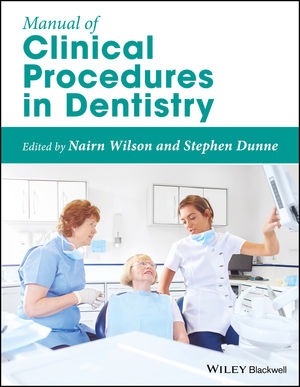
Explains the core procedures in dentistry, how to do them, and the rationale that underpins them. Full of useful and easy-to-access information, it acts as a compendium of practical procedures in primary dental care, supporting students and dental practitioners in their daily professional and academic lives. This manual is a complete, practical guide to the delivery of effective, state of the art oral healthcare—the ‘what, when, and how’ of clinical practice. It compiles chapters written by expert clinicians on topics such as dental imaging, the management of dental pain, conscious sedation, operative dentistry, implant dentistry, oral medicine and surgery, paediatric dentistry, periodontics, prosthodontics, special care dentistry, dental trauma, aesthetic dentistry, and much more.
In Level the curve, tech-savvy orthodontist and entrepreneur Dr. Jamie Reynolds teams with digital stats guru Oliver Gelles to rewrite the rules for running a profitable orthodontic practice. Their book offers a proven, data-driven system that’s the new gold standard in orthodontic practices all over the country.
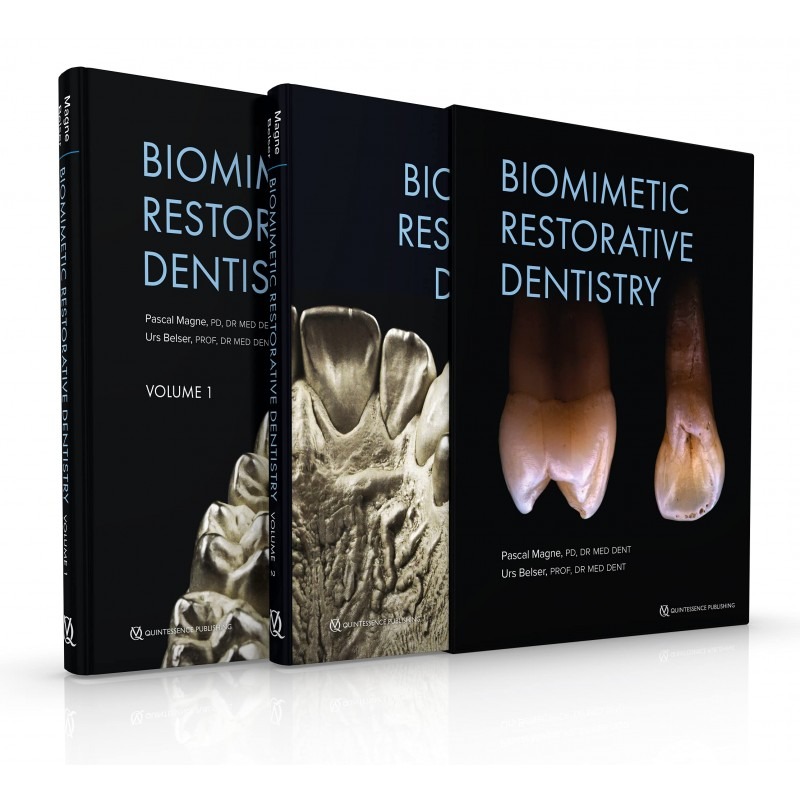
Takes the science of esthetic dental reconstruction to a new level both clinically and academically, and it offers all that a clinician could wish for in terms of indications and the classic clinical steps for tooth preparation, laboratory and CAD/CAM procedures, adhesive luting procedures, and maintenance. But above all, what makes this book so unique is the biomimetic principle—as such, restoring or mimicking the biomechanical, structural, and esthetic integrity of teeth is paramount. The core of this book centers on the application of the biomimetic principle in the form of bonded restorations using composite resins and ceramics, covering indications, treatment planning, diagnosis, tooth preparation and impression, laboratory and CAD/CAM procedures, final delivery, follow-up, maintenance, and repair. Written by a true master and artist, this book will undoubtedly inspire excellence in anyone who picks it up.

Presents a focused overview of biocompatible nanocomposites, emphasizing recent advancements in material design, synthesis techniques, and their expanding applications in biomedicine. It spans key areas such as regenerative medicine, drug delivery, cancer therapy, biosensing, diagnostic imaging, and vaccine delivery —illustrating how these materials are transforming modern healthcare. The book reviews widely used biomaterials including polycaprolactone, bioactive ceramics, and polymer-based hybrids, discussing their roles in cardiovascular, orthopedic, dental, maxillofacial, and ophthalmic applications.
Provides a comprehensive overview of current developments in anaesthesiology. The chapters : Solutions for Insufficient Epidural Analgesia for Planned Vaginal Birth and Interdisciplinary Emergencies in the Delivery Room, Anesthesia for Robotic Surgeries in Children, Anesthetic Management of Bronchoscopic Lung Volume Reduction, General Anaesthesia in the Context of Haemorrhagic Shock and Trauma, Anesthesiologic Management of Patients with Opioids or Psychoactive Substance Use, Fascial Plane Blocks, Considerations and New Perspectives of Locoregional Anesthesia in Dentistry, The Effect of Parental Anxiety on Postoperative Paediatric Cognitive Dysfunction.

Describes the processes, techniques and biomechanics involved in providing aligner treatment for different types of malocclusions. It opens with an overview of the material characteristics and the basic concepts of aligner therapy including topics like biocompatibility and intraoral deterioration. The main part of the book is dedicated to the various types of aligners, the methods used in their application and the practical aspects of delivery. It is structured based on the type of malocclusion being managed giving the reader a systematic pattern and a practical way of progressing through the book. The book closes with a discussion of the scientific data available.

Delivers a broad and concise look at advanced metallic materials used for dental applications. This book aims to bring the readers closer to the specific purpose of dental metallic materials meeting specific criteria and materials properties such as biocompatibility, non-toxicity, resistance to corrosion, long-term durability, appropriate strength and toughness, as well as corresponding values of modulus of elasticity.

Presents some specific problems including the metal-forming process, combustion room, Mullins effect of rubber tires, viscoelasticity of liver soft tissues, small punch test, tunnel excavation, slope stability, concrete slump test, orthodontic wire, and piezoelectric microaccelerometer.
Delivers not just the state-of-the-art of vertical loading, but also to provide recommendations of best-practice for all the major challenges in the field – short-span, single and multi-lane bridge loading, dynamic allowance and long-span bridges. It reviews issues that continue to be debated, such as which statistical distribution is most appropriate, whether free-flowing or congested traffic governs and dealing with future traffic growth. Specialist consultants and bridge owners should find this invaluable, as will regulators.

Daraa Highway - Ghabagheb - Syria
+963-15 2050 - 15 860 380 /1/2/3 - 11 662 3900