



Page 35
Page 35
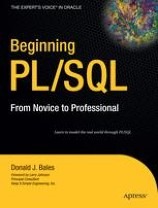
Beginning PL/SQL : From novice to professional
Get started with PL/SQL, the built-in language that every Oracle developer and database administrator must know, in Beginning PL/SQL, a fast-paced and example-filled tutorial. The book that covers all the key features of PL/SQL without wasting your time discussing esoteric and obsolete parts of the language.
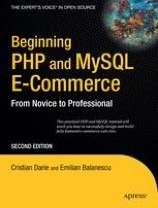
Beginning PHP and MySQL E-Commerce : From novice to professional
Beginning PHP and MySQL E-Commerce: From Novice to Professional, Second Edition covers every step of the design and building process involved in creating powerful, extendable e–commerce web sites. Based around a real–world example involving a web site selling t–shirts, you'll learn how to create and manage a product catalog, build and integrate a shopping cart, and process customer accounts and PayPal/credit card transactions. With the e–commerce framework in place, authors Emilian Balanescu and Cristian Darie show you how to integrate advanced features sure to set your web site apart from the competition. You'll learn how to expand your catalog using Amazon Web Services, optimize the web site for the search engines, and take advantage of Ajax to build an even more user–friendly shopping cart.
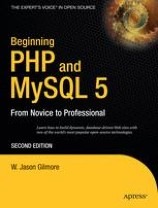
Beginning PHP and MySQL 5 : From novice to professional
Written for the budding web developer searching for a powerful, low-cost solution for building flexible, dynamic web sites. Essentially three books in one: provides thorough introductions to the PHP language and the MySQL database, and shows you how these two technologies can be effectively integrated to build powerful websites. Provides over 500 code examples, including real-world tasks such as creating an auto-login feature, sending HTML-formatted e-mail, testing password guessability, and uploading files via a web interface. Updated for MySQL 5, includes new chapters introducing triggers, stored procedures, and views.
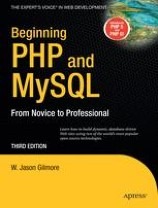
Beginning PHP and MySQL : From novice to professional
Beginning PHP and MySQL: From Novice to Professional, Third Edition offers a comprehensive introduction to two of the most prominent open-source technologies on the planet: the PHP scripting language and the MySQL database server. Updated to introduce the features found in MySQL's most significant release to date, readers will learn how to take advantage of the features of both technologies to build powerful, manageable, and stable web applications. Essentially three books in one, readers will not only profit from extensive introductions to the core features of each technology, but also learn how to effectively integrate the two in order to build robust data-driven applications.
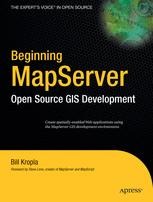
Beginning MapServer : Open Source GIS Development
Beginning MapServer: Open Source GIS Development is the first book of its kind. It offers a comprehensive introduction to MapServer, the development platform for integrating mapping technology into Internet applications. You'll learn how to build and extend dynamic applications using popular languages like PHP, Perl, and Python. After a thorough introduction to installation and configuration, you'll uncover basic MapServer topics and examples. You'll also learn about advanced MapServer features, and how to query and incorporate dynamic data into your application. The book culminates with the creation of an actual mapping application.
Beginning jOOQ : Learn to Write Efficient and Effective Java-Based SQL Database Operations
Learn to use the jOOQ library to manage SQL database operations in Java and JVM applications. This book walks you through what JOOQ is, how to install and get started with it, and then gets you working with it. You will: Comparing equivalent features between Hibernate, JPA and jOOQ. Unlock the power of your SQL database with high performing, flexible and typesafe SQL queries. Seamlessly work with many different SQL database vendors without changing your code. Effortlessly generate Java code based on the content of your database. Write reactive SQL database access code with R2DBC. Integrating jOOQ into popular frameworks and platforms like Hibernate, Spring boot and Quarkus tools like IDEs. Testing jOOQ-based code with modern integration testing frameworks like TestContainers and Docker. Learn how to safely handle data access code within frameworks like the Java Persistence API (JPA)
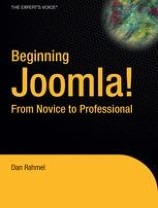
Beginning Joomla! : From novice to professional
Beginning Joomla! answers many of the questions you're sure to have, guiding you through the process of creating your own design templates, adding and managing content, and adding popular community features such as article commenting, user profile management, and forums.
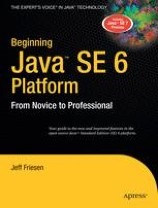
Beginning Java™ SE 6 Platform : From novice to professional
Beginning Java™ SE 6 Platform: From Novice to Professional steers you through the maze of Java Standard Edition (SE) 6 features. The first chapter sets the stage by introducing Java SE 6 in terms of its name change, themes, an overview, and a sampling of new features. It also briefly discusses the first two Java SE 6 updates.
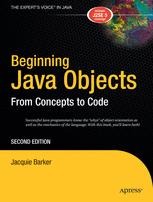
Beginning Java Objects : From concepts to code
Learning to design objects effectively with Java is the goal of Beginning Java Objects: From Concepts to Code, Second Edition. Plenty of titles dig into the Java language in massive detail, but this one takes the unique approach of stepping back and looking at fundamental object concepts first. Mastery of Java—from understanding the basic language features to building complete industrial-strength Java applications—emerges only after a thorough tour of thinking in objects. The first edition of Beginning Java Objects has been a bestseller; this second edition includes material on the key features of J2SE 5, conceptual introductions to JDBC and J2EE, and an in-depth treatment of the critical design principles of model-data layer separation and model-view separation.
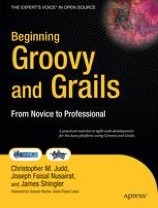
Beginning Groovy and Grails : From novice to professional
Web frameworks are playing a major role in the creation of today's most compelling web applications, because they automate many of the tedious tasks, allowing developers to instead focus on providing users with creative and powerful features. Java developers have been particularly fortunate in this area, having been able to take advantage of Grails, an open source framework that supercharges productivity when building Java–driven web sites. Grails is based on Groovy, which is a very popular and growing dynamic scripting language for Java developers and was inspired by Python, Ruby, and Smalltalk.
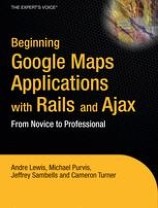
Beginning Google Maps Applications with Rails and Ajax : From novice to professional
Beginning Google Maps Applications with Rails and Ajax: From Novice to Professional is the first book to comprehensively introduce the service from a developer perspective, showing you how you can integrate mapping features into your Rails-driven web applications. Proceeding far beyond simplistic map display, youll learn how to draw from a variety of data sources.
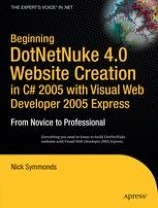
Beginning DotNetNuke 4.0 Website Creation in C# 2005 with Visual Web Developer 2005 Express : From novice to professional
The book takes you through the steps necessary to get an internal web portal running for employee use. If you have some programming experience and creativity, this book will help you expand your business presence in a short amount of time. It features simple explanations and proof-of-concept examples throughout. The book concludes with the creation of a web portlet that you can plug into an external website for a web presence.
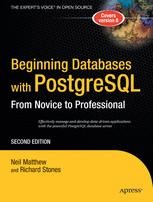
Beginning Databases with PostgreSQL : From novice to professional
The book continues with a complete tutorial on PostgreSQL features and functions and include information on database construction and administration. Key features such as transactions, stored procedures and triggers are covered, along with many of the capabilities new to version 8. To help you get started quickly, step-by-step instructions on installing PostgreSQL on Windows and Linux/UNIX systems are included. In the remainder of the book, we show you how to make the most of PostgreSQL features in your own applications using a wide range of programming languages, including C, Perl, PHP, Java and C#. Many example programs are presented in the book, and all are available for download from the Apress web site. By the end of the book you will be able to install, use, and effectively manage a PostgreSQL server, design and implement a database, and create and deploy your own database applications.
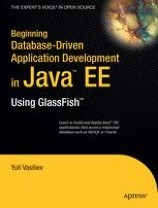
Beginning Database-Driven Application Development in Java EE : Using GlassFish™
The book explains in detail how you can organize your Java EE solution into a multilayer architecture, placing most emphasis on how to implement the persistence and database tiers of an application. Through many examples, this book shows how you can efficiently use the Java Persistence features available in the Java EE platform. Find out how you can greatly simplify the task of building the persistence layer of your Java EE application by moving some application logic into the underlying database, utilizing database views, stored programs, and triggers. The book also explains how to deploy Java EE applications to GlassFish, a free, open source Java EE 5–compliant application server.
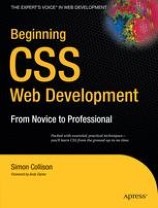
Beginning CSS web development : From novice to professional
There are many books out there on CSS, but Beginning CSS Web Development is different—it doesn't waste time discussing theory, and it delves straight into the practical matter. It provides you with what you need to know, faster. It is also completely up to date, covering the most modern CSS standards and design techniques. In addition to the essential CSS basics, this book covers advanced techniques like accessibility, hacks, and filters. The book concludes with a case study, and features a CSS reference section that allows you to look up required syntax as quickly as possible.
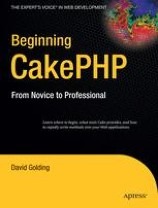
Beginning CakePHP : From novice to professional
CakePHP is a leading PHP–based web app development framework. When asking a question on forums or chat rooms, many CakePHP beginners get little help from the experts. Simple questions can get a response like, “Well, just read the online manual and API.” Unfortunately, the online manual is depreciated, and who wants to absorb a programming language or framework from an API? Beginning CakePHP will do the following: Lead you from a basic setup of CakePHP to building a couple applications that will highlight CakePHP’s functionality and capabilities without delving too deeply into the PHP language, but rather what the CakePHP framework can offer the developer. Teach you to use CakePHP by incorporating advanced features into your web development projects.
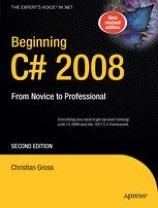
Beginning C# 2008 : From novice to professional
This book is for anyone who wants to write good C# code—even if you have never programmed before. Writing good code can be a challenge—there are so many options, especially in a .NET language like C#. If you want to really get the best from a programming language, you need to know which features work best in which situations, and understand their strengths and weaknesses. It is this understanding that makes the difference between coding and coding well. Beginning C# 2008: From Novice to Professional, Second Edition has been written to teach you how to use the C# programming language to solve problems. From the earliest chapters and the first introductory concepts, you'll be looking at real–world programming challenges and learning how C# can be used to overcome them.
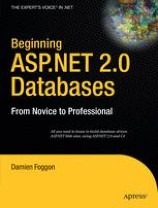
Beginning ASP.NET 2.0 Databases : From novice to professional
Beginning ASP.NET 2.0 Databases: From Novice to Professional is a comprehensive introduction to connecting a website to many different data sourcesnot just databases. You'll learn how to build a relational database, use SQL to communicate with it, and leverage both in your web applications. You'll also learn about the new features of ADO.NET and ASP.NET in .NET 2.0. The authors cover mission-critical issues, such as design, transactions, error handling, optimization, and scalability. They examine SQL Server, Jet, and MySQL databases, and highlight the differences among them.
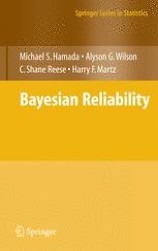
Bayesian reliability
Bayesian Reliability presents modern methods and techniques for analyzing reliability data from a Bayesian perspective. The adoption and application of Bayesian methods in virtually all branches of science and engineering have significantly increased over the past few decades. This increase is largely due to advances in simulation-based computational tools for implementing Bayesian methods. The authors extensively use such tools throughout this book, focusing on assessing the reliability of components and systems with particular attention to hierarchical models and models incorporating explanatory variables. Such models include failure time regression models, accelerated testing models, and degradation models. The authors pay special attention to Bayesian goodness-of-fit testing, model validation, reliability test design, and assurance test planning. Throughout the book, the authors use Markov chain Monte Carlo (MCMC) algorithms for implementing Bayesian analyses--algorithms that make the Bayesian approach to reliability computationally feasible and conceptually straightforward.
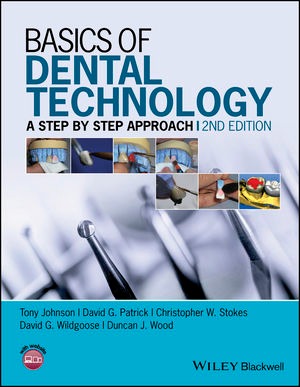
Basics of dental technology : a step by step approach
A complete reference for the current techniques and materials used in dental technology. Retains the accessible, task-based approach and step-by-step guidance. Features digital dental technology and an interactive student website to support self-assessment. Explains key competencies, concepts, instruments, and equipment, and also introduces more specialist techniques and procedures, such as denture prosthetics, fixed prosthodontics and orthodontic work. Provides essential information for trainee dental technicians and students learning about dental technology, including study tips and strategies for working effectively within a dental team
