


Refine Results
Sort By
From
To

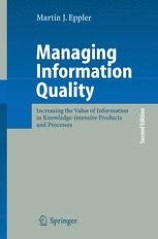
It still holds true: information is not always the answer. Information is often part of the problem. While the main goal of information in the business place is to - able adequate decisions and actions, it can also lead to numerous negative effects: it can confuse, block creativity, or it can lead to hectic activism, stress and fatigue. Information can distract and divert attention, and it may even delay important - cisions – the paralysis by analysis. Strategies to avoid these dysfunctional effects of information can be divided into sender-based strategies and receiver-based strategies.
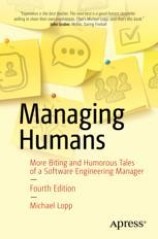
Expands on the previous editions’ explorations of management essentials including handling stress, building diverse teams, running inclusive meetings, and how to lead in times of crisis. The education of a great leader never stops, and Lopp applies crucial insights to help continue your never-ending leadership education. Whether it is approaching a myriad of engineering personalities or handling unexpected conflict, you will come away with the wisdom to handle any team situation.
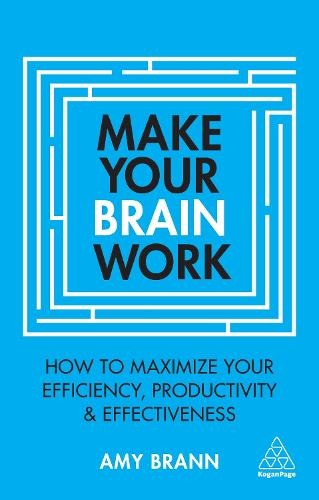
This entertaining book will help you reduce the stress and overwhelm of poor time management, and help get you to that next professional level. Including brand-new content on developing resilience and creativity, and managing your work-life balance, now it's even easier to Make Your Brain Work!
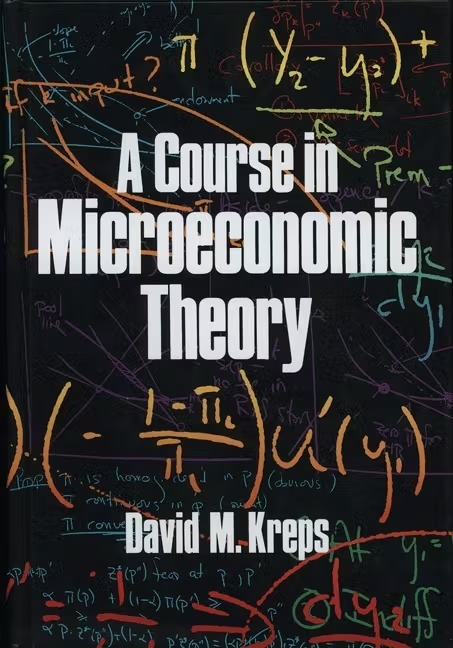
Offers a treatment of microeconomic theory - one that stresses the behavior of the individual actor in various institutional settings. This book begins with an exposition of the standard models of choice and the market. It is designed for the first-year graduate microeconomic theory course and is accessible to advanced undergraduates as well.

Tax laws are constantly changing, but you don’t have to pore over piles of legislation to file your tax accurately and completely — that’s what Mr. Taxman is here for. Don’t let yourself become one of the people who overpay. Find out what you actually owe, and prepare for even better savings next year. This guide removes the stress and confusion from tax season and helps you file on time with no mistakes. Whether you're an individual, married couple,
takes an entirely new approach to teaching this essential topic for Architects, Designers and Building Engineers. Written to prepare students for the real world and packed with practical examples, the book will foster an understanding of specific issues that are critical to those features of technical systems that most directly affect design. The book stresses the ever-present nature of these systems: they are everywhere, all the time. Taking a design oriented view, it outlines what can and cannot be done, and provides the student with the know-how and confidence to defend and promote their design intent when working with other industry professionals.
“Materials for springs” is basically intended for engineers related to spring materials and technologies who graduated from metallurgical or mechanical engineering courses in technical high school, or in other higher engineering schools, as well as those who are related to the purchase or sales of spring materials. The first chapter introduces into the fundamental selection processes of spring materials including the information sources on materials database. It is followed by the basic mechanisms and theories of spring failures such as fatigue fracture, creep/stress relaxation and stress corrosion cracking of metallic materials.

The first part of the book deals with the geometrical description of uniform bodies and their homogeneity (i.e., integrability) conditions. In the second part, a theory of material evolution is developed and its relevance in various applied contexts discussed. The necessary geometrical notions are introduced as needed in the first two parts but often without due attention to an uncompromising mathematical rigour. This task is left for the third part of the book, which is a highly technical compendium of those concepts of modern differential geometry that are invoked in the first two parts (differentiable manifolds, Lie groups, jets, principal fibre bundles, G-structures, connections, frame bundles, integrable prolongations, groupoids, etc.).

MASS TERMS, COUNT TERMS, AND SORTAL TERMS Central examples of mass terms are easy to come by. 'Water', 'smoke', 'gold', etc. , differ in their syntactic, semantic, and pragmatic properties from count terms such as 'man', 'star', 'wastebasket', etc. Syntactically, it seems, mass terms do, but singular count terms do not, admit the quantifier phrases 'much', 'an amount of', 'a little', etc. The typical indefinite article for them is 'some' (unstressed)!, and this article cannot be used with singular count terms. Count terms, but not mass terms, use the quantifiers 'each', 'every', 'some', 'few', 'many'; and they use 'a(n)' as the indefinite article. They can, unlike the mass terms, take numerals as prefixes.
This monograph firstly provides a detailed description of the constitutive equation of masonry-like materials, clearly setting out its most important features. It then goes on to provide a numerical procedure to solve the equilibrium problem of masonry solids.

In the paper the author attempts to assess the fatigue life of chosen welded joints. It focuses especially on chosen problems that accompany deter- nation of the fatigue life of welded joints, taking into consideration the strain energy density parameter.
This book stresses learning and teaching, rather than teaching and learning. The contention of the contributors is that the focus in all educational endeavours should not be primarily on teachers and teaching, but on learners; how to best facilitate learning, in the most effective, enjoyable, relevant and cost-effective ways for learners, whether they be children, youth or adults. The focus is therefore on how learning can be enhanced, through effective teaching; and how individuals can be best prepared to be excellent teachers.
Il presente testo intende chiarire misconoscimenti e riduzionismi che paralizzano il pur auspicato mutamento della medicina e le sue articolazioni in differenti professionalità. La Psicologia Clinica si pone come chiave per leggere la mentalità collettiva che sottende l’attuale cultura sanitaria medicalizzante, che si scontra con le esigenze della persona umana, negando, oltretutto, quanto la psicosomatica oggi ci dice circa la costante modulazione psichica di tutti i processi organici, nella salute così come in tutte le malattie. L’umanizzazione della medicina non è un surplus eticamente giusto per il malato: è un indispensabile agente terapeutico. La sua mancanza è iatrogena.

This collection ot ten tutorial reviews by leading researchers in the field introduces and renews recent advances on irreversible deformation phenomena in solid state and soft condensed matter physics. The focus in applications is on amorphous materials, crystalline solids under stress and more generally, elastic manifolds driven by external processes. This book addresses in particular nonspecialists and graduate students wishing to enter the field.
This book deals with the mechanical and physical behavior of composites as influenced by composite geometry. This monograph provides a comprehensive introduction for researchers and students to modern composite materials research with a special emphasis on the influence of geometry to materials properties. Composite Materials enables the reader to a better understanding of the behavior of natural composites, improvement of such materials, and design of new materials with prescribed properties.

This book stresses the unity of electromagnetic theory with electric and magnetic fields developed in parallel. SI units are used throughout and considerable use is made of tensor notation and the Levi-Cevita symbol. To more closely display the parallelism, extensive use is made of the scalar magnetic potential particularly in dealing with the Laplace and Poisson equation. 85 worked problems illustrate the theory. Conformal mappings are dealt with in some detail. Relevant mathematical material is provided in appendices.
This sequel to the authors’ Psychological Knowledge in Court offers a welcome expansion on key concepts, terms, and issues in causality, bringing much needed clarity to psychological injury assessments and the legal contexts that employ them. Focusing on PTSD, traumatic brain injury, and chronic pain (and grounding readers in salient U.S. and Canadian case law), Causality sets out a multifactorial causality framework to facilitate admissibility of psychological evidence in court. Issues concerning malingering are examined in depth, as are clinical gray areas that can jeopardize validity. At the same time, the book clearly explains what lawyers and clinicians need to understand about each other’s work—of crucial importance since the two sides often seem to speak at cross-purposes.

Cathodic Arcs: From Fractal Spots to Energetic Condensation is the first book in over a decade dedicated to the physics and technology of cathodic arcs. It includes a detailed account of arc history, a textbook-like introduction to cathode phenomena, and some basic physics of expanding plasmas; it deals with the infamous macroparticle issue and describes a host of practical plasma filter solutions. In contrast to previous books on cathodic arcs, the focus is on the relation of arc plasmas and their properties to surface modification and thin film deposition. The book contains sections on basic plasma physics and thin film materials science. It also deals with practical issues of coatings such as stress control and the often-underrated issue of the coating’s color. By stressing the fractal nature of cathode spots, the theme of fluctuations can be found throughout the book: fluctuations affect all plasma properties and thereby have consequences for plasma-based surface modifications and film growth.

Biology and Mechanics of Blood Flows presents the basic knowledge and state-of-the-art techniques necessary to carry out investigations of the cardiovascular system using modeling and simulation. Part I of this two-volume sequence, Biology, addresses the nanoscopic and microscopic scales. The nanoscale corresponds to the scale of biochemical reaction cascades involved in cell adaptation to mechanical stresses among other stimuli. The microscale is the scale of stress-induced tissue remodeling associated with acute or chronic loadings. The cardiovascular system, like any physiological system, has a complicated three-dimensional structure and composition. Its time dependent behavior is regulated, and this complex system has many components.
Atomistic Modeling of Materials Failure is an introduction to molecular and atomistic modeling techniques applied to solid deformation and fracture. Focusing on a variety of brittle, ductile and geometrically confined materials, this detailed overview includes computational methods at the atomic scale, and describes how these techniques can be used to model the dynamics of cracks, dislocations and other deformation mechanisms.

Daraa Highway - Ghabagheb - Syria
+963-15 2050 - 15 860 380 /1/2/3 - 11 662 3900