


Refine Results
Sort By
From
To


Presents specific aspects of how fracture mechanics is used to address fatigue crack growth, environment assisted cracking, and creep and creep-fatigue crack growth. Other topics include mixed-mode fracture and materials testing and selection for damage tolerant design, alongside in-depth discussions of ensuring structural integrity of components through real-world examples. There is a strong focus throughout the book on the practical applications of fracture mechanics. It provides a clear description of the theoretical aspects of fracture mechanics and also its limitations.

Contrary to popular belief marketing effectiveness is not just about the measuring of ROI. The lens of effectiveness must be applied to all marketing mix elements, from strategy to pricing and product, to media and advertising. It's a strategic shift that demands robust evidence-based decisions and consistent application in order to grow. Written by leading marketing practitioner, Sorin Patilinet, this book enables mid-senior level marketers to integrate the scientific methods and advanced measurements required for true marketing effectiveness into their marketing strategies, in order to reap the benefits of strong customer understanding and developing decision-making processes for growth. Covering everything from neuroscience and its application to marketing to advanced analytics and machine learning models, this book provides a comprehensive practical guide for marketers.

India’s telephone network is the second largest in the world, next to China. Over the last decade, these emerging economies have been the drivers of growth in the world economy. Therefore foreign companies have been rushing to invest in these countries more or less successfully.Kiruba Jeyaseeli Benjamin Levi highlights why the Indian telecom market is so attractive to foreign investors. She describes the rules and regulations for telecoms in India, and examines the reasons for success and failure of the foreign telecom companies in India.

In this volume economists, ecology experts, geographers, agronomists, sociologist, and business experts come together to address marginality. The inter-disciplinary research offers conceptual innovations and presents the dimensions of marginality in developing countries. Economic, political, and environmental drivers are assessed and mapped globally and in detail for countries in Africa and Asia, especially Ethiopia, India, Bangladesh, China, Indonesia. Economic growth especially in rural areas remains and farming communities is central to poverty reduction but needs to be complemented with specific actions to reach those at the margins.

This book showcases examples of excellent manufacturing companies who have succeeded in creating value and job growth in Western Europe. The examples show managers of industrial firms how a clearly articulated strategic position can be combined with excellent execution to achieve competitiveness in Europe, in spite of the usually cited disadvantage of high labor costs and rigidity. Not every company is alike — strategic positions differ, and the means of execution differ, but what is common is a clear plan together with mobilization of all employees to apply their abilities in supporting this common plan. The book is indispensable reading for all managers that are interested in improving competitiveness.
Growth is the key goal of management. It's not just an indicator of a company's performance, but also the basis for its future success. But growth doesn't just mean getting bigger – it also means getting better. In other words, growth must be profitable, otherwise it destroys the company's value long term. And this is not the only challenge. Growth must also be made continuous. The traditional V-curve paradigm (first downsize, then grow) no longer applies. Today, companies must follow a parallel strategy of growth coupled with reorganization, in the sense of permanently increasing efficiency.
This book encompasses a collection of in-depth analyses showcasing the challenges and ways forward for macroeconomic modelling of R&D and innovation policies. Based upon the proceedings of the EC-DG JRC-IEA workshop held in Brussels in 2017, it presents cutting-edge contributions from a number of leading economists in the field. It provides a comprehensive overview of the current academic and policy challenges surrounding R&D as well as of the state-of-the-art modelling techniques.
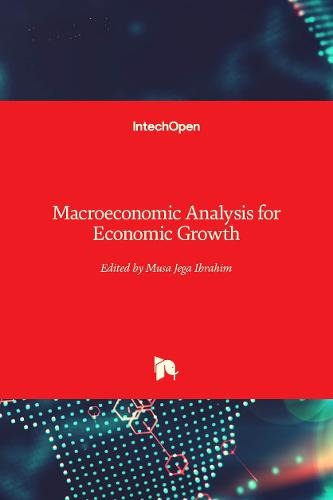
Discusses the essential principles that guide macroeconomic policy formulation and implementation to stimulate strong economic growth for sustainable development, especially for emerging economies. it includes twelve chapters over three sections: "macroeconomics of economic growth", "labour market and employment", and "the financial system and macroeconomic performance". key conclusions illustrate that the efficacy of regulatory frameworks to create enabling conditions for nurturing and bolstering robust value-adding production structures anchored on appropriate macroeconomic management are the fundamental building blocks of strong economic growth.

Explores how to set up an empirical model that helps with forecasting long-term economic growth in a large number of countries. It offers a systematic approach to models of potential GDP that can also be used for forecasts of more than a decade. It is an attempt to fill the wide gap between the high demand for such models by commercial banks, international organizations, central banks and governments on the one hand and the limited supply on the other hand. Frequent forecast failures in the past (e.g. Japan 1990, Asia 1997) and the heavy economic losses they produced motivated the work. The book assesses the large number of different theories of economic growth, the drivers of economic growth, the available datasets and the empirical methods on offer. A preference is shown for evolutionary models and an augmented Kaldor model. The book uses non-stationary panel techniques to find pair-wise cointegration among GDP per capita and its main correlates such as physical capital, human capital and openness.

The book contributes to the debate what role public policies play in stimulating national and regional economic growth. With a better understanding of the complexity and variety of existent entrepreneurship policies in the U.S. and Germany the reader of this volume will be able to formulate best practice, hands-on strategies which aim to promote nations as well as regions in an "entrepreneurial economy".This volume brings together conference contributions of leading academics and policy advisors from the United States and Europe,The volume has the virtue of both providing solid empirical analysis and theoretical underpinning from leading economists,social scientists as well as a fresh perspective on the myths and realities concerning the operation of the U.S
Pharmaceutical giants have doubled their investments in drug development in the past decade only to see new drug approvals remain constant. This book investigates and highlights a set of proactive strategies aimed at generating sustainable competitive advantage based on value-generating business practices. We focus on three sources of pharmaceutical innovation: new management methods in the drug development pipeline, new technologies as enablers for cutting-edge R&D, and new forms of cooperation and internationalization, such as open innovation in the early phases of R&D. Our findings are illustrated by cases from Europe, the US, and Asia.

Companies are constantly searching for new ways of creating higher profit and a larger market share. Growth seems to be the most appropriate tactic for surviving economically in difficult times. New instruments and methods as a support to a company’s growth strategy can be essential in gaining a competitive advantage. Knowledge management is one of the answers to this challenge. It can support strategic goals such as the improvement of efficiency, the minimization of risk and an increase in innovation, but also has inherent potentials which have not been leveraged yet.
International tourism is expected to be a major vehicle of economic development in industrializing countries in the 21st century, especially for Asia. To generate long-term growth, countries with tourism-based economies must develop strategies for employing their comparative advantages to achieve competitive advantages. However, competitiveness in the tourist industry is multi-dimensional and complex. This study evaluates the competitiveness of the Taiwanese tourism sector by a multi-dimensional framework. The theoretical model proposes that the competitiveness of tourist destinations should be composed of Ricardian comparative advantages (like the conditions of natural endowments and the degree of technological change); Porterian competitive advantages; tourism management, i.e., providing high quality education and job training, public goods, support services and reduced transaction costs to enhance comparative and competitive advantages; and environmental conditions.
Do small developing economies, or SDEs, need a specific competition policy to create competitive markets? Against the backdrop of globalization, protectionist policies that promote state ownership and heavy regulation of key industries are proving increasingly ineffective for driving growth. Countries around the world are instituting reforms to promote competition and business creation, yet the economic and political concentration of power, feeble judicial systems, and the scarcity of human and financial resources pose special challenges to SDEs. Competition Policies in Emerging Economies features an in-depth analysis of two strategic industries — telecommunications and banking — in several Central American nations which sheds light on the dynamics of the transition to deregulation and trade liberalization. Examining the lessons learned from these experiences and presenting discussion of political, legal, economic, financial, cultural, and organizational issues, the book provides unique perspectives on competition policy and economic development.
Although being huge by any measure, Chinese Railways are a bottleneck for economic growth in China. The state-owned enterprise returns a small profit but is severely capacity constrained and burdened with inefficiency. A comprehensive reform and efficiency improvement program needs to be developed in order to enable Chinese Railways to support further GDP growth in China. Application of industrial economics to the case of Chinese Railways suggests that moderate deregulation of e.g., the freight business could make Chinese Railways fit for future growth. Operational improvements need to complement this development, such as a redesign of the schedule or the introduction of value added services in the freight business. Based on interviews with Chinese experts, benchmarking with railways in the US, Germany, Russia, and Japan as well as broad coverage of Chinese-language sources, the book makes detailed recommendations on how to design a comprehensive turnaround program for Chinese Railways.
This book is an encyclopaedic analysis of the current and future energy system of the world’s most populous country and second biggest economy. What happens in China impacts the planet. In the past 40 years China has achieved one of the most remarkable economic growth rates in history. Its GDP has risen by a factor of 65, enabling 850,000 people to rise out of poverty.

Business Education in Emerging Market Economies discusses the impact of business education on emerging markets and explores curricular innovation, pedagogical approaches, and strategic alliances in the context of industrializing economies. Emerging markets consist of eighty percent of the world's population and some 75% of its trade growth in the foreseeable future according to the U.S. Department of Commerce. The potential economic growth of emerging markets has prompted a need to understand the dynamics of these markets, their business institutions, and their educational systems. The pressures of globalization and the recent economic reforms that swept across emerging, developing, and transitioning, economies have had a positive impact on the demand for business education and business knowledge from the developed and industrialized countries. As a result, many methods were developed to transfer know-how from the developed markets including learning through imitation, using western style pedagogical approaches, attending universities in industrialized countries, learning through experience and practice, and using information technology. The conclusion we reach is that business and management education in emerging markets is fast changing the way in which these markets operate and are perceived – business educators are catalysts for greater economic integration.
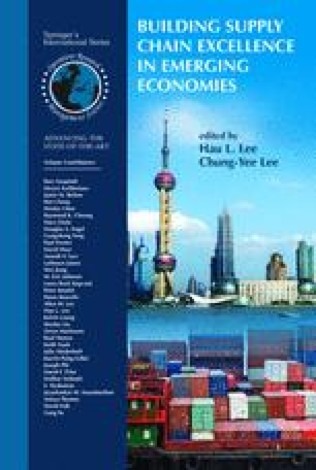
How can we manage supply chains well in emerging economies, coordinate information flows with multiple partners, tackle challenges such as unexpected disruptions, diversify the risks and increase flexibilities, are the topics and issues of the book.

In 2003, Goldman Sachs published a startling report on the BRICs (Brazil, Russia, India, and China) region: These four countries would be larger than the G6 economics within 40 years, muscling their way to economic dominance over the coming decades, and powering past developed countries such as the United Kingdom, Germany, and Japan. This book focuses on the technology and technology-enabled services that underpin this social and economic revolution. The editor analyses the reasons why these four countries are in a unique position to lead a 21st century growth in international services. He then features 12 chapters written by the most important chief executives from the BRICs service economy. Indian technology leaders, such as Nandan Nilekani (Infosys), Shiv Nadar (HCL), and Rajendra Pawar (NIIT), feature alongside their peers from Brazil, Russia, and China outlining their views on the next decade for offshoring.

Broadband is a key enabler of the information society, increasing productivity and competitiveness across all sectors of the economy. Unlike traditional n- rowband connections, broadband provides high speed, always-on connections to the Internet and supports innovative content and services. Direct consumer welfare gains from mass-market adoption of broadband across the EU could easily reach 50 billion euros or more per annum. This is quite apart from the more profound societal shifts that ubiquitous broadband could bring. It may allow the individual to distribute content and ideas independent of traditional media and bring together communities of interest without regard to borders. Public policy for broadband will have a big impact on whether and how quickly these benefits are realised. Getting policy right could bring large benefits for consumers.

Daraa Highway - Ghabagheb - Syria
+963-15 2050 - 15 860 380 /1/2/3 - 11 662 3900