



Page 3
Page 3

Effector-triggered immunity : methods and protocols
Presents a collection of protocols to study effector-triggered immunity (ETI) in both plants and animals from eminent groups in the field. Cover topics such as genetic manipulation of plant and animal pathogens, host cells, and the analysis of key host responses; and techniques used for the analysis of inflammasome activation, cell death pathways, and mitochondria damage in response to pathogens. All of these topics cover a broad spectrum of immunological, biochemical, cell biological, and structural biology approaches to examine ETI.

Effect of Cranberry in the Treatment of E. Coli
Escherichia coli (E. coli) bacteria normally live in the intestines of healthy people and animals. It may cause severe stomach cramps, bloody diarrhoea, vomiting and UTI. You may be exposed to E. coli from contaminated water or food especially raw vegetables and undercooked ground beef. Healthy adults usually recover from infection with E. coli within a week. Young children and older adults have a greater risk of developing a life-threatening form of kidney failure. Cranberries are a popular superfood. People can consume them in the form of a sauce or a juice. They can also add them to stuffing, casseroles, or dessert. In fact, research has linked the nutrients in cranberries to a lower risk of urinary tract infection (UTI), the prevention of certain types of cancer, improved immune function, and decreased blood pressure

Ecology of Social Evolution
This book brings together renowned researchers working on sociality in different animals. For the first time, they compile the evidence for the importance of ecological factors in the evolution of social life, ranging from invertebrate to vertebrate social systems, and evaluate its importance versus that of relatedness. Answers are given to important questions such as: - Which factors favour group living in social invertebrates and vertebrates? - Are there general differences in the evolutionary forces promoting social life in social insects versus cooperatively breeding vertebrates? - Why are there only so few eusocial vertebrates? - Can relatedness within social groups be a by-product arising from the fact that neighbours are generally kin?

Ecology and Behaviour of Mesozoic Reptiles
Our knowledge of extinct animals depends almost entirely upon the study of fossils. This richly illustrated book clothes the skeletons of dinosaurs and other Mesozoic reptiles with flesh, and shows how these fascinating animals evolved and probably lived. Expert provides an interesting synthesis of current views on their ecology, physiology and behaviour, and outlines the various hypotheses that have been proposed to explain their extinction.

Drug residues in animal products
The use of veterinary drugs in food-producing animals has the potential to generate residues in animal derived products (meat, milk, eggs and honey) and poses a health hazard to the consumer. There are many factors influencing the occurrence of residues in animal products such as drug's properties and their pharmacokinetic characteristics, physicochemical or biological processes of animals and their products. The most likely reason for drug residues might be due to improper drug usage and failure to keep the withdrawal period...

Disorders of the Oral Cavity
The oral cavity is the part of the mouth behind the teeth and the gums surrounded by the soft palate, which is the movable layer hanging from the back of the hard palate and ending in the nasal cavity and under the tongue and the mucous membrane connecting it with the inner part of the jaw. It forms the first part of the digestive system. It is considered the entrance of food and drink into the digestive system and an entrance to the air into the respiratory system and it contains the teeth through which the chewing process begins, and on the tongue, which plays a fundamental role in the process of taste and swallowing and is also used by humans in speech to communicate with others, and animals use it to make sounds.

Disease in Wild Animals : Investigation and Management
Wildlife diseases have become increasingly important recently due to their effect upon human health, veterinary medicine, wildlife, and conservation biology. Gary Wobeser's successful book from 1994 has been completely updated and enlarged in a new second edition. An in-depth overview of the available techniques for the investigation and management of disease in free-ranging animals is provided. The subjects are illustrated with examples drawn from around the world, with emphasis on the special requirements involved in working with wild animals. Techniques are assessed critically with regard to their efficacy and effectiveness.

Crimean-Congo Hemorrhagic Fever : A Global Perspective
Crimean-Congo hemorrhagic fever (CCHF) is a tick-borne disease associated with severe hemorrhagic manifestations. CCHF has been referred to as the "Asian Ebola." However, in fact, the disease is one of the most widely distributed tick-borne diseases in the world, occurring in Africa, Asia, Europe, and the Middle East. This volume covers major aspects of this important disease and the virus which causes it. Chapters are written by leading experts in their fields and detail historical, public health, epidemiological, and clinical aspects of CCHF and the genetics and molecular biology of the virus. Additional chapters focus on disease control, tick vectors and infection among animals, both natural and experimental.

COVID-19 and new aspects of treatment that might lower the risks and mortality rate
Coronaviruses are enveloped non-segmented positive-sense RNA viruses belonging to the family Coronaviridae. The human coronavirus infections are mild; the epidemics of the two βcoronaviruses, severe acute respiratory syndrome coronavirus (SARS-CoV) and Middle East respiratory syndrome coronavirus (MERS-CoV) have caused more than ten thousand cumulative cases in the past two decades. There is a new public health crisis threatening the world with the emergence and spread of 2019 novel coronavirus (2019nCoV). The virus originated in bats and was transmitted to humans through yet unknown intermediary animals in Wuhan, Hubei province in China during the month of December 2019. After the pandemic have started the scientists and researchers started immediately to find ways and technics to diagnose the virus in a different analytical and chemical methods to investigate and find out more about the new species

Control of Biofilm Infections by Signal Manipulation
Describes the molecular mechanisms of cell-to-cell communication among bacterial cells in a biofilm, the development of antibiofilm inhibitors, like quorum-sensing inhibitors, and the use of biofilm inhibitors to prevent and treat bacterial infections in humans and other animals.

Co-enzyme Q10
Coenzyme Q10 is a vitamin like substance that has been found in both microorganisms and plants as well as in animals and humans. In this research we will talk about CoenzymeQ10, it’s biochemical functions and roles in health and diseases such as Parkinson, cardiovascular diseases, diabetes, male fertility, cancers , covid19 and immune functions. Some coQ10 determination methods in foods will be discussed. At the last can we use it as asupplement? Does it have an adverse effects and contraindications? and what are the factors that affect on it’s plasma concentrations ? .
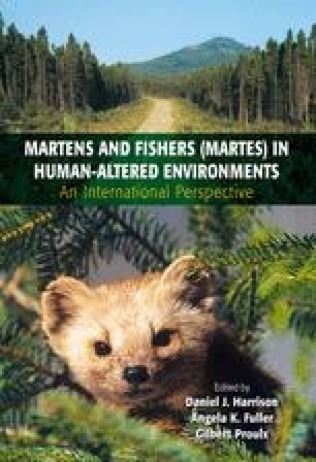
Martens and Fishers (Martes) in human-altered environments : An international perspective
Examines the conditions where humans and martens are compatible and incompatible, and promotes land use practices that allow Martes to be representatively distributed and viable. All Martes have been documented to use forested habitats and 6 species (excluding the stone marten) are generally considered to require complex mid- to late-successional forests throughout much of their geographic ranges. All species in the genus require complex horizontal and vertical structure to provide escape cover protection from predators, habitat for their prey, access to food resources, and protection from the elements. Martens and the fisher have high metabolic rates, have large spatial requirements, have high surface area to volume ratios for animals that often inhabit high latitudes, and often require among the largest home range areas per unit body weight of any group of mammals. Resulting from these unique life history characteristics, this genus is particularly sensitive to human influences on their habitats, including habitat loss, stand-scale simplification of forest structure via some forms of logging, and landscape-scale effects of habitat fragmentation. Given their strong associations with structural complexity in forests, martens and the fisher are often considered as useful barometers of forest health and have been used as ecological indicators, flagship, and umbrella species in different parts of the world. Thus, efforts to successfully conserve and manage martens and fishers are associated with the ecological fates of other forest dependent species and can greatly influence ecosystem integrity within forests that are increasingly shared among wildlife and humans.We have made great strides in our fundamental understanding of how animals with these unique life history traits perceive and utilize habitats, respond to habitat change, and how their populations function and perform under different forms of human management and mismanagement.
Mammalian and Avian Transgenesis : New Approaches
Mammalian and Avian Transgenesis presents a collection of novel methods for the production of a wide range of transgenic animals. The manual focuses largely on mice, but also contains protocols for successful transgenesis in rats, cows, pigs and birds. The manual provides detailed, step-by-step protocols covering all aspects of the production of transgenic animals, including the use of lentiviral vectors in gene transfer, intracytoplasmic sperm injection, nuclear transfer, large insert transgenesis, conditional gene expression systems, the use of reporter genes in transgenesis and transgenesis in large animals and birds. The text is supplemented by superb color photos. While the focus is on newly established techniques, the fundamental methods of transgenesis are also covered for those new to the field. Thus this manual is perfectly suited for those wishing to adopt new technologies in transgenesis.
Low-Dose Radiation Effects on Animals and Ecosystems : Long-Term Study on the Fukushima Nuclear Accident
Brings together the works of radiation biologists and ecologists to provide reliable radioecology data and gives insight into future radioprotection. The book examines the environmental pollution and radiation exposure, and contains valuable data from abandoned livestock in the ex-evacuation zone and from wild animals including invertebrates and vertebrates, aqueous and terrestrial animals, and plants that are subjected to long-term exposure in the area still affected by radiation. It also analyzes dose evaluation, and offers new perspectives gained from the accident, as well as an overview for future studies to promote radioprotection of humans and the ecosystem.
Kantianism for animals : A radical kantian animal ethic
The book gives readers in animal ethics an accessible introduction to Kant’s views on our duties to others, and his view that we have only ‘indirect’ duties regarding animals. It then investigates how one would have to depart from Kant in order to recognise that animals matter morally for their own sake. The result is a deliberately amended version of Kantianism which nevertheless remains faithful to central aspects of Kant’s thought. The book’s final part illustrates the framework’s use in applied contexts, addressing the issues of using animals as mere means, the ethics of veganism and vegetarianism, and environmental protection.
Complexity in landscape ecology
Interactions matter. To understand the distributions of plants and animals in a landscape you need to understand how they interact with each other, and with their environment. The resulting networks of interactions make ecosystems highly complex. Recent research on complexity and artificial life provides many new insights about patterns and processes in landscapes and ecosystems. This book provides the first overview of that work for general readers. It covers such topics as connectivity, criticality, feedback, and networks, as well as their impact on the stability and predictability of ecosystem dynamics. With over 60 years of research experience of both ecology and complexity, the authors are uniquely qualified to provide a new perspective on traditional ecology.

Comparative Hepatitis
This volume reviews today’s knowledge about hepatitis with emphasis on comparative aspects between hepatitis in humans and animals, but also between different etiological agents. This particular viewpoint makes the book relevant for scientists from both human and veterinary medicine, gastroenterologists, pathologists, virologists and students of human and veterinary medicine.
Common Chinese materia medica ; Vol.10
Records 5 species of resin, 74 species of animals, 41 species of minerals and fossils. There are resins such as Liquidambar orientalis, Commiphore myrrha, Boswellia carterii, Garcinia hanburyi; animals such as Solenognathus hardwickii, , Cervus nippon, Scolopendra subspinipes, Cryptotympana pustulata, Agkistrodon acutus, Bombyx mori, Collocalia esculenta, Moschus moschiferus, Hippocampus kelloggi, Gekko gekko; minerals and fossils such as mercury, gypsum, alum, mirabilite, cinnabar, actinolite, calomel, keel, dens draconis, lithodes, fossilia spiriferis.

Chemical residues in food from animal produce
One Health' is an approach to designing and implementing programmers, policies, legislation and research in which multiple sectors communicate and work together to achieve better public health outcomes . The areas of work in which a One Health approach is particularly relevant include food safety, the control of zoo noses (diseases that can spread between animals and humans, such as flu, rabies and Rift Valley Fever), and combating antibiotic resistance (when bacteria change after being exposed to antibiotics and become more difficult to.

Chamomile & insulin nasal spray in the treatment of Alzheimer's disease
Chamomile is one of the most widely used herbs in Western countries, in the present study, we assessed the effect of chamomile combined with insulin on the learning and memory impairments (Alzheimer's disease) induced by scopolamine. The cognition-enhancing effect of chamomile & insulin was investigated using the Y-maze test. Drug-induced amnesia was induced by treating animals with scopolamine. Mix solution administration intranasally reversed scopolamine induced cognitive impairments in mice by the Y-maze test. Moreover, results suggest that the combination of both chamomile and insulin may be a useful cognitive impairment treatment, and its beneficial effects are mediated, in part, via inhibitory effects in vivo on the release of several pro-inflammatory mediators and as a co-absorbent.
