



Page 21
Page 21

Computational intelligence for agent-based systems
In these last years the digital technology explosion has spawned so many new lifestyle models that the boundaries between "real" and "digital" are fiercely debated. This scenario has deeply changed the viewpoint about computer applications: computers become smaller, cheapest and hugely distributed in wired or unwired networks, applications become so flexible and intelligent as to tailor its communication facilities in order to increase the usability of the system. Such data-intensive, unstructured spaces featured by minimal or no centralized control flow, present a challenge for traditional methods of analysis, design and integration of advanced, distributed and intelligent computer systems. Within this challenge, an important role is played by two important research areas : Fuzzy Technology, thanks to its ability to exploit the tolerance for imprecision to achieve tractability and Agent Technology, thanks to its nature to employ agent-wise communities to carry out complex goals by means of smart interaction, cooperation, and pro-activeness.

Computational intelligence and security ; Vol. 3801 ; International Conference, CIS 2005, Xi'an, China, December 15-19, 2005, Proceedings, Part I
The two volume set LNAI 3801 and LNAI 3802 constitute the refereed proceedings of the annual International Conference on Computational Intelligence and Security, CIS 2005, held in Xi'an, China, in December 2005. The 338 revised papers presented - 254 regular and 84 extended papers - were carefully reviewed and selected from over 1800 submissions. The first volume is organized in topical sections on learning and fuzzy systems, evolutionary computation, intelligent agents and systems, intelligent information retrieval, support vector machines, swarm intelligence, data mining, pattern recognition, and applications.

Computational intelligence and security ; International Conference, CIS 2006, Guangzhou, China, November 3-6, 2006, Revised selected papers
It covers bio-inspired computing, evolutionary computation, learning systems and multi-agents, cryptography, information processing and intrusion detection, systems and security, image and signal processing, and pattern recognition.

Computational intelligence : A compendium
Computational Intelligence paradigms have proven effective on real-world problems in virtually all disciplines including Science, Engineering, Business, healthcare, Management and Avionics. This handbook includes contributions from the leading international experts in their respective fields. There are twenty five chapters grouped in the following ten parts covering theoretical aspects and practical applications.

Combating Antibiotic Resistance : Report to the President and National Strategy
Antibiotics, in particular, have saved millions of lives. This book discusses combating antibiotic resistance and provides reports to the presidents and national strategies.

Cognitive Vision Systems : Sampling the Spectrum of Approaches
This volume is a post-event proceedings volume and contains selected papers based on the presentations given, and the lively discussions that ensued, during a seminar held in Dagstuhl Castle, Germany, in October 2003. Co-sponsored by ECVision, the cognitive vision network of excellence, it was organized to further strengthen cooperation between research groups from different countries, and scientists active in related areas were invited from around the world.

Cognitive Economics
As a manifestation of a 'cognitive turn' observable in all social sciences, Cognitive Economics is concerned with the beliefs and mental operations held by actors placed within a dynamical and strategic environment. It appears as a synthesis of an educative research program, dealing with crossed expectations of actors, and an evolutionist research program on collective learning processes. The book mainly aims at extending the framework of game theory in order to better fit the results of rapidly increasing laboratory experiments concerned with individual choices and collective interactions. It also seeks to better explain some original economic phenomena involving boundedly rational agents in an institutional setting such as financial bubbles, job search or technological innovation.

Materials, Chemicals and Methods for Dental Applications
Focuses on the materials used for dental applications looking at the fundamental issues and the developments that have taken place the past decade. While it provides a broad overview of dental materials, the chemicals that are used for the preparation and fabrication of dental materials are explained as well. Also, the desired properties of these materials are discussed and the relevance of the chemical, physical, and mechanical properties is elucidated. Methods for the characterization and classification, as well as clinical studies are reviewed here. In particular, materials for dental crowns, implants, toothpaste compositions, mouth rinses, as well as materials for toothbrushes and dental floss are discussed. For example, in toothpaste compositions, several classes of materials an chemcials are incorporated, such as abrasives, detergents, humectants, thickeners, sweeteners, coloring agents, bad breath reduction agents, flavoring agents, tartar control agents, and others. These chemicals, together with their structures, are detailed in the text.

Markell & Voge's Medical Parasitology
An updated and fresh look that highlights the comprehensive material students have trusted for over 40 years. Completely redrawn line drawings and improved halftones provide visual examples related directly to the textual material. The content explores the etiologic agents of human disease belonging to the animal kingdom: protozoa, helminths (worms), and arthropods (insects and spiders), all of which are a significant cause of, or link to illness encountered both in tropical and temperate environments.
Management Andragogics 2 : Zurich Living Case
At a time when managers often provide fodder for unseemly headlines, and some are even compared unflatteringly with locusts, today’s business leaders are called upon as never before to demonstrate the moral justification for their activities, and to ensure that it is understood by all the key stakeholders of a company. What is required is nothing less than a management renaissance, based on a thoroughgoing concept of corporate leadership; there is no less a need for decision makers who hold themselves to the highest standards, with a positive perception of their fu- tion as agents of dissemination, and who are committed to the good not only of “their” firm, but also of society in general.
Male Sexual Function : A Guide to Clinical Management
Male Sexual Function: A Guide to Clinical Management, Second Edition, completely updates and reviews newer developments, including linking erectile dysfunction (ED) with lower urinary tract systems, advances in erectile physiology, and the appreciation of ED as a form of endothelial dysfunction and a harbinger of other potentially lethal forms of vascular disease. Treatments of ED as well as the background, causes, associated conditions, and diagnostic tools are also provided. This new updated edition also presents the facts of sexual function and dysfunction so that the practitioner can properly treat basic problems with easily prescribed therapies. Also included is a new chapter on cardiovascular disease as well as chapters on pelvic surgeries, intracavernous injections with vasoactive agents, and vacuum erection devices.
Magnetic resonance angiography : techniques, indications and practical applications
The advent of contrast-enhanced MRA in the early to mid 1990s revolutionized the clinical approach to vascular imaging: an accurate non-invasive imaging modality, not requiring ionizing radiation or potentially nephrotoxic iodinated contrast media, was able to compete with the more hazardous and invasive catheter angiography. Today, MRA is a safe, easy-to-perform procedure routinely used in most imaging centers, and the continued development of faster, more powerful magnets and more effective contrast agents is increasingly helping to overcome many of the early limitations of the technique.

Machine Learning for Multimodal Interaction ; 4th International Workshop, MLMI 2007, Brno, Czech Republic, June 28-30, 2007, Revised Selected Papers
This book contains a selection of revised papers from the 4th Workshop on Machine Learning for Multimodal Interaction (MLMI 2007), which took place in Brno, Czech Republic, during June 28 30, 2007. As in the previous editions of the MLMI series, the 26 chapters of this book cover a large area of topics, from multimodal processing and human computer interaction to video, audio, speech and language processing. The application of machine learning techniques to problems arising in these felds and the design and analysis of software

Machine Learning for Cyber Agents : Attack and Defence
The cyber world has been both enhanced and endangered by AI. On the one hand, the performance of many existing security services has been improved, and new tools created. On the other, it entails new cyber threats both through evolved attacking capacities and through its own imperfections and vulnerabilities. Moreover, quantum computers are further pushing the boundaries of what is possible, by making machine learning cyber agents faster and smarter.
Long Memory in Economics
When applying the statistical theory of long range dependent (LRD) processes to economics, the strong complexity of macroeconomic and financial variables, compared to standard LRD processes, becomes apparent. In order to get a better understanding of the behaviour of some economic variables, the book assembles three different strands of long memory analysis: statistical literature on the properties of, and tests for, LRD processes; mathematical literature on the stochastic processes involved; models from economic theory providing plausible micro foundations for the occurence of long memory in economics. Each chapter of the book will give a comprehensive survey of the state of the art and the directions that future developments are likely to take. Taken as a whole the book provides an overview of LRD processes which is accessible to economists, econometricians and statisticians.

Logic, Thought and Action
Contribute to our understanding of this dynamic process by clearly presenting and discussing the most important hypotheses, issues and theories in philosophical and logical study of language, thought and action. Among the fundamental issues discussed are the rationality and freedom of agents, theoretical and practical reasoning, individual and collective attitudes and actions, the nature of cooperation and communication, the construction and conditions of adequacy of scientific theories, propositional contents and their truth conditions, illocutionary force, time, aspect and presupposition in meaning, speech acts within dialogue, the dialogical approach to logic and the structure of dialogues and other language games, as well as formal methods needed in logic or artificial intelligence to account for choice, paradoxes, uncertainty and imprecision.
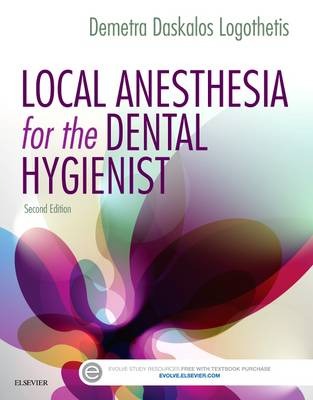
Local anesthesia for the dental hygienist
Provides complete instructions for the safe and effective administration of local anesthesia. Written by noted dental hygiene educator Demetra Logothetis, the first edition won a 2012 PROSE Honorable Mention award. This edition adds a new chapter on children and adolescent patients, plus new coverage of anesthetic agents and advanced techniques.

Liver carcinogenesis : Methods and protocols
Discusses the latest advancements in modern methodologies used to study liver carcinogenesis. The first half of this book describes pertinent preclinical models of hepatocellular carcinoma (HCC) and cholangiocarcinoma (CCA), established either through orthotopic induction of ectopic implantation. The second half of this book covers a diverse array of techniques applied to characterize the biochemical and cellular composition of hepatic malignancies that operate at the single-cell and histological levels. Written in the highly successful Methods in Molecular Biology series format, chapters include introductions to their respective topics, lists of the necessary materials and reagents, step-by-step, readily reproducible laboratory protocols, and tips on troubleshooting and avoiding known pitfalls.

Lippincott illustrated reviews : Pharmacology
Presents up-to-date drug information in an accessible format ideal for a fast, effective refresher. Part of the popular Lippincott® Illustrated Reviews series, this concise resource features clear, effective writing and hundreds of illustrations that break down complex information for rapid review. Sequential images present mechanisms of action and focus on showing rather than telling students how drugs work, and review questions with answers deliver powerful, practical exam preparation. Updated drug information reflects the most current, clinically relevant pharmacology material. Approachable outline format distills complex information for easier review. High-quality illustrations reinforce understanding in vibrant detail. Enhanced review questions with answers test students' understanding and identify areas for further study.
Linguistics for the age of AI
One of the original goals of artificial intelligence research was to endow intelligent agents with human-level natural language capabilities. Recent AI research, however, has focused on applying statistical and machine learning approaches to big data rather than attempting to model what people do and how they do it. In this book, Marjorie McShane and Sergei Nirenburg return to the original goal of recreating human-level intelligence in a machine. They present a human-inspired, linguistically sophisticated model of language understanding for intelligent agent systems that emphasizes meaning—the deep, context-sensitive meaning that a person derives from spoken or written language.
