


Refine Results
Sort By
From
To

Explores the past, present, and future of artificiality and sustainability in entrepreneurship – the unforeseen consequences and ways to advance to a sustainable future. In particular, it connects artificiality, sustainability and entrepreneurship, intertwining artificial with the specific phenomenon of those novel digital technologies that provoke continuous and significant change in our lives and business. Unlike digital entrepreneurship research, which focuses on digital technology development and management, this book covers processes and mechanisms of sustainable adaptability of entrepreneurs, the business logic of start-ups, and the collaborative behaviours under the mass digital transformation, including the prevalence of artificial intelligence. Some of the questions that this book answers are as follows: How has entrepreneurship reacted to such challenges previously? What lessons have been learned and need to be carried forward? How can entrepreneurship and the artefacts of entrepreneurship respond to current challenges? What should be the mindset of the entrepreneur to assure sustainable adaptation? How to embrace and embed the new business logic?
The topics addressed in this book are of vital importance to the survival of humankind. Agricultural biodiversity, encompassing genetic diversity as well as human knowledge, is the base upon which agricultural production has been built, and protecting this resource is critical to ensuring the capacity of current and future generations to adapt to unforeseen challenges. Agricultural biodiversity underpins the productivity of all agricultural systems and is particularly important for poor and food-insecure farmers, who maintain highly diverse production systems in response to the marginal and risky production conditions they operate under. Understanding the importance of agricultural biodiversity in the livelihoods of the food insecure and enhancing its performance through the use of a variety of tools, including biotechnology, is a critically important issue in the world today

Takes a taxpayer's perspective to the relations taxation creates between people and their state. Larsen proposes that in order to understand tax compliance and cheating, we have to look beyond law, psychological experiments and surveys to include tax collectors and taxpayers' practices. The text explores the view of taxes seen as citizen’s explicit economic relation to the state and implicit economic relation to all other compatriots. Larsen suggests how to build and increase tax compliance if we take the idea of taxation creating reciprocal relations seriously.
Architectural Colossi and the Human Body discusses the role of Platonic and Cartesian philosophy and how philosophers such as Heidegger and Merleau-Ponty, and theoreticians such as Frascari and Pallasmaa, have seen, described and analysed the human body and the role of architecture and perception. Drawing upon three key case studies and by employing theoretical ideas of Venturi and others, this book will provide an understanding of the role of anthromorphism and the relation and use of the human body with reference to selected architects and artists.

On the occasion of the annual Swiss Federal Design Competition, the Federal Office of Culture is realizing a publication and an exhibition - this year in collaboration with the Musée de design et d'arts appliqués contemporains in Lausanne. They serve as platforms to present and document all award winners and their award-winning works. Works from the fields of fashion, textiles, graphics, illustration, photography, product design and jewelry can be seen.

MARSWALK ONE: First Steps on a New Planet addresses the question of why we should embark on a journey to Mars, documenting what the first human crew will do when they place their feet in the red dust of the planet. The book also addresses why we need to carry out these tasks and, more importantly, what a human crew could achieve that an automated mission could not. Understanding the clear benefits of sending a human crew to the surface of Mars, and how these benefits can be seen back on Earth, is the key to sustained long-term public and political support for the programme in terms of cash and commitment. The book accepts that the journey will be made, but does not specify precisely when. Flight time, and how to get to and from the planet are discussed briefly, to understand why the suggested duration spent at Mars is reasonable. The main objective of the work is to look at what science will be done on the surface – supported by orbital operations – and what hardware and technology will be employed to achieve the mission objectives. This analysis is drawn from previous experiences in manned and unmanned space programmes, including Apollo, Skylab, Salyut/Mir, Shuttle and ISS, Viking, Luna/Lunokhod, and recent Mars missions such as Pathfinder and Global Surveyor.

The search for marine natural products is well-known for colorful pictures of exotic creatures which, after having been found to contain the cure for cancer, disappear into the depths, never to be seen again, or for accounts of scuba-diving chemists in waters alive with poisonous sea snakes - in short, the sort of sensational stuff that even nonchemists find interesting. That sort of thing will not be found in this book.
The goals of the workshop included a discussion of the state of the science in identification of new research and approaches for water pollution events and communication of the management of water pollution and sustainability of water resources. Critical to management of accidental and intentional pollution events is the assessment of the risk, an understanding of the hazards and lessons learned from events which may lead to preventative management and control strategies. Public health protection will ultimately be improved by the ability to develop management frameworks which are flexible and adaptable to the specific region, country or watershed problems and concerns and allow for prioritization in the decision making. The integration of scientific information regarding the types of hazards the environmental fate of the chemical/biological, exposure pathways and human and ecosystem impacts may be implemented from both a qualitative or descriptive approach or using a more classical quantitative risk assessment paradigm. Thus the frameworks for assessing the risk and managing the risk may be seen as preventive, early warning and responsive.

The Human Condition-in-the-unity-of-everything-there-is-alive, under whose aegis the present selection of essays falls, offers the urgently needed new approach to reinvestigating humanness. While recent advances in the neurosciences, genetics and bio-engineering challenge the traditional abstract conception of "human nature", indicating its transformability, thus putting in question the main tenets of traditional philosophical anthropology, in the new perspective of the Human Creative Condition the human individual is seen in its emergence and unfolding within the dynamic networks of the logos of life, and within the evolution of living types.

Presents logical foundations for rule-based systems, as seen by the Author. An attempt has been made to provide an in-depth discussion of logical and other aspects of such systems, including languages for knowledge representation, inference mechanisms, inference control, design and verification.

Lipids are as important for life as proteins, sugars, and genes. The present book gives a multi-disciplinary perspective on the physics of life and the particular role played by lipids and the lipid-bilayer component of cell membranes. The book is aimed at undergraduate students and young research workers within physics, chemistry, biochemistry, molecular biology, nutrition, as well as pharmaceutical and biomedical sciences. The emphasis is on the physical properties of lipid membranes seen as soft and molecularly structured interfaces. By combining and synthesizing insights obtained from a variety of recent studies, an attempt is made to clarify what membrane structure is and how it can be quantitatively described. Furthermore, it is shown how biological function mediated by membranes is controlled by lipid membrane structure and organization on length scales ranging from the size of the individual molecule, across molecular assemblies of proteins and lipid domains in the range of nanometers, to the size of whole cells. Applications of lipids in nano-technology and biomedicine are also described.

This volume considers the ways in which modernity challenges and informs the language policies of various Southeast Asians nations. Using case studies from Malaysia, the Philippines, Singapore and Thailand, the authors examine language policies that are explicitly articulated either in the form of State constitutions or in the public proclamations of political leaders. Particular attention is paid to the ways in which English, often seen as the language of globalization, impacts the status of indigenous Southeast Asian language.
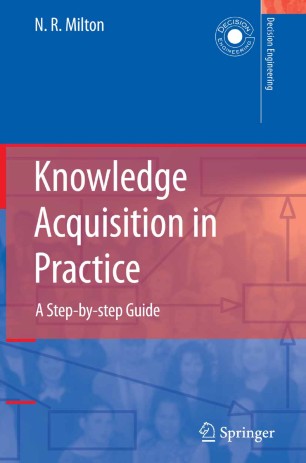
Recent years have seen an upsurge of interest in knowledge. Leading organisations now recognise the importance of identifying what they know, sharing what they know and using what they know for maximum benefit. Many organisations employ knowledge engineers to capture knowledge from experts using the principles and techniques of knowledge engineering. The emphasis is on a structured approach built on a sound understanding of the psychology of expertise and making use of knowledge modelling methods and the latest web technologies. Knowledge Acquisition in Practice is the first book to provide a detailed step-by-step guide to the methods and practical aspects of acquiring, modelling, storing and sharing knowledge. The reader is led through 47 steps from the inception of a project to its successful conclusion. Each step is described in terms of the reasons for the step, the required resources, the activities to be undertaken, and the solutions to common problems.

This book critically examines equality, equity and democracy in education, globally as well as from various perspectives. Globally, there are increasing arguments both for the democratization of education and for the use of education to promote a democratic society. It is argued that democratic schools would better prepare for active citizenship and for a strong civil society which are seen to be the foundation of a democratic state. The book further argues that while there are inspiring examples of schools that engage in peace education or emancipatory pedagogy that work across various ethnic or religious divides, on balance, the forms, structures, ideologies and purposes of formal education interact to make national and international conflict more likely.
This book presents histories of the WCCES and its member societies. It shows ways in which the field has changed over the decades, and the forces which have shaped it in different parts of the world. The book demonstrates that while comparative education can be seen as a single global field, it has different characteristics in different countries and cultures. In this sense, the book presents a comparison of comparisons.
This monograph is devoted to the classical topic of impedance control, which has recently seen renewed interest following advances in the mechanical design of lightweight robotic systems with improved actuation and sensing capabilities.
The last decade has seen a dramatic shift in anticancer drug research towards agents that aim to target selectively key regulatory and signaling processes known to drive tumorigenesis. A number of these newer agents have now been introduced into clinical practice. This volume reviews advances in cancer chemotherapy research over the last 10 years and will be of interest to scientists engaged in drug research in the pharmaceutical industry, biotechnology and startup companies, academia and government institutions. Chapters written by leading experts in their field reflect a range of current medicinal chemistry approaches to small molecule drugs, including anti-hormonal therapy, growth factor inhibition, survival signaling, cell cycle inhibition, anti-angiogenics and anti-nvasives. Each chapter aims to cover the drug target and biological rationale, chemotypes, clinical status and future prospects in this rapidly developing area of drug research.
The past 30 years have seen the emergence of a growing desire worldwide to take positive actions to restore and protect the environment from the degrading effects of all forms of pollution: air, noise, solid waste, and water. The Handbook of Environmental Engineering series guides readers to answer the fundamental questions facing pollution in the modern era – How serious is pollution? Is the technology needed to abate it not only available, but feasible? Among the topics included in this, the sixth edition, are: biosolids, flotation thickening, anaerobic and aerobic digestion, pressurized ozonation, lime stabilization, elutriation and polymer conditioning, and animal waste treatment.

Making a clear distinction is made between nano- and micro-mechanical testing for physical reasons, this monograph describes the basics and applications of the supermicroscopies AFM and SNOM, and of the nanomechanical testing on rough and technical natural surfaces in the submicron range down to a lateral resolution of a few nm. New or improved instrumentation, new physical laws and unforeseen new applications in all branches of natural sciences (around physics, chemistry, mineralogy, materials science, biology and medicine) and nanotechnology are covered as well as the sources for pitfalls and errors.
At some time we have all gazed through the telescope eyepiece at the magnificent rings and banded globe of Saturn, or seen long shadows reaching across crater floors at the Moon’s terminator – and wondered at the sheer beauty of the sight. It seems almost anachronistic to think of sketching when CCD imaging is available, but astronomical sketching provides an entirely different and deeply personal experience. It means spending time at the eyepiece to really look at what you can see, training your eye to perceive ever greater detail to take the fullest advantage of your telescope's light grasp and resolution.

Daraa Highway - Ghabagheb - Syria
+963-15 2050 - 15 860 380 /1/2/3 - 11 662 3900