


Refine Results
Sort By
From
To

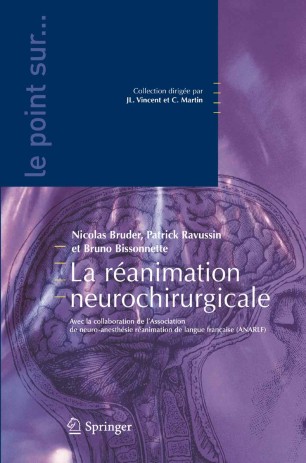
«decade of the brain », s’est ajouté en clinique humaine le développement des nouvelles techniques d’imagerie. Ceci a permis d'enterrer enfin certaines idées anciennes et de développer de nouvelles stratégies thérapeutiques fondées sur une meilleure compréhension des mécanismes physiopathologiques de l’agression cérébrale en transposant les résultats de la recherche fondamentale dans la pratique de tous les jours. Il ne fait aucun doute que le médecin, qu'il soit anesthésiste, réanimateur, urgentiste, qui serait passé « à côté » de cette période concernant la prise en charge globale du cerveau agressé se retrouverait distancé face à la prise en charge actuelle et n’aurait pas en main les moyens d’en comprendre sa justification. L’association de neuro-anesthésie réanimation de langue Française
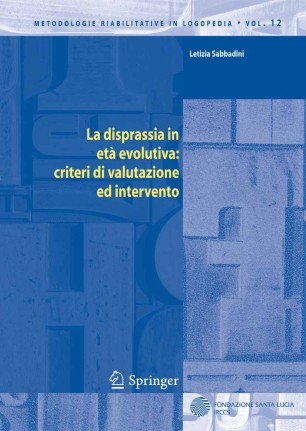
As clinical and rehabilitation practice shows, children with dyspraxia are unable to plan and organize an action plan; they cannot control what they are doing during an action; therefore, they cannot do something, but we could also admit that they cannot yet do something; that is, they have not yet learned to perform functions. Functions and actions, however, can be learned and performed with the help of targeted exercises performed consistently. It is, however, essential to recognize the difficulties children with dyspraxia face when faced with new, unusual tasks. The author proposes an assessment and intervention model that takes into account etiological and neuropsychological hypotheses, emphasizing the need to proceed with an analysis on multiple levels: perceptual, motor, and representational. Particular importance is given to early diagnosis and intervention to define and implement appropriate treatment plans. The work concludes with the analysis and description of clinical cases related to some specific forms of dyspraxia: verbal dyspraxia and dysgraphia.

Kinase inhibition remains an area of significant interest, and growing importance, across academia and the pharmaceutical industry. There are now many marketed drugs that target kinases and a significant number of compounds are currently in various stages of clinical development. This book is a forward-looking analysis of a number of key areas for kinase inhibition in the coming years and builds on the first volume. This includes topics such as screening approaches to target kinases along with different modes of inhibition such as allosteric and covalent. Novel approaches such as macrocyclisation are considered along with how the properties of kinase inhibitors have evolved, including the potential for brain penetration. Recent areas of great importance also covered include cutting edge molecular modelling approaches and the importance of kinase mutations.

The most comprehensive and authoritative pharmacology text --updated with new content and USMLE-style questions Presented in full-color and packed with hundreds of illustrations, Basic and Clinical Pharmacology is the wide-ranging, engaging guide students have counted on for decades. To be as clinically relevant as possible, the book includes sections that specifically address the clinical choice and use of drugs in patients and the monitoring of their effects, along with case studies that introduce clinical problems. Each chapter opens with a case study, covers drug groups and prototypes, and closes with summary tables and diagrams that encapsulate important information. Updated to reflect the latest research, this sixteenth edition features a new chapter on cannabinoids, USMLE-style questions, new drug tables, and more. Basic and Clinical Pharmacology, Sixteenth Edition features: * 330 full-color illustrations * NEW: 100 drug tables * NEW: 50 USMLE-style questions * NEW: Chapter on cannabinoids * A strong emphasis on drug groups and prototypes * Case studies and chapter-ending summary tables * Organization that reflects the syllabi of pharmacology courses * Descriptions of important new drugs

Excellent Q & A and rationales for course exams and USMLE Step 1. With 1,000+ board-style questions/answers and fully up-to-date content, this is the most popular review in pharmacology. Organized to reflect the syllabi in pharmacology courses, Katzung & Trevor's Pharmacology Exam and Board Review covers all current drugs and retrovirals, immunologic agents, and chemotherapies. Each chapter begins with 20 pages of informative text, followed by questions and answers, and includes concise discussions of the concepts underlying basic principles or specific drug groups. Edited by the world leading figures in pharmacology and medicine, this high-yield text focuses on basic principles, autonomic drugs, cardiovascular-renal drugs, and drugs with actions on smooth muscle, central nervous system drugs, and drugs used to treat chemotherapeutic drugs, and toxicology.

This volume presents the proceedings of the eighth Colloquium Crustacea Decapoda Mediterranea, which was held at the Ionian University on Corfu Island, Greece, from 2 to 6 September 2002, and reflects recent advancements in decapod crustacean research. The meeting is the oldest European carcinological event, organized regularly at 3-year intervals since 1972. Although focused on the Mediterranean Sea, worldwide contributions provided a forum for fruitful contact and scientific exchange. The book covers up-to-date issues in decapod crustacean research, including genetics, morphology, reproduction, ecology, behaviour and fisheries, and it is primarily aimed at scientists interested in decapod crustacean research, but other scientists and decision-makers working on marine ecology and fisheries will also find up-to-date information on relevant issues.

Computational and Statistical Approaches to Genomics, 2nd Edition, aims to help researchers deal with current genomic challenges. During the three years after the publication of the first edition of this book, the computational and statistical research in genomics have become increasingly more important and indispensable for understanding cellular behavior under a variety of environmental conditions and for tackling challenging clinical problems. In the first edition, the organizational structure was: data à analysis à synthesis à application. In the second edition, the same structure remains, but the chapters that primarily focused on applications have been deleted.

Complex Systems Science in Biomedicine covers the emerging field of systems science involving the application of physics, mathematics, engineering and computational methods and techniques to the study of biomedicine including nonlinear dynamics at the molecular, cellular, multi-cellular tissue, and organismic level. With all chapters helmed by leading scientists in the field, Complex Systems Science in Biomedicine's goal is to offer its audience a timely compendium of the ongoing research directed to the understanding of biological processes as whole systems instead of as isolated component parts.

Science produces fascinating puzzles: why is there such a range of placental structures when other mammalian organs are so structurally uniform ? Why and how did the different placental structures evolve ? Comparative placental studies can facilitate the identification of the common factors in placental growth, differentiation and function and their relevance to possible evolutionary pathways. Comparative Placentation is the only book presenting up-to-date data illustrating the great variety of structure but uniform function of vertebrate placentas from fish to man. This information is essential for selection of suitable models to investigate particular practical problems of impaired or anomalous growth in human and animal placentation. The unique collection of the best light and electron micrographs from the last thirtyfive years which precisely illustrate the structural range in each taxon, make the book the most authoritative publication in this field and a vital source of information for anyone interested on reproductive physiology, anatomy and medicine.
Provides new and updated chapters covering computational and mathematical techniques and concepts related to the field of comparative genomics. The topics covered in the chapters range from those that address general techniques and concepts that apply to all organisms to others that are specialized and apply to specific biological systems such as viruses, bacteria, nematodes, and insects.
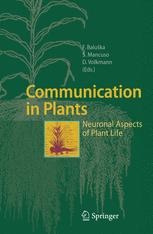
Plant neurobiology is a newly emerging field of plant sciences. It covers signalling and communication at all levels of biological organization – from molecules up to ecological communities. In this book, plants are presented as intelligent and social organisms with complex forms of communication and information processing. Authors from diverse backgrounds such as molecular and cellular biology, electrophysiology, as well as ecology treat the most important aspects of plant communication, including the plant immune system, abilities of plants to recognize self, signal transduction, receptors, plant neurotransmitters and plant neurophysiology. Further, plants are able to recognize the identity of herbivores and organize the defence responses accordingly. The similarities in animal and plant neuronal/immune systems are discussed too. All these hidden aspects of plant life and behaviour will stimulate further intense investigations in order to understand the communicative plants in their whole complexity.
This book offers a guide to common dermatologic conditions most often treated by primary care providers. Most dermatologic disorders in the United States are treated by primary care physicians, and yet primary care training programs do not prioritize dermatology. This easy-to-use reference answers that need with practical recommendations for diagnosing and treating these common diseases along with a number of illustrative color images. Throughout, chapters are either organized by population and the dermatologic conditions common to those groups or diseases commonly encountered in primary care. Populations covered include children, pregnant women, and athletes, and common diseases covered include dermatitis, warts, herpes, psoriasis, and some skin cancers.
Clinical Chemistry considers what happens to the body’s chemistry when affected by disease. It provides introductory coverage of the scientific basis for biochemistry tests routinely used in medicine - including tests for the assessment of organ function, diagnosis and monitoring disease activity and therapy efficacy. Each topic area begins with a concise description of the underlying physiological and biochemical principles and then applies them to patient investigation and management. The regular use of case histories helps further emphasise clinical relevance and chapter key points, as well as provide a useful starting point for examination revision.
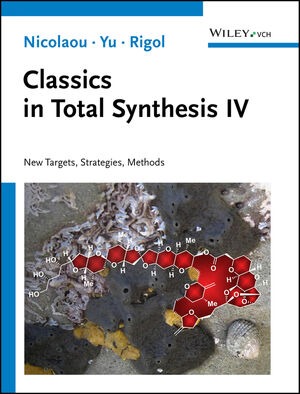
A compilation of highly important synthetic methods which lead to complex molecules with valuable properties. From the complex architectures of natural products to the streamlined synthesis of functional molecules, each chapter in Classics in Total Synthesis IV unfolds a unique story. The interplay of mechanisms, reactivity, selectivity, and stereochemical aspects is thoroughly examined, echoing the pedagogical format that has become synonymous with this series. Well-designed graphics are included throughout, and all important parts of the reaction sequences are highlighted.

Springer Handbook of Enzymes provides data on enzymes sufficiently well characterized. It offers concise and complete descriptions of some 5,000 enzymes and their application areas. Data sheets are arranged in their EC-Number sequence and the volumes themselves are arranged according to enzyme classes. This new, second edition reflects considerable progress in enzymology: many enzymes are newly classified or reclassified. Each entry is correlated with references and one or more source organisms. New datafields are created: application and engineering (for the properties of enzymes where the sequence has been changed). The total amount of material contained in the Handbook has more than doubled so that the complete second edition consists of 39 volumes as well as a Synonym Index.

Springer Handbook of Enzymes provides data on enzymes sufficiently well characterized. It offers concise and complete descriptions of some 5,000 enzymes and their application areas. Data sheets are arranged in their EC-Number sequence and the volumes themselves are arranged according to enzyme classes. This new, second edition reflects considerable progress in enzymology: many enzymes are newly classified or reclassified. Each entry is correlated with references and one or more source organisms. New datafields are created: application and engineering (for the properties of enzymes where the sequence has been changed). The total amount of material contained in the Handbook has more than doubled so that the complete second edition consists of 39 volumes as well as a Synonym Index.

Springer Handbook of Enzymes provides data on enzymes sufficiently well characterized. It offers concise and complete descriptions of some 5,000 enzymes and their application areas. Data sheets are arranged in their EC-Number sequence and the volumes themselves are arranged according to enzyme classes. This new, second edition reflects considerable progress in enzymology: many enzymes are newly classified or reclassified. Each entry is correlated with references and one or more source organisms. New datafields are created: application and engineering (for the properties of enzymes where the sequence has been changed). The total amount of material contained in the Handbook has more than doubled so that the complete second edition consists of 39 volumes as well as a Synonym Index.

This new, second edition reflects considerable progress in enzymology: many enzymes are newly classified or reclassified. Each entry is correlated with references and one or more source organisms. New datafields are created: application and engineering (for the properties of enzymes where the sequence has been changed). The total amount of material contained in the Handbook has more than doubled so that the complete second edition consists of 39 volumes as well as a Synonym Index. In addition, starting in 2009, all newly classified enzymes are treated in Supplement Volumes. Springer Handbook of Enzymes is an ideal source of information for researchers in biochemistry, biotechnology, organic and analytical chemistry, and food sciences, as well as for medicinal applications

Springer Handbook of Enzymes provides data on enzymes sufficiently well characterized. It offers concise and complete descriptions of some 5,000 enzymes and their application areas. Data sheets are arranged in their EC-Number sequence and the volumes themselves are arranged according to enzyme classes. This new, second edition reflects considerable progress in enzymology: many enzymes are newly classified or reclassified. Each entry is correlated with references and one or more source organisms. New datafields are created: application and engineering (for the properties of enzymes where the sequence has been changed). The total amount of material contained in the Handbook has more than doubled so that the complete second edition consists of 39 volumes as well as a Synonym Index.

This new, second edition reflects considerable progress in enzymology: many enzymes are newly classified or reclassified. Each entry is correlated with references and one or more source organisms. New datafields are created: application and engineering (for the properties of enzymes where the sequence has been changed). The total amount of material contained in the Handbook has more than doubled so that the complete second edition consists of 39 volumes as well as a Synonym Index. In addition, starting in 2009, all newly classified enzymes are treated in Supplement Volumes. Springer Handbook of Enzymes is an ideal source of information for researchers in biochemistry, biotechnology, organic and analytical chemistry, and food sciences, as well as for medicinal applications.

Daraa Highway - Ghabagheb - Syria
+963-15 2050 - 15 860 380 /1/2/3 - 11 662 3900