


Refine Results
Sort By
From
To


Aims to show which factors have been decisive in the rise of successful countries. Never before have so many people been so well off. However, prosperity is not a law of nature; it has to be worked for. A liberal economy stands at the forefront of this success – not as a political system, but as a set of economic rules promoting competition, which in turn leads to innovation, research and enormous productivity.

The Nature of Comparative and International Criminal JusticeThe Purpose of Comparative and International Criminal Justice Systems; Crime and Criminal Law: Global PerspectiveCrime: International and Comparative;Overview of Model Criminal Justice Systems

Explores both the content and role of individual common law constitutional rights alongside the constitutional significance and broader implications of these developments. It therefore contributes not only to ourunderstanding of what the common law might be capable of offering in terms of the protection of rights, but also to our understanding of the nature of the constitutional order of which such rights are an integral part.

Offers readers comprehensive coverage and a high level of academic rigour while maintaining its signature accessible and engaging style. Introducing the readers to the fundamental concepts of international criminal law, as well as the domestic and international institutions that enforce that law, this book engages with critical questions, political and moral challenges, and alternatives to international justice.

This open access book presents the outcomes of the “Design for Future – Managed Software Evolution” .The different lifecycles of software and hardware platforms lead to interoperability problems in such systems. Instead of separating the development, adaptation and evolution of software and its platforms, as well as aspects like operation, monitoring and maintenance, they should all be integrated into one overarching process. Accordingly, the book is split into three major parts, the first of which includes an introduction to the nature of software evolution, followed by an overview of the specific challenges and a general introduction to the case studies used in the project. The second part of the book consists of the main chapters on knowledge carrying software, and cover tacit knowledge in software evolution, continuous design decision support, model-based round-trip engineering for software product lines, performance analysis strategies, maintaining security in software evolution, learning from evolution for evolution, and formal verification of evolutionary changes. In turn, the last part of the book presents key findings and spin-offs. The individual chapters there describe various case studies, along with their benefits, deliverables and the respective lessons learned. An overview of future research topics rounds out the coverage.
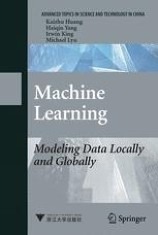
Machine Learning - Modeling Data Locally and Globally presents a novel and unified theory that tries to seamlessly integrate different algorithms. Specifically, the book distinguishes the inner nature of machine learning algorithms as either "local learning"or "global learning."This theory not only connects previous machine learning methods, or serves as roadmap in various models, but – more importantly – it also motivates a theory that can learn from data both locally and globally. This would help the researchers gain a deeper insight and comprehensive understanding of the techniques in this field. The book reviews current topics,new theories and applications.
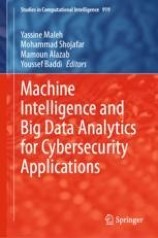
Presents the latest advances in machine intelligence and big data analytics to improve early warning of cyber-attacks, for cybersecurity intrusion detection and monitoring, and malware analysis. Cyber-attacks have posed real and wide-ranging threats for the information society. Detecting cyber-attacks becomes a challenge, not only because of the sophistication of attacks but also because of the large scale and complex nature of today’s IT infrastructures. It discusses novel trends and achievements in machine intelligence and their role in the development of secure systems and identifies open and future research issues related to the application of machine intelligence in the cybersecurity field.
Addresses the fundamentals of kernel methods for machine learning by considering relevant math problems and building Python programs. The book’s main features are as follows: Includes 100 exercises, which have been carefully selected and refined. As their solutions are provided in the main text, readers can solve all of the exercises by reading the book. / The mathematical premises of kernels are proven and the correct conclusions are provided, helping readers to understand the nature of kernels. / Source programs and running examples are presented to help readers acquire a deeper understanding of the mathematics used. / Once readers have a basic understanding of the functional analysis topics covered in Chapter 2, the applications are discussed in the subsequent chapters. Here, no prior knowledge of mathematics is assumed. / Considers both the kernel for reproducing kernel Hilbert space (RKHS) and the kernel for the Gaussian process; a clear distinction is made between the two.
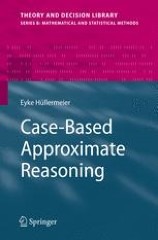
Case-based reasoning (CBR) has received a great deal of attention in recent years and has established itself as a core methodology in the field of artificial intelligence. The key idea of CBR is to tackle new problems by referring to similar problems that have already been solved in the past. More precisely, CBR proceeds from individual experiences in the form of cases. The generalization beyond these experiences typically relies on a kind of regularity assumption demanding that 'similar problems have similar solutions'. Making use of different frameworks of approximate reasoning and reasoning under uncertainty, notably probabilistic and fuzzy set-based techniques, this book develops formal models of the above inference principle, which is fundamental to CBR. The case-based approximate reasoning methods thus obtained especially emphasize the heuristic nature of case-based inference and aspects of uncertainty in CBR. This way, the book contributes to a solid foundation of CBR which is grounded on formal concepts and techniques from the aforementioned fields. Besides, it establishes interesting relationships between CBR and approximate reasoning, which not only cast new light on existing methods but also enhance the development of novel approaches and hybrid systems.

This book clearly describes how to establish an architecture practice that delivers value for an organization. The authors demonstrate a wealth of experience and a deep understanding of the multifaceted nature of this challenging task and they provide sound advice on how to avoid the many pitfalls that may be encountered along the way. Building an Enterprise Architecture Practice provides practical advice on how to develop your enterprise architecture practice.
Blockchain technology is a powerful, cost-effective method for network security. Essentially, it is a decentralized ledger for storing all committed transactions in trustless environments by integrating several core technologies such as cryptographic hash, digital signature and distributed consensus mechanisms. Over the past few years, blockchain technology has been used in a variety of network interaction systems such as smart contracts, public services, Internet of Things (IoT), social networks, reputation systems and security and financial services. With its widespread adoption, there has been increased focus on utilizing blockchain technologies to address network security concerns and vulnerabilities as well as understanding real-world security implications.
The use of computers to recognize humans from physical and behavioral traits dates back to the digital computer evolution of the 1960s. But even after decades of research and hundreds of major deployments, the field of biometrics remains fresh and exciting as new technologies are developed andoldtechnologiesareimprovedandfieldedinnewapplications.Wor- wide over the past few years,there has been a marked increase in both g- ernment and private sector interest in large-scale biometric deployments for accelerating human–machine processes, efficiently delivering human services, fighting identity fraud and even combating terrorism. The p- pose of this book is to explore the current state of the art in biometrics- tems and it is the system aspect that we have wished to emphasize. By their nature, biometric technologies sit at the exact boundary of the human–machineinterface.Butlikealltechnologies,bythemselvestheycan provide no value until deployed in a system with support hardware, n- work connections, computers, policies and procedures, all tuned together to work withpeople to improve some real business process within a social structure.
The book is devoted to the analysis of big data in order to extract from these data hidden patterns necessary for making decisions about the rational behavior of complex systems with the different nature that generate this data. To solve these problems, a group of new methods and tools is used, based on the self-organization of computational processes, the use of crisp and fuzzy cluster analysis methods, hybrid neural-fuzzy networks, and others. The book solves various practical problems. In particular, for the tasks of 3D image recognition and automatic speech recognition large-scale neural networks with applications for Deep Learning systems were used.
Membrane computing is a branch of natural computing which investigates computing models abstracted from the structure and functioning of living cells and from their interactions in tissues or higher-order biological structures. The models considered, called membrane systems (P systems), are parallel, distributed computing models, processing multisets of symbols in cell-like compartmental architectures. In many applications membrane systems have considerable advantages – among these are their inherently discrete nature, parallelism, transparency, scalability and nondeterminism.
Computational intelligence (CI) is the theory, design, application, and development of biologically and linguistically motivated computational paradigms. Traditionally, the three main pillars of CI have been neural networks, fuzzy systems, and evolutionary computation. However, in time, many nature-inspired computing paradigms have evolved. Thus, CI is an evolving field, and, at present, in addition to the three main constituents, it encompasses computing paradigms such as ambient intelligence, artificial life, cultural learning, artificial endocrine networks, social reasoning, and artificial hormone networks. CI plays a major role in developing successful intelligent systems, including games and cognitive developmental systems.

Manufacturing of products in urban production sites is connected to unique potentials, yet also to specific challenges. Urban factories can provide functional diversity and contribute positive impacts to a city. The concept of urban production receives rising attention in research and industry and it is recognized in its interdisciplinary nature. With a holistic approach from both the urban perspective and the factory perspective, negative impacts can be minimized, positive effects enabled and mutually beneficial, symbiotic combinations created. The presented framework and methods for the evaluation and implementation of sustainable urban production systems allow the assessment of impacts and provide the means to control and utilize the unique strengths of urban factories for cities and industry. This will allow a structured derivation of methods and measures from the concept of urban production for producing enterprises and the urban stakeholders.

The Belgian block cipher Rijndael was chosen in 2000 by the U.S. government’s National Institute of Standards and Technology (NIST) to be the successor to the Data Encryption Standard. Rijndael was subsequently standardized as the Advanced Encryption Standard (AES), which is potentially the world’s most important block cipher. In 2002, some new analytical techniques were suggested that may have a dramatic effect on the security of the AES. Existing analytical techniques for block ciphers depend heavily on a statistical approach, whereas these new techniques are algebraic in nature.

This advanced-level textbook covers conventional cryptographic primitives and cryptanalysis of these primitives; basic algebra and number theory for cryptologists; public key cryptography and cryptanalysis of these schemes; and other cryptographic protocols, e.g. secret sharing, zero-knowledge proofs and undeniable signature schemes.

Contains contributions from leading researchers, worldwide, who have thought deeply about the nature and consequences of this interplay. The articles take a long-range view of the subject and distill the most important advances in broad terms, making them easily accessible to non-specialists. The first part is devoted to a summary of how relativity theories were born (J Stachel). The second part discusses the most dramatic ramifications of general relativity, such as black holes (P Chrusciel and R Price), space-time singularities (H Nicolai and A Rendall), gravitational waves (P Laguna and P Saulson), the large scale structure of the cosmos (T Padmanabhan); experimental status of this theory (C Will) as well as its practical application to the GPS system (N Ashby). The last part looks beyond Einstein and provides glimpses into what is in store for us in the 21st century.

This book identifies and discusses biodiversity’s contribution to physical, mental and spiritual health and wellbeing. Furthermore, the book identifies the implications of this relationship for nature conservation, public health, landscape architecture and urban planning – and considers the opportunities of nature-based solutions for climate change adaptation. This transdisciplinary book will attract a wide audience interested in biodiversity, ecology, resource management, public health, psychology, urban planning, and landscape architecture. The emphasis is on multiple human health benefits from biodiversity - in particular with respect to the increasing challenge of climate change.

Daraa Highway - Ghabagheb - Syria
+963-15 2050 - 15 860 380 /1/2/3 - 11 662 3900