



Page 19
Page 19

Urban Environmental Management and Technology
Examines the importance of urban environmental management in the face of formidable challenges. It offers a comprehensive overview of science and policy, with discussion of relevant traditional and contemporary technologies.

Uranium in the Environment : Mining Impact and Consequences
Uranium is an element to be found ubiquitous in rock, soil, and water. Uranium concentrations in natural ground water can be more than several hundreds µg/l without impact from mining, nuclear industry, and fertilizers. Considering the WHO recommendation for drinking water of 15 µg/l (has been as low as 2 µg/l before) due to the chemical toxicity of uranium the element uranium has become an important issue in environmental research. Besides natural enrichment of uranium in aquifers uranium mining and milling activities, further uranium processing to nuclear fuel, emissions form burning coal and oil, and the application of uranium containing phosphate fertilizers may enrich the natural uranium concentrations in soil and water by far.

Upper Gastrointestinal Surgery
A valuable resource for trainees and specialist alike. With information presented in a didactic manner, this useful reference guide will compliment the Springer Surgery Atlas Series, together forming a unique resource for the busy gastrointestinal surgeon. Written by an international group of contributors, all experts in their field, to provide a text for specialists and trainees, this book gives a current and concise summary of all key topics within the specialty and concentrates on recent developments.

Upon What Does the Turtle Stand? : Rethinking Education for the Digital Age
Brings together the reflections of independent researchers from around the world. Sixteen authors from fourteen countries present their views on the use of information and communication technology (ICT) in education, offering valuable insights through the examination of current issues relevant to the future of education. What will education be in tomorrow’s world? How can ICT be used without rendering education a purely technical process? How can we succeed the renovation of educational subjects without transforming them into technical objects? The introductory chapter of this publication guides us into the essays through a classification organized by the editors to illustrate different attitudes to technologies: The ‘Globalizers’ see the integration of ICT and education as a means of enhancing the competitiveness of their society in a global economy / The ‘Reformists’ see it as a means of bringing about significant change in didactics in the various disciplines, and even in the ‘basics’ of education / The ‘Humanists’ consider technologies as possible catalysts for changing the aims and values of education from learni- oriented to humanistic

Unsteady Aerodynamics, Aeroacoustics and Aeroelasticity of Turbomachines
The papers represent the latest in state of the art research in the areas of aeroacoustics, aerothermodynamics, computational methods, experimental testing related to flow instabilities, flutter, forced response, multistage, and rotor-stator effects for turbomachinery.
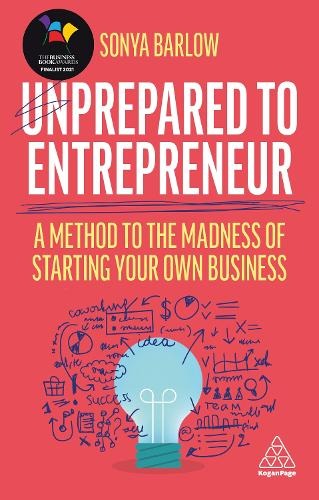
Unprepared to entrepreneur : A method to the madness of starting your own business
Unprepared to Entrepreneur is an honest guide to launching your own business, sharing real stories from real people who have tested, failed and won at business. It profiles the underdogs, those who brainstormed ideas whilst travelling on the bus, started a business from their phone and managed to create three income streams whilst maintaining a full-time job in the city to show you that you can do it too.

University Dorm
Project Choosing Purpose Providing a Living Place for Students who live in far cities From the University. The Goal of Project Saving Time and Energy

University architecture
Illustrates current architecture for higher education with projects constructed in recent years. Forty-four projects are presented here, including various types of buildings in universities and colleges from all over the world. With different functions and locations, they present themselves naturally with diverse styles and distinctive features. Most of the projects have received architectural awards. The book is suitable for both casual reading and professional references.

University and school collaborations during a pandemic : Sustaining educational opportunity and reinventing education
Based on twenty case studies of universities worldwide, and on a survey administered to leaders in 101 universities, this open access book shows that, amidst the significant challenges caused by the COVID-19 pandemic, universities found ways to engage with schools to support them in sustaining educational opportunity. In doing so, they generated considerable innovation, which reinforced the integration of the research and outreach functions of the university. The evidence suggests that universities are indeed open systems, in interaction with their environment, able to discover changes that can influence them and to change in response to those changes. They are also able, in the success of their efforts to mitigate the educational impact of the pandemic, to create better futures, as the result of the innovations they can generate.

Universal principles of architecture : 100 architectural archetypes, methods, conditions, relationships and imaginaries
Illustrates in 100 concepts the importance, possibilities, challenges, and roles that architecture plays in shaping the world. This radical and perhaps surprising survey is divided into five sections: Archetypes, Methods, Conditions, Relationships, and Imaginaries. And, each of the five sections in the book introduces in 20 principles architecture at different scales and stages of the design process.Through an inclusive and holistic approach, the book refers to initial design ideas, creative design approaches, reflections on the effects of the built and destroyed environments, and architectural desires and aspirations to transform the world and engage with the cosmos.

Universal Artificial Intelligence : Sequential Decisions Based on Algorithmic Probability
This book presents sequential decision theory from a novel algorithmic information theory perspective. While the former is suited for active agents in known environments, the latter is suited for passive prediction in unknown environments. The book introduces these two well-known but very different ideas and removes the limitations by unifying them to one parameter-free theory of an optimal reinforcement learning agent embedded in an arbitrary unknown environment. Most if not all AI problems can easily be formulated within this theory, which reduces the conceptual problems to pure computational ones. Considered problem classes include sequence prediction, strategic games, function minimization, reinforcement and supervised learning. The discussion includes formal definitions of intelligence order relations, the horizon problem and relations to other approaches to AI.

Universal Access in Ambient Intelligence Environments ; 9th ERCIM Workshop on User Interfaces for All, Königswinter, Germany, September 27-28, 2006, Revised Papers
This volume contains the proceedings of the last ERCIM “User Interfaces for All” Workshop. The work of the ERCIM WG UI4ALL led in 2001 to the establishment of the - ternational Conference on Universal Access in Human–Computer Interaction 3 (UAHCI) , which takes place in the context of the HCI International Conference se- 4 ries . UAHCI has established an international forum for the dissemination and - change of scientific information on theoretical, methodological and empirical research that addresses all issues related to the attainment of universal access in the devel- ment of interactive software, attracting participants from a broad range of disciplines and fields of expertise.

Univariate Time Series in Geosciences : Theory and Examples
The author introduces the statistical analysis of geophysical time series. The book includes also a chapter with an introduction to geostatistics, many examples and exercises which help the reader to work with typical problems. More complex derivations are provided in appendix-like supplements to each chapter. Readers are assumed to have a basic grounding in statistics and analysis. The reader is invited to learn actively from genuine geophysical data. He has to consider the applicability of statistical methods, to propose, estimate, evaluate and compare statistical models, and to draw conclusions. This book is also a guide to using "R" for the statistical analysis of time series. "R" is a powerful environment for the statistical and graphical analysis of data."R" is available under GNU conditions.

Unifying Perspectives in Computational and Robot Vision
The field of computer vision has developed significantly over the last several years and the application areas span a broad range from medicine to robotics and surveillance. In robotics, computer vision is mainly seen as another sensory modality and new algorithms are commonly developed for different applications. In the computer vision community, there have been more requirements for benchmarking and comparison of methods but very few are still applied in realistic settings and in real-time which is one of the strongest requirements in robotic applications. Unifying Perspectives in Computational and Robot Vision brings the communities of robot and computer vision to a joint appreciation of the value of systems, where there is a need to consider all aspects from perception to action generation.I1222

Uniformly Accelerating Charged Particles : A Threat to the Equivalence Principle
There has been a long debate about whether uniformly accelerated charges should radiate electromagnetic energy and how one should describe their worldline through a flat spacetime, i.e., whether the Lorentz-Dirac equation is right. There are related questions in curved spacetimes, e.g., do different varieties of equivalence principle apply to charged particles, and can a static charge in a static spacetime radiate electromagnetic energy? The problems with the LD equation in flat spacetime are spelt out in some detail here, and its extension to curved spacetime is discussed. Different equivalence principles are compared and some vindicated. The key papers are discussed in detail and many of their conclusions are significantly revised by the present solution.

Unemployment Insurance and Non-Standard Employment : Four European Countries in Comparison
The importance of non-standard employment forms has increased over the last decades. Janine Leschke addresses two important questions in this regard. First, do workers with part-time and temporary contracts face greater risks of becoming unemployed than those with regular contracts? Secondly, how far are they disadvantaged in terms of access to and level of unemployment benefits? The author compares the design of unemployment benefit systems in Denmark, Germany, Spain, and the United Kingdom. After discussing the development and role of non-standard employment in these countries, she examines the relevant features of unemployment insurance systems such as hours and earning thresholds and minimum contribution requirements. Her empirical analysis shows that non-standard workers are more likely to become unemployed or inactive and are disadvantaged in their entitlements to unemployment benefits.

Understanding Risks and Uncertainties in Energy and Climate Policy : Multidisciplinary Methods and Tools for a Low Carbon Society
This book analyzes and seeks to consolidate the use of robust quantitative tools and qualitative methods for the design and assessment of energy and climate policies. In particular, it examines energy and climate policy performance and associated risks, as well as public acceptance and portfolio analysis in climate policy, and presents methods for evaluating the costs and benefits of flexible policy implementation as well as new framings for business and market actors. In turn, it discusses the development of alternative policy pathways and the identification of optimal switching points, drawing on concrete examples to do so. Lastly, it discusses climate change mitigation policies’ implications for the agricultural, food, building, transportation, service and manufacturing sectors.

Understanding Programming Languages
This book is about describing the meaning of programming languages. While a compiler or an interpreter offers a form of formal description of a language, it is not something that can be used as a basis for reasoning about that language nor can it serve as a definition of a programming language itself since this must allow a range of implementations. By writing a formal semantics of a language a designer can yield a far shorter description and tease out, analyse and record design choices.Early in the book the author introduces a simple notation, a meta-language, used to record descriptions of the semantics of languages. In a practical approach, he considers dozens of issues that arise in current programming languages and the key techniques that must be mastered in order to write the required formal semantic descriptions. The book concludes with a discussion of the eight key challenges: delimiting a language (concrete representation), delimiting the abstract content of a language, recording semantics (deterministic languages), operational semantics (non-determinism), context dependency, modelling sharing, modelling concurrency, and modelling exits.

Understanding nutrition
presents the core information of an introductory nutrition course for majors, with active learning that prepares students for their future careers. An overarching goal of the text is to help readers learn to distinguish valid nutrition information from misinformation. In addition to providing accurate information, the text encourages readers to understand the connections between concepts, evaluate the pros and cons of an argument, detect inconsistencies and errors, solve problems, and identify the relevance of information.

Understanding Non-equilibrium Thermodynamics : Foundations, Applications, Frontiers
Our time is characterized by an explosion of information and by an accel- ation of knowledge. A book cannot compete with the huge amount of data available on the Web. However, to assimilate all this information, it is n- essary to structure our knowledge in a useful conceptual framework. The purpose of the present work is to provide such a structure for students and researchers interested by the current state of the art of non-equilibrium th- modynamics. The main features of the book are a concise and critical pres- tation of the basic ideas, illustrated by a series of examples, selected not only for their pedagogical value but also for the perspectives o?ered by recent technological advances. This book is aimed at students and researchers in physics, chemistry, engineering, material sciences, and biology. We have been guided by two apparently antagonistic objectives: gener- ity and simplicity. To make the book accessible to a large audience of n- specialists, we have decided about a simpli?ed but rigorous presentation. Emphasis is put on the underlying physical background without sacri?cing mathematical rigour, the several formalisms being illustrated by a list of - amplesandproblems.
