



Page 189
Page 189
Applied Parallel Computing ; State of the Art in Scientific Computing ; 8th International Workshop, PARA 2006, Umea, Sweden, June 18-21, 2006, Revised Selected Papers
It covers partial differential equations, parallel scientific computing algorithms, linear algebra, simulation environments, algorithms and applications for blue gene/L, scientific computing tools and applications, parallel search algorithms, peer-to-peer computing, mobility and security, algorithms for single-chip multiprocessors.
Applied Parallel Computing ; State of the Art in Scientific Computing
Introduction The PARA workshops in the past were devoted to parallel computing methods in science and technology. There have been seven PARA meetings to date: PARA’94, PARA’95 and PARA’96 in Lyngby, Denmark, PARA’98 in Umea, ? Sweden, PARA 2000 in Bergen, N- way, PARA 2002 in Espoo, Finland, and PARA 2004 again in Lyngby, Denmark. The ?rst six meetings featured lectures in modern numerical algorithms, computer science, en- neering, and industrial applications, all in the context of scienti?c parallel computing. This meeting in the series, the PARA 2004 Workshop with the title “State of the Art in Scienti?c Computing.

Applied Parallel Computing ; 6th International Conference, PARA 2002, Espoo, Finland, June 15-18, 2002. Proceeding
These proceedings contain the papers presented at PARA 2002, the Sixth In-ternational Conference on Applied Parallel Computing. PARA 2002 was held inEspoo, Finland, June 15–18, 2002, and hosted by CSC, the Finnish informationtechnology center for science. The general theme of the conference was advancedscientific computing.The conference demonstrated the ability of advanced scientific computing tosolve real-world problems, and highlighted methods, instruments, and trends infuture scientific computing. The conference began with a one-day tutorial sessionon Grid programming.The conference focused on an application-oriented, multi-disciplinary, andmulti-scale approach. A wide variety of scientific computing applications wereintroduced, from semiconductor processing and behavior of the human body tooceanic and atmospheric phenomena.
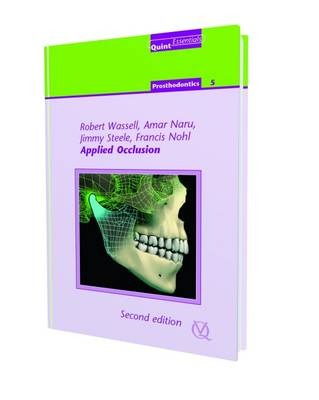
Applied Occlusion : QuintEssentials of Dental Practice ; Vol. 29
Includes many new illustrations, highlighted practical tips, and updates to the text with the most recent advances in the literature. The narrated 3D animations on the accompanying DVD clarify the effects of jaw movement, and comprehensive clinical videos demonstrate the process of investigating and managing real-life occlusal problems. The authors of this practical guide bring occlusal concepts and techniques to life and demystify them for dentists and students alike.
Applied Multivariate Statistical Analysis
This book presents the tools and concepts of multivariate data analysis in a way that is understandable for non-mathematicians and practitioners who face statistical data analysis.
Applied Mathematics for Restructured Electric Power Systems : Optimization, Control, and Computational Intellige
Discusses the use of applied mathematics to solve challenging power system problems. This book covers such areas as: control, optimization, and computational intelligence. It follows a three-part format: a description of an important power system problem or problems; the practice and/or particular research approaches; and, research directions.
Applied Mathematics for Database Professionals
The math that you'll learn in this book will put you above the level of understanding of most database professionals today. You'll better understand the technology and be able to apply it more effectively. You'll avoid data anomalies like redundancy and inconsistency. Understanding whats in this book will take your mastery of relational technology to heights you may not have thought possible.
Applied mathematics and machine learning
The simultaneous availability of large datasets and high-performance computing capability in recent years has enabled the rapid development of powerful machine learning algorithms. On the one hand, state-of-the-art machine learning techniques have transformed many areas of science and engineering; on the other hand, theoretical discoveries in mathematical algorithms, differential equations, and statistical inferences, to name a few, have provided the foundation for the exploration of new multidisciplinary models for solving practical problems. This Special Issue endeavors to continue the journey that started in our previous Special Issue (Applied Mathematics and Computational Physics) by providing a platform for researchers from both academia and industry, as well as government, to present their new computational methods that have engineering and physics applications.
Applied Mathematical Demography
it focus on applications of demographic models, while extending its scope to matrix models for stage-classified populations.first introduce the life table to describe age-specific mortality, and then use it to develop theory for stable populations and the rate of population increase. This theory is then revisited in the context of matrix models, for stage-classified as well as age-classified populations. Reproductive value and the stable equivalent population are introduced in both contexts, and Markov chain methods are presented to describe the movement of individuals through the life cycle. Applications of mathematical demography to population projection and forecasting, kinship, microdemography, heterogeneity, and multi-state models are considered.
Applied Linguistics and Language Teacher Education
Applied Linguistics and Language Teacher Education is aimed at applied linguists who are interested in understanding more about the learning of novice teachers in their classes. The 21 studies in this volume provide information on the complexity of novice teachers’ learning and use of knowledge in a variety of applied linguistics classes such as SLA, Syntax, Pragmatics, Sociolinguistics, Phonetics and Phonology, L2 Reading and Writing, Testing, and Content Based Instruction. These studies were conducted in a variety of contexts, from North and South America to Europe, Asia and Australia, and look at the preparation of teachers of English, Spanish and Chinese.
Applied Linear Algebra and Matrix Analysis
This new book offers a fresh approach to matrix and linear algebra by providing a balanced blend of applications, theory, and computation, while highlighting their interdependence.

Applied Informatics; Third International Conference, ICAI 2020, Ota, Nigeria, October 29–31, 2020, Proceedings
This book constitutes the thoroughly refereed papers of the Second International Conference on Applied Informatics, ICAI 2020, held in Ota, Nigeria, in October 2020. The 35 full papers were carefully reviewed and selected from 101 submissions. The papers are organized in topical sections on artificial intelligence; business process management; cloud computing; data analysis; decision systems; health care information systems; human-computer interaction; image processing; learning management systems; software design engineering.
Applied Hydrogeophysics
This book focuses on how hydrogeophysical methods can be applied to solve problems facing environmental engineers, geophysicists, agronomists, hydrologists, soil scientists and hydrogeologists. We present applications of hydrogeophysical methods to the understanding of hydrological processes and environmental problems dealing with the flow of water and the transport of solutes and contaminants. The majority of the book is organized as a series of process-driven chapters, each authored by leading experts. Areas covered include: infiltration and solute transport processes, biogeochemical functioning of soil-water systems, coastal groundwater interactions, cold region hydrology, engineered barriers and landfill processes. In addition, the book offers insight into the development of new data fusion methodologies, of value to many hydrogeophysical investigations, and provides an account how the rapidly developing self-potential technique can give valuable information about water fluxes and hydrochemical states within the subsurface.
Applied High-Speed Plate Penetration Dynamics
High-speed impact dynamics is of interest in the fundamental sciences, e.g., astrophysics and space sciences, and has a number of important applications in military technologies, homeland security and engineering.
Applied Graph Theory in Computer Vision and Pattern Recognition
It presents the application of graph theory to low-level processing of digital images, presents graph-theoretic learning algorithms for high-level computer vision and pattern recognition applications, and provides detailed descriptions of several applications of graph-based methods to real-world pattern recognition tasks.
Applied geotechnics for construction projects ; Vol. 3 : Behavior and Design of Project Foundations and Eurocode Validation
Applied Geotechnics for Construction Projects 3 first presents the basic theoretical principles and rules governing the designing and validation of foundations; shallow, semi-deep and deep, then presents real foundation projects with a detailed comparison of the approaches and methods of calculating foundations in relation to the reference systems and rules in force, closely compared to and validated by the Eurocodes. The third chapter presents examples of foundation projects, covering high-side building rafts, strip footings, piles and embankments, enriched by an unprecedented level of experience in the field of foundations for civil and industrial construction projects.
Applied geotechnics for construction projects ; Vol. 2 : Fundamental Principles of Soil Mechanics and the Role of Water
Addresses the fundamental principles of soil mechanics and the role of water in geotechnical projects and assessments. Applied Geotechnics for Construction Projects 2 outlines the hydraulic properties of soils and the basic concepts of water in soil, detailing the principles of permeability measurement tests and giving concrete test cases, and then goes on to outline the basic notions of soil mechanics as applied in geotechnics: from consolidation to short- and long-term notions via the swelling phenomena of clayey soils, soil shear strength and slope stability. The third chapter presents a comprehensive overview of geotechnical expertise using examples of concrete projects either with or without damage in the context of geotechnical construction works.
Applied geotechnics for construction projects ; Vol. 1 : Soil and Experimental Data
Applied Geotechnics for Construction Projects 1 first defines, identifies and classifies soils, exploring their complexities and weaknesses, and then outlines the basic principles of stresses and strains that establish and develop within soils. The third chapter of the book introduces and develops methods of soil investigation in order to experimentally determine the geotechnical parameters that are useful in the design stage of construction projects.
Applied Geometry for Computer Graphics and CAD
Focusing on the manipulation and representation of geometrical objects, this book explores the application of geometry to computer graphics and computer-aided design (CAD). An introduction to transformations of the plane and three-dimensional space describes how objects can be constructed from geometric primitives and manipulated. This leads into a treatment of projections and the method of rendering objects on a computer screen by application of the complete viewing operation. Subsequently, the emphasis is on the two principal curve and surface representations, namely, Bézier and B-spline (including NURBS).
Applied Fuzzy Arithmetic : An Introduction with Engineering Applications
Applied Fuzzy Arithmetic provides a well-structured compendium that offers both a deeper knowledge about the theory of fuzzy arithmetic and an extensive view on its applications in the engineering sciences, making it a resource for students, researchers, and practical engineers. The first part of the book gives an introduction to the theory of fuzzy arithmetic, which aims to present the subject in a well-organized and comprehensible form. The derivation of fuzzy arithmetic from the original fuzzy set theory and its evolution towards a successful implementation is presented with existing formulations of fuzzy arithmetic included and integrated in the overall context. The second part of the book presents a diversified exposition of the application of fuzzy arithmetic, addressing different areas of the engineering sciences, such as mechanical, geotechnical, biomedical, and control engineering.
