


Refine Results
Sort By
From
To

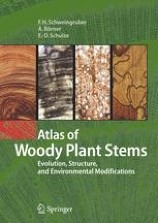
he „Atlas of Woody Plant Stems“ is a com- Naturally, it was impossible to cover completely the Tprehensively illustrated book with short, in- enormous variability of plant life forms. We have formative texts. We chose this layout because plant tried, however, to illustrate the main principles and anatomy and morphology can only be conveyed by features. Many decades of collection and prepa- detailed pictures. In addition, a vivid presentation tion provided the basis for this book.

Details its complex subject matter clearly and plainly and covers everything from catalyst development and reactions to mechanisms and applications in academia and industry. The papers included within come from many of the leading voices in their respective fields and represent the newest and best research available today.
Cell biologists have recently become aware that the asymmetry of cell division is an important regulatory phenomenon in the fate of a cell. During development, cell diversity originates through asymmetry; in the adult organism asymmetric divisions regulate the stem cell reservoir and are a source of the drift that contributes to the aging of organisms with renewable cell compartments. Because of the concept of semi-conservative DNA synthesis, it was thought that the distribution of DNA between daughter cells was symmetric. The analysis of the phenomenon in cells during mitosis, however, revealed the asymmetry in the distribution of the genetic material that creates the drift contributing to aging of mammals. On the other hand, cancer cells can originate from a deregulation of asymmetry during mitosis in particular during stem cell expansion. The book describes the phenomenon in different organisms from plants to animals and addresses its implications for the development of the organism, cell differentiation, human aging and the biology of cancers.
For the past decade, there has been success in using conventional map-based strategies in identification and cloning of quantitative trait loci (QTL) in model plant species including tomato and Arabidopsis. These quantitative traits are generally the products of many loci with varying degrees of effect upon the observed phenotypes. Recently, a new approach to genetic mapping has emerged called association mapping. This new technique takes into account the thousands of genes to evaluate for QTL effect and is a more efficient approach that does not require generation of segregating populations/large numbers of progeny. As it can utilize all of the historic recombination events in a diverse population of individuals it can generate higher resolution genetic maps and, is needed to complement current map based cloning methods.
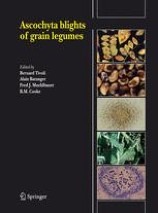
Ascochyta blights consistently affect large areas of grain legume production (pea, lentil, chickpea and faba bean) in all countries where they are cultivated. These diseases are capable of causing large yield losses under conducive environmental conditions. This book considers the state of the art by taking a comparative approach of Ascochyta blight diseases of cool season food and feed legumes. Topics considered are pathogen diversity, legume genetics and breeding, and integrated disease management.

This volume of the Keio University International Symposia for Life Sciences and Medicine contains the proceedings of the 13th symposium held under the sponsorship of the Keio University Medical Science Fund. The fund was est- lished by the generous donation of the late Dr. Mitsunada Sakaguchi. The Keio University International Symposia for Life Sciences and Medicine constitute one of the core activities sponsored by the fund,of which the objective is to contribute to the international community by developing human resources, promoting scienti?c knowledge, and encouraging mutual exchange. Each year, the Committee of the International Symposia for Life Sciences and Medicine selects the most signi?cant symposium topics from applications received from the Keio medical community. The publication of the proce- ings is intended to publicize and distribute the information arising from the lively discussions of the most exciting and current issues presented during the symposium.
Looks at applications of artificial intelligence (AI), machine learning (ML), and deep learning (DL) in drug design. The chapters in this book describe how AI/ML/DL approaches can be applied to accelerate and revolutionize traditional drug design approaches such as: structure- and ligand-based, augmented and multi-objective de novo drug design, SAR and big data analysis, prediction of binding/activity, ADMET, pharmacokinetics and drug-target residence time, precision medicine and selection of favorable chemical synthetic routes. How broadly are these approaches applied and where do they maximally impact productivity today and potentially in the near future.
Nanomedicine is evolving with novel drug formulations devised for multifunctional approaches towards diagnostics ad therapeutics. Nanomedicine-based drug therapy is normally explored at a fixed dose. The drug action is time-dependent, dose-dependent and patient-specific. To overcome challenges of nanomedicine testing, artificial intelligence (AI) serves as a helping tool for optimizing the drug and dose parameters. Real time conversions between these two features enables upgradation of patient data acquisition and improved design of nanomaterials. In this scenario, AI-based pattern analysis and algorithms models can greatly improve accuracy of diagnostics and therapeutics.

The timely book answers key questions raised at instructional courses, such as how to convert from mini-open repair to all arthroscopic repair. The fundamentals, including patient positioning, suture anchor options, and knot tying, are covered in addition to state-of-the-art techniques.
Despite their enormous bulk and complexity of architecture, plants make up only around a quarter of a million of the 8 million or so species on Earth. The major components of biodiversity, instead, are the smaller, largely unseen, silent majority of invertebrates – most of which are arthropods. Vertebrates, a mere blip on the biotic horizon, are elevated in importance in the bigger scheme of things only by the human psyche. This collection of more than 30 peer-reviewed papers focuses on the diversity and conservation of arthropods, whose species inhabit virtually every recess and plane – and feature somewhere in virtually every food web – on the planet. Highlighting issues ranging from large-scale disturbance to local management, and from spatial heterogeneity to temporal patterns, these papers reflect some of the most exciting new research taking place today – and in some of the most biodiverse corners of the planet.

Sand dune dynamics plays a key role in many arid deserts. This volume provides a synthesis of a specific sand dune ecosystem, the Nizzana site in the Negev Desert. Describing its climate and geophysical/geochemical properties of soils, geological history, flora and fauna, and past/present land-use patterns, it elucidates ecological and geomorphological processes and their interrelations, based on long-term monitoring, in situ experiments and satellite imagery. Particular attention is drawn to the impact of the topsoil biological crust in controlling water availability at local/regional scales. The interdisciplinary approach adopted in this case study offers a good example of a highly complex and dynamic system, which could easily be applied to other sandy ecosystems.
The use of medicinal plants in herbal and modern medicine has gained popularity over the last few decades due to consumers taking more natural approaches to medicine. Aquatic medicinal plants are rich in bioactive compounds and demonstrate various commercial, nutraceutical, and biological applications. Aquatic Medicinal Plants offers the reader a wealth of information on uses of bioactive components of these plants, along with crucial references, and explains their traditional uses, phytochemistry, and pharmacological properties.
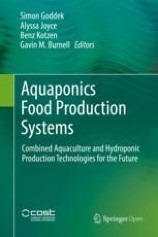
This book, written by world experts in aquaponics and related technologies, provides the authoritative and comprehensive overview of the key aquaculture and hydroponic and other integrated systems, socio-economic and environmental aspects. Aquaponic systems, which combine aquaculture and vegetable food production offer alternative technology solutions for a world that is increasingly under stress through population growth, urbanisation, water shortages, land and soil degradation, environmental pollution, world hunger and climate change.
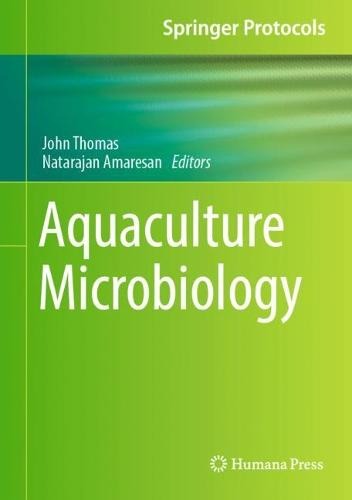
Details techniques involved to study aquatic pathogens that cause infections, especially in fish. Chapters guide readers through a wide range of basic and advanced methods, viral and fungal pathogens, probiotic bacteria, treatment of pathogens using seaweed extract, medicinal plant extracts, and actinomycetes.
This book provides a scientific forecast of the development in aquaculture with a focus on the environmental, technological, social and economic constraints that need to be resolved to ensure sustainable development of the industry and allow the industry to be able to feed healthy seafood products to the future generations. The chapters included discuss the most critical bottlenecks of the development encompassing subjects of understanding the environmental impacts, the current state-of-art in monitoring programs and in coastal zone management, the important interactions between wild and cultured organisms including release of non-native species into the wild, the current trends within the development of aquafeeds along with human health aspects as well as the political, socio-economic and economic trends within the industry including a chapter on approaches taken by Non Governmental Organisations (NGOs) to aquaculture. Finally the last chapter provides different future scenarios of the industry based on the identified bottlenecks.

This book is neither a summary nor an encyclopedia devoted to the treatment of loss of skin substance in the hand. There are currently excellent books that can serve as a reference, at any time, for the treatment of any skin defect, of the hand ... or elsewhere. We wanted a completely different perspective on trauma management open by hand, while respecting the spirit of the “Practical Approach” collection directed by Christian Fontaine: a simple presentation diagram, relatively stereotypical, a rich and varied iconography, tips and tricks, in short, an anthology of technical details and answers to the most common questions about hand flap surgery.
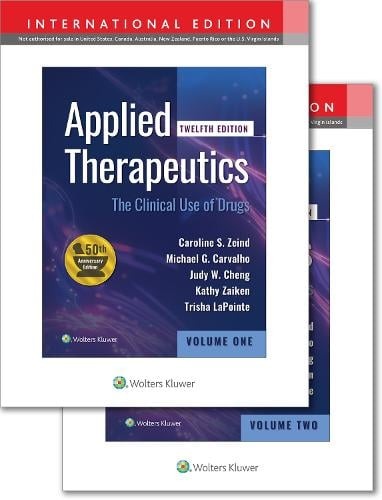
"Continually revised and updated for 50 years, Applied Therapeutics: The Clinical Use of Drugs is the gold standard for patient centered drug therapeutics. With its acclaimed case-based approach, it promotes mastery and application of the fundamentals of drug therapeutics. Featuring contributions from more than 200 experienced clinicians, every chapter reflects our ever-changing knowledge of drugs and the application of this knowledge to the individualized therapy of patients. As students progress from the General Principles section to chapters on specific diseases, they will benefit from practical problem-solving techniques that help devise effective evidence-based drug treatment plans"
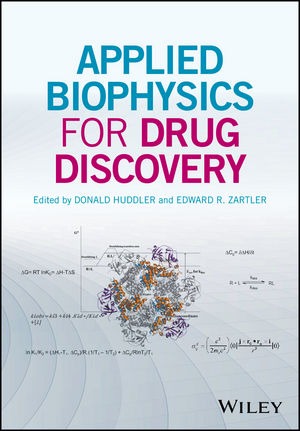
It is a guide to new techniques and approaches to identifying and characterizing small molecules in early drug discovery. Biophysical methods are reasserting their utility in drug discovery and through a combination of the rise of fragment-based drug discovery and an increased focus on more nuanced characterisation of small molecule binding, these methods are playing an increasing role in discovery campaigns.
In this book, anyone who can operate a PC, standard software and the Internet will learn to understand the biological basis of bioinformatics of the existence as well as the source and availability of bioinformatics software how to apply these tools and interpret results with confidence.This is aided by introductory chapters to important aspects of bioinformatics, detailed bioinformatics exercises, including solutions and a glossary of definitions and terminology relating to bioinformatics.
Written by leading international experts in the field of plant metabolic engineering, this book discusses, mainly, applications of plant metabolic engineering. Metabolic engineering, which is part of second generation biotechnology, has made several contributions at basic level as well as at conceptualising products ever since its emergence in the early 1980s. Applications resulting from metabolic engineering are expected to play a very important role in future for plant breeding, e.g. for improved resistance or improved traits concerning health promoting constituents, and production of fine chemicals such as medicines, flavors and fragrances.

Daraa Highway - Ghabagheb - Syria
+963-15 2050 - 15 860 380 /1/2/3 - 11 662 3900