


Refine Results
Sort By
From
To

In times of fierce competition in business-to-business markets strong and economically sound business relationships with a company's customers rank among the main success factors. As a well established marketing management conception, key account management is of particular significance in this context. Interestingly enough, empirical research studies have recently proved that relationship marketing, and particularly key account management, does not achieve the economic value originally expected.
Kanban control systems bear a great potential to significantly improve operations. A company may reap the full benefits of kanban control only after determining an optimal or near-optimal system configuration. To do that, methods are needed to evaluate the performance and operating costs of individual system configurations. We propose an innovative construction-kit approach that enables us to build stochastic analytical models of a large class of single- and multi-product kanban systems. The presented construction-kit approach may be extended and augmented in various directions
International tourism is expected to be a major vehicle of economic development in industrializing countries in the 21st century, especially for Asia. To generate long-term growth, countries with tourism-based economies must develop strategies for employing their comparative advantages to achieve competitive advantages. However, competitiveness in the tourist industry is multi-dimensional and complex. This study evaluates the competitiveness of the Taiwanese tourism sector by a multi-dimensional framework. The theoretical model proposes that the competitiveness of tourist destinations should be composed of Ricardian comparative advantages (like the conditions of natural endowments and the degree of technological change); Porterian competitive advantages; tourism management, i.e., providing high quality education and job training, public goods, support services and reduced transaction costs to enhance comparative and competitive advantages; and environmental conditions.
In his book, Jan Brinckmann develops a comprehensive competence concept for new technology-based firms. It is grounded in competence-related literature combining insights from entrepreneurship and management research. The competence concept comprises three domains: general entrepreneurial competencies, social competencies, and functional competencies in technology, marketing, and financial management. A measurement model is developed to specify the contents of each sub-domain and to facilitate self-assessment of these competencies. In an empirical study, 212 executives of German NTBFs assessed their team’s competencies. This data is analyzed using structural equation modelling to identify the most relevant competencies for new venture success.

This book evaluates, from an economic perspective, various measures introduced in Japan to prevent climate change. Although various countries have implemented such policies in response to the pressing issue of climate change, the effectiveness of those programs has not been sufficiently compared.

Takes a comprehensive and contemporary approach that aims to bridge the gap between how statistics is taught and applied in the business world. this title not only prepares students in basic statistics but also gets them excited about further exploration of data analytics. the authors emphasize communicating with numbers rather than number crunching, through relatable case studies with relevant statistical methods and takeaways. this title incorporates timely examples from various fields, reinforces core features from previous editions, uses Excel and R to analyze data and solve problems, and includes new improvements, such as a revised chapter on data visualization, an exclusive chapter on logistic regression, and digital enhancements such as a big data capstone project with algorithmic exercises that span across multiple chapt.
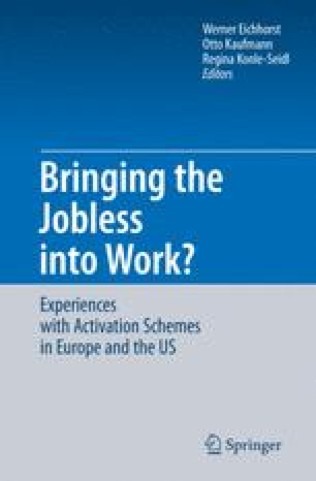
Over the last decade, many industrialized countries shifted from passive unemployment and welfare benefit regimes and traditional active labor market and social policies to activation strategies by making benefit receipt conditional upon accepting job offers or participation in active labor market schemes. But countries differ with regard to the design of activation instruments and their implementation, the definition of target groups and the effects of activation in the national labor market setting. This volume provides an up-to-date overview of activation strategies in unemployment benefit systems and social assistance in selected European countries and the US. A particular focus lies on the development of activation schemes, governance and implementation as well as on the outcomes of activation in terms of labor market and social integration. The volume is the first to address these issues both from a socio-economic and a legal perspective.

1 The tools of modern portfolio theory are in general use in the equity markets, either in the form of portfolio optimization software or as an accepted frame- 2 work in which the asset managers think about stock selection. In the ?xed income market on the other hand, these tools seem irrelevant or inapplicable. Bond portfolios are nowadays mainly managed by a comparison of portfolio 3 4 risk measures vis ¶a vis a benchmark. The portfolio manager’s views about the future evolution of the term structure of interest rates translate th- selves directly into a positioning relative to his benchmark, taking the risks of these deviations from the benchmark into account only in a very crude 5 fashion, i.e. without really quantifying them probabilistically. This is quite surprising since sophisticated models for the evolution of interest rates are commonly used for interest rate derivatives pricing and the derivation of ?xed 6 income risk measures.
Combines energy economics and big data modeling analysis in energy conversion and management and comprehensively introduces the relevant theories, key technologies, and application examples of the smart energy economy. With the help of time series big data modeling results, energy economy managers develop reasonable and feasible pricing mechanisms of electricity price and improve the absorption capacity of the power grid. In addition, they also carry out scientific power equipment scheduling and cost–benefit analysis according to the results of data mining, so as to avoid the loss caused by accidental damage of equipment. Energy users adjust their power consumption behavior through the modeling results provided and achieve the effect of energy saving and emission reduction while reasonably reducing the electricity expenditure.
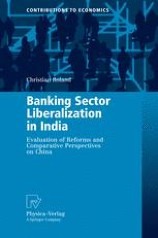
Banking Sector Liberalization in India explores in detail the changes in the Indian banking sector over the last 20 years, and puts them into a comparative perspective with the Chinese banking sector. For this purpose, the author develops a detailed indicator-based framework for assessing the liberalization of a banking sector along various process steps based on financial liberalization and transformation studies. This framework, along with the indicators for the process and the results of liberalization, is applied to the banking sectors in India and China to test for the effects of liberalization on the sector and the macro level. The key finding is that while liberalization has improved the sectoral performance, it has so far had no effect on the macro level. The book features a detailed description of recent reforms in the Indian banking sector, a set of indicators for evaluating banking sector reforms, and a large number of graphs with key figures for the banking sectors in India and China.

In this book, scholars from a range of disciplines argue that the asset—meaning anything that can be controlled, traded, and capitalized as a revenue stream—has become the primary basis of technoscientific capitalism. An asset can be an object or an experience, a sum of money or a life form, a patent or a bodily function. A process of assetization prevails, imposing investment and return as the key rationale, and overtaking commodification and its speculative logic. Although assets can be bought and sold, the point is to get a durable economic rent from them rather than make a killing on the market. Assetization examines how assets are constructed and how a variety of things can be turned into assets, analyzing the interests, activities, skills, organizations, and relations entangled in this process.
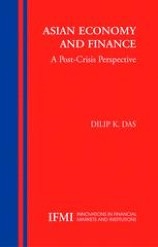
Topicality of Asian economy has refused to fade for almost four decades; if anything it has been levitating. The Asian economy has changed markedly since the economic and financial crisis of 1997-1998 and is continuing to evolve. As a scholarly subject matter, Asian economy has not stopped attracting academicians, policy mandarins, decision makers in the arena of business and students of Asian economy. The Asian crisis was a cataclysmic event for the region and brought to the surface several systemic limitations, like those in the financial sector, corporate governance, regulatory oversight, legal framework, and exchange rate management. Managers of Asian economy need to get to the bottom of these acutely problematical systemic issues. Additionally, Asian economies need to change with the demands of time and devise their post-crisis development strategy. Asia’s growth model, that served it so well for four decades, is overdue for renewal so that it can re-strengthen its bonds with the ever-evolving regional and global economic reality. The old growth model is likely to be less relevant and effective in the post-crisis future of the Asian economies. It is sure to run into the wall of diminishing returns.
Explores the past, present, and future of artificiality and sustainability in entrepreneurship – the unforeseen consequences and ways to advance to a sustainable future. In particular, it connects artificiality, sustainability and entrepreneurship, intertwining artificial with the specific phenomenon of those novel digital technologies that provoke continuous and significant change in our lives and business. Unlike digital entrepreneurship research, which focuses on digital technology development and management, this book covers processes and mechanisms of sustainable adaptability of entrepreneurs, the business logic of start-ups, and the collaborative behaviours under the mass digital transformation, including the prevalence of artificial intelligence. Some of the questions that this book answers are as follows: How has entrepreneurship reacted to such challenges previously? What lessons have been learned and need to be carried forward? How can entrepreneurship and the artefacts of entrepreneurship respond to current challenges? What should be the mindset of the entrepreneur to assure sustainable adaptation? How to embrace and embed the new business logic?

This collection analyzes the impact of Western consumer culture on local cultures and consumption in Southeast Europe and East Asia. Cultural, historical, economic and sociopolitical contexts are examined regarding buying behaviors, usage and customization practices and consumer activism, specifically in Bulgaria, Serbia, and Romania as cultures continue to evolve in the post-socialist era, and in China and Japan as a continuation of movements toward modernity and progress. Surprising and thought-provoking contrasts stand out as consumers balance the global with the local in terms of clothing, technology, luxury items, and food.

Sustainable development, climate policy, and biodiversity conservation are examples of issues on the current political agenda in many countries. These themes are also subject to economic research, and economic insights are increasingly finding their way into the design of environmental policy. Still, the reception of academic findings by policy makers as well as the timely identification of policy-relevant questions by economic researchers often seem to be problematic. This volume attempts to vitalise the exchange between policy makers and academics. It offers a snapshot of environmental economic research on a range of policy-relevant problems.

Simulation methods are revolutionizing the practice of applied economic analysis. This volume collects eighteen chapters written by leading researchers from prestigious research institutions the world over. The common denominator of the papers is their relevance for applied research in environmental and resource economics. The topics range from discrete choice modeling with heterogeneity of preferences, to Bayesian estimation, to Monte Carlo experiments, to structural estimation of Kuhn-Tucker demand systems, to evaluation of simulation noise in maximum simulated likelihood estimates, to dynamic natural resource modeling. Empirical cases are used to show the practical use and the results brought forth by the different methods.

An Annotated Timeline of Operations Research: An Informal History recounts the evolution of Operations Research (OR) as a new science - the science of decision making. Arising from the urgent operational issues of World War II, the philosophy and methodology of OR has permeated the resolution of decision problems in business, industry, and government. The Timeline chronicles the history of OR in the form of self-contained, expository entries. Each entry presents a concise explanation of the events and people under discussion, and provides key sources where further relevant information can be obtained. In addition, books and papers that have influenced the development of OR or helped to educate the first generations of OR academics and practitioners are cited throughout the book.

Shows for the first time how mental models and values influence this attribution in the life cycle inventory step of LCA. One of the key findings is that the different management rules for a sustainable use of materials must be taken into account for the attribution of material and energy flows to a product. Otherwise, improvement options recommended by an LCA might turn out to even worsen the environmental situation if reassessed from a meta-perspective. As a consequence of this book, the claim of unambiguitiy (‘objectivity’) of the life cycle inventory must be abandoned. A group-model building process for LCA is developed that allows one to grasp the decision makers' mental models and values in the inventory analysis on a case- and situation-specific basis. Only by this, LCA results will become relevant in a decision-making process. Two case studies on the modelling of recycling and other end-of-life options of aluminium windows and beech wood railway sleepers in LCA complement the methodological part.
Explores the concept of advertising and the different ways advertising is understood and evaluated. It dives deep into planning, designing, and executing advertising campaigns on different mediums. It discusses the theoretical and research parts of advertising by critically examining how over the years various hierarchical models and theories are developed by advertising experts. It examines various models and theories that explain why and how advertising is successful in persuading customers target audiences to buy a product or accept an idea for behavioural change.
Modern Advances in Tourism Research provides a thorough assessment of state-of-the-art academic research in this recent field of economic science. The authors start by scoping the scene of tourism research, evolving then to a comprehensive analysis of themes of particular interest for researchers and academics interested on the workings of the tourism markets. With a view to go beyond fundamental research, the book closes with a chapter dedicated to applied country and regional studies.

Daraa Highway - Ghabagheb - Syria
+963-15 2050 - 15 860 380 /1/2/3 - 11 662 3900