


Refine Results
Sort By
From
To


The ability to manage knowledge is relevant for millions of small and medium sized enterprises (SMEs) that operate in high-tech environments. They strongly depend on external knowledge about customers, technologies, and competitors because, as opposed to large companies, they have limited internal knowledge resources and little power to control their business environments.
Bridges the disciplinary boundaries within the social sciences to explore the role of social institutions in shaping geographical contexts, and in creating new knowledge. It includes theorizations as well as original empirical case studies on the emergence, maintenance and change of institutions as well as on their constraining and enabling effects on innovation, entrepreneurship, art and cultural heritage, often at regional scales across Europe and North America. Rooted in the disciplines of management and organization studies, sociology, geography, political science, and economics the contributors all take comprehensive approaches to carve out the specific contextuality of institutions as well as their impact on societal outcomes. Not only does this book offer detailed insights into current debates in institutional theory, it also provides background for scholars, students, and professionals at the intersection between regional development, policy-making, and regulation.
Stefano Borzillo examines a large variety of CoPs by means of six success factors and identifies three basic types: innovating strategic, operational excellence, and social and productive space CoPs.
Business Education in Emerging Market Economies discusses the impact of business education on emerging markets and explores curricular innovation, pedagogical approaches, and strategic alliances in the context of industrializing economies. Emerging markets consist of eighty percent of the world's population and some 75% of its trade growth in the foreseeable future according to the U.S. Department of Commerce. The potential economic growth of emerging markets has prompted a need to understand the dynamics of these markets, their business institutions, and their educational systems. The pressures of globalization and the recent economic reforms that swept across emerging, developing, and transitioning, economies have had a positive impact on the demand for business education and business knowledge from the developed and industrialized countries. As a result, many methods were developed to transfer know-how from the developed markets including learning through imitation, using western style pedagogical approaches, attending universities in industrialized countries, learning through experience and practice, and using information technology. The conclusion we reach is that business and management education in emerging markets is fast changing the way in which these markets operate and are perceived – business educators are catalysts for greater economic integration.

This short-form book provides a comprehensive overview of research evidence on several core branding topics whilst acting as a catalyst for advancing future research and informing business practice. The book represents a timely compendium on popular topics in branding and aims to be a valuable addition to knowledge in branding. The book focuses on reviewing research in branding and brand management, and proposes areas for expanding research in the field.

This book defines the new field of "Bioeconomy" as the sustainable and innovative use of biomass and biological knowledge to provide food, feed, industrial products, bioenergy and ecological services. The chapters highlight the importance of bioeconomy-related concepts in public, scientific, and political discourse. Using an interdisciplinary approach, the authors outline the dimensions of the bioeconomy as a means of achieving sustainability.
This book examines the capabilities needed to transform a globally distributed organization into a virtual organization (an organization that exists and operates across time and distance with the support of global communications technologies such as the Internet). It introduces techniques for definition of goals for virtualization, for monitoring progress toward virtualization and for studying the impact of virtualization on social uncertainty, knowledge sharing and knowledge transfer, organizational memory, transactive memory, communities of practice and organizational commitment, power and control. These techniques are applied in an extended case study of a development aid organization's attempts to use knowledge management for virtualization over a two year period. The multidisciplinary team of authors examines virtualization from points of view ranging from the organizational to the technological to the sociological and psychological.

Key for successful knowledge management is a balance between exploration and exploitation. Danger arises when exploration is neglected in favour of exploitation since that may result in an organization which lacks innovation capability. In order to prevent this, an idea has been put forward in recent knowledge management research called ambidexterity, which means the simultaneous and balanced pursuing of both exploration and exploitations activities. Tatjana-Xenia Puhan follows up on this idea by concluding that ambidexterity need not necessarily be implemented in one single organization but can also be realised in a network of associated organizations. The interorganizational ambidexterity is based on co-specialisation: one organisation is devoted solely to exploration while associated organizations focus on their competences in exploitation. Furthermore, the author develops the concept of think tanks as organizations that concentrate on radical innovations while their network associates exploit this newly generated knowledge commercially.
AI in marketing equips students with the knowledge to understand the impact of artificial intelligence (AI) on marketing strategies, processes, and activities, empowering them to navigate the AI-driven marketing landscape confidently. divided into four parts, it provides a comprehensive exploration of AI's transformative role in marketing. the first part lays the groundwork, offering foundational insights into the intersection of AI and marketing. Part II explores the various applications of AI in marketing, and the tools marketers use to optimize their processes and deliver enhanced customer experiences. the third part focuses on leveraging AI for consumer insights, enabling marketers to craft data-driven strategies. the final part examines ethical considerations and the pedagogical integration of AI into marketing education.
The topics addressed in this book are of vital importance to the survival of humankind. Agricultural biodiversity, encompassing genetic diversity as well as human knowledge, is the base upon which agricultural production has been built, and protecting this resource is critical to ensuring the capacity of current and future generations to adapt to unforeseen challenges. Agricultural biodiversity underpins the productivity of all agricultural systems and is particularly important for poor and food-insecure farmers, who maintain highly diverse production systems in response to the marginal and risky production conditions they operate under. Understanding the importance of agricultural biodiversity in the livelihoods of the food insecure and enhancing its performance through the use of a variety of tools, including biotechnology, is a critically important issue in the world today
This book presents a comprehensive and up-to-date collection of knowledge on the state of crowdfunding research and practice. It considers crowdfunding models and their different manifestations across a variety of geographies and sectors, and explores the perspectives of fundraisers, backers, platforms, and regulators.
This book covers the fundamental concepts of data mining, to demonstrate the potential of gathering large sets of data, and analyzing these data sets to gain useful business understanding. The book is organized in three parts. Part I introduces concepts. Part II describes and demonstrates basic data mining algorithms. It also contains chapters on a number of different techniques often used in data mining. Part III focusses on business applications of data mining. Methods are presented with simple examples, applications are reviewed, and relativ advantages are evaluated.

The book gives generations of instructors and students a comprehensive knowledge of the specialized accounting and financial reporting practices of governmental and not-for-profit organizations, as well as an understanding of how those organizations can better meet the information needs of a diverse set of financial statement users and decision makers.

It underlines an important truth: that science has always advanced most rapidly when it is a collective endeavour, with a strong circulation of knowledge.This book will show how the new Framework Programme was put together and explain why it took the shape it did. It will also set out its potential impacts and the conditions necessary for it to be a success.

A Customer-oriented Manager for B2B Services provides managers with the knowledge and tools necessary to implement customer orientation themselves, with the involvement of their extended team. To this end, this book presents a four-step approach: understand the fundamentals of customer orientation in B2B services, know the customer, make the most of the offer and deliver the service.

Highly visual and intuitively organized, this box set allows you to: Learn from financial thought leaders. Access market-relevant instruction. Gain critical knowledge and skills. The set also includes practice questions to assist with your recall of key terms, concepts, and formulas.

Highly visual and intuitively organized, this box set allows you to: Learn from financial thought leaders. Access market-relevant instruction. Gain critical knowledge and skills. The set also includes practice questions to assist with your recall of key terms, concepts, and formulas.

Explores the pluriverse of art and design through epistemological and methodological considerations. What kinds of sustainable ways are there for knowledge transfer, supporting plural agendas, finding novel ways for unsettling conversations, unlearning and learning and challenging power structures with marginalised groups and contexts through art and design? The main themes of the book are art and design methods, epistemologies and practices that provide critical, interdisciplinary, pluriversal and decolonial considerations. The book challenges the domination of the white logic of art and design and shifts away from the Anglo-European one-world system towards the pluriverse.
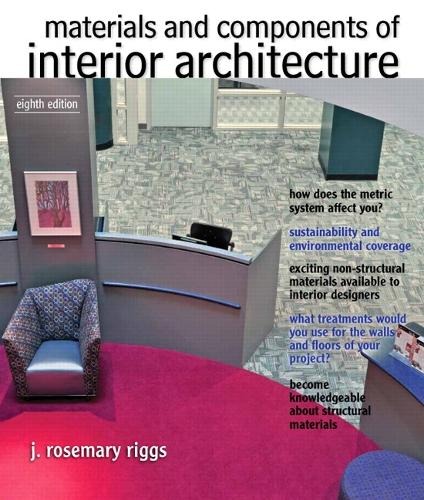
Offers a unique look at interior design,fully covering the exciting breadth of nonstructural materials available to interior designers. With an eye on the environment, it instills a firm understanding of the products, properties, and uses of all materials—from floors, walls, and ceilings to installation and recycling. Going beyond paint and carpet, it explores over 27 different floorings and devotes separate chapters to kitchens and baths. Filled with the latest information from manufacturers, suppliers, and associations, it provides students with the knowledge to creatively engage the “nuts and bolts” of interior design—both in terms of structure and style.

The art of the object reached unparalleled heights in the medieval Islamic world, yet the deep intellectual dimensions of ceramics, metalwares, and other plastic arts in this milieu have not always been acknowledged. Arts of Allusion reveals the object as a crucial site where premodern craftsmen of the eastern Mediterranean and Persianate realms engaged their creations in fertile dialogue with poetry, literature, painting, and, perhaps most strikingly, architecture. Through close studies of objects from the ninth to the thirteenth centuries, this book reveals that allusions to architecture abound across media in the portable arts of the medieval Islamic world.

Daraa Highway - Ghabagheb - Syria
+963-15 2050 - 15 860 380 /1/2/3 - 11 662 3900