


Refine Results
Sort By
From
To

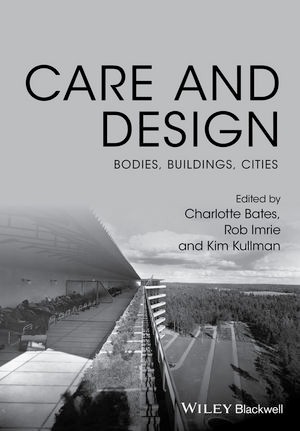
Connects the study of design with care, and explores how concepts of care may have relevance for the ways in which urban environments are designed. It explores how practices and spaces of care are sustained specifically in urban settings, thereby throwing light on an important arena of care that current work has rarely discussed in detail.
For a number of years, the healthy and environment-friendly building material earth, in common use for thousands of years, has been enjoying increasing popularity, including in industrialized nations. In hot dry and temperate climate zones, earth offers numerous advantages over other materials. Its particular texture and composition also holds great aesthetic appeal.
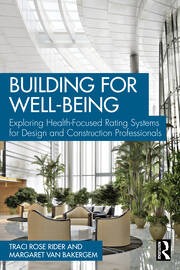
The first introduction to health-focused building standards for design and construction professionals. More than a summary of the state of the field, this practical resource guides designers, builders, developers, and owners through considerations for incorporating WELL®, Fitwel®, and other systems from the planning phase to ground-breaking and beyond.Drawing on the authors’ backgrounds in sustainable design and public health, chapters on the evolution of the green building movement and the relationship between health and the built environment provide vital context for understanding health-focused standards and certifications. The final chapter looks toward the future of health and the built environment.

Explores the rapid evolution of hospital design in the twentieth century, analysing the ways in which architects and other specialists reimagined the modern hospital. It examines how the vast expansion of medical institutions over the course of the century was enabled by new approaches to architectural design and it highlights the emerging political conviction that physical health would become the cornerstone of human welfare.
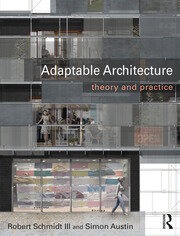
provides thought-provoking and inquisitive insights into how we can prolong the useful life of buildings by designing them to be more adaptable, and hence create a more sustainable built environment. The book provides a theoretical foundation counterpointed by the experiences and ideas of those involved in the design and use of buildings. It explains many approaches to designing for change, with lessons from history, and case studies including The Cedar Rapids Public Library, Kentish Town Health Centre and Folkestone Performing Arts Centre, which stretch our thinking beyond the conventional notions of adaptability. The authors reveal the many conditions that make it a complex design phenomenon, by considering the purpose, design and business case of buildings as well as the physical product. Full of summaries, diagrams, reference charts, tables, and photos of exemplar solutions for use as conversational tools or working aids, this book is for any professional or student who wants to research, question, imagine, illustrate - and ultimately design for - adaptation.

Presents an up-to-date and comprehensive introduction to the principles and findings of immunology. It contains full-colour illustrations, study questions, study aids and much more

Based on lecture notes of two summer schools with a mixed audience from mathematical sciences, epidemiology and public health, this volume offers a comprehensive introduction to basic ideas and techniques in modeling infectious diseases, for the comparison of strategies to plan for an anticipated epidemic or pandemic, and to deal with a disease outbreak in real time. It covers detailed case studies for diseases including pandemic influenza, West Nile virus, and childhood diseases. Models for other diseases including Severe Acute Respiratory Syndrome, fox rabies, and sexually transmitted infections are included as applications. Its chapters are coherent and complementary independent units. In order to accustom students to look at the current literature and to experience different perspectives, no attempt has been made to achieve united writing style or unified notation.
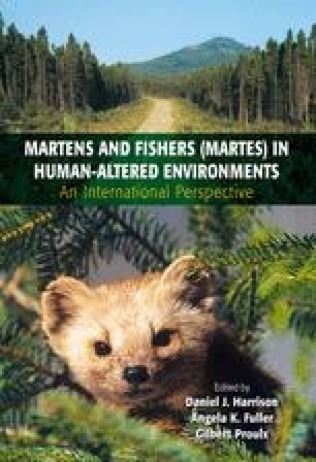
Examines the conditions where humans and martens are compatible and incompatible, and promotes land use practices that allow Martes to be representatively distributed and viable. All Martes have been documented to use forested habitats and 6 species (excluding the stone marten) are generally considered to require complex mid- to late-successional forests throughout much of their geographic ranges. All species in the genus require complex horizontal and vertical structure to provide escape cover protection from predators, habitat for their prey, access to food resources, and protection from the elements. Martens and the fisher have high metabolic rates, have large spatial requirements, have high surface area to volume ratios for animals that often inhabit high latitudes, and often require among the largest home range areas per unit body weight of any group of mammals. Resulting from these unique life history characteristics, this genus is particularly sensitive to human influences on their habitats, including habitat loss, stand-scale simplification of forest structure via some forms of logging, and landscape-scale effects of habitat fragmentation. Given their strong associations with structural complexity in forests, martens and the fisher are often considered as useful barometers of forest health and have been used as ecological indicators, flagship, and umbrella species in different parts of the world. Thus, efforts to successfully conserve and manage martens and fishers are associated with the ecological fates of other forest dependent species and can greatly influence ecosystem integrity within forests that are increasingly shared among wildlife and humans.We have made great strides in our fundamental understanding of how animals with these unique life history traits perceive and utilize habitats, respond to habitat change, and how their populations function and perform under different forms of human management and mismanagement.
At the beginning of each year, there is a deluge of top-10 lists on just about every subject you can imagine. A top-10 list of biggest news stories, best-selling books, most popular music and movies, richest companies, and best places to visit or live. It seems everyone has his or her own top-10 list, reflecting, perhaps, differences in regional, national, and cultural values. Companies and governments most often tend to focus their top-10 lists on economic priorities, or priorities related to national defense, security, public health, and new infrastructure. This year, 2007, was no exception. Yet, increasingly, we see governments, private organizations, and companies advocating a new type of prioritization. This framework needs to reach beyond the realms of economics, world trade, and corporate management to include the environment, stakeholders, public preferences, and social goals. Moreover, corporations and individuals are not only interested in generic 10-best lists; they want lists tailored to their values, goals, and current economic and social state. For example, the U. S.
The concept of genuine responsibility, recognizing the complexity of health care and the need for stakeholder-specific interpretations of responsibility, proposes as the underlying premise of responsibility (at least in regard to health care) the social agreement that distributive choices should be made on the basis of the premise of deliberate reciprocity. When all parties share the same foundation on which the notion of responsibility is built the resulting trust and cooperation among stakeholders enables them to find morally appropriate solutions in reforming health care.This book that is at the same time provocative and important. It proposes to change the way we think about deploying healthcare resources. It will accomplish its goal for readers who are willing to be challenged at a basic level. Intellectually sound and a very good read too.
The goals of the workshop included a discussion of the state of the science in identification of new research and approaches for water pollution events and communication of the management of water pollution and sustainability of water resources. Critical to management of accidental and intentional pollution events is the assessment of the risk, an understanding of the hazards and lessons learned from events which may lead to preventative management and control strategies. Public health protection will ultimately be improved by the ability to develop management frameworks which are flexible and adaptable to the specific region, country or watershed problems and concerns and allow for prioritization in the decision making. The integration of scientific information regarding the types of hazards the environmental fate of the chemical/biological, exposure pathways and human and ecosystem impacts may be implemented from both a qualitative or descriptive approach or using a more classical quantitative risk assessment paradigm. Thus the frameworks for assessing the risk and managing the risk may be seen as preventive, early warning and responsive.
Most physical and mental health professionals will agree that their time, space, and funds are generally in short supply, even under optimal conditions. Their participants (clients or patients), too, will admit to similar deficits of time and patience, even with optimal motivation. Overburdened mental health facilities are trying to cope with limited budgets and overworked and underpaid personnel. Low-Cost Approaches to Promote Physical and Mental Health addresses both sides of this shortfall by offering either self-administered or easily administered verbal and non-verbal interventions designed to promote positive health behaviors while requiring little or no outside funding.
Focuses on theoretical issues and empirical findings related to trends and determinants of healthy aging, including factors related to "healthy longevity" of the oldest-old, aged 80 and over. The group is the most rapidly increasing elderly sub-population and is most likely to need assistance in daily living in all countries. Chapters include both longitudinal and cross-sectional data from North America, Europe, and Asia in country-specific studies and cross-national comparisons. Part I focuses on the definition, components, concepts, measurements, and determinants of healthy aging, and discusses the trends and patterns of disability and healthy life expectancy at the macro level. Part II addresses individual healthy aging, including its biological and socio-demographic aspects. Part III focuses on issues concerning the family and healthy aging, and Part IV explores formal and informal care for healthy aging through governmental policy interventions and community service programs.
Provides a comprehensive portrait of lone parenthood at the beginning of the XXI century from a life course perspective. The contributions included in this volume examine the dynamics of lone parenthood in the life course and explore the trajectories of lone parents in terms of income, poverty, labour, market behaviour, wellbeing, and health. Throughout, comparative analyses of data from countries as France, the United Kingdom, Ireland, Germany, Belgium, Sweden, Switzerland, Hungary, and Australia help portray how lone parenthood varies between regions, cultures, generations, and institutional settings. The findings show that one-parent households are inhabited by a rather heterogeneous world of mothers and fathers facing different challenges.
Examines social and medical responses to the disfigured face in early medieval Europe, arguing that the study of head and facial injuries can offer a new contribution to the history of early medieval medicine and culture, as well as exploring the language of violence and social interactions. Despite the prevalence of warfare and conflict in early medieval society, and a veritable industry of medieval historians studying it, there has in fact been very little attention paid to the subject of head wounds and facial damage in the course of war and/or punitive justice. The impact of acquired disfigurement —for the individual, and for her or his family and community—is barely registered, and only recently has there been any attempt to explore the question of how damaged tissue and bone might be treated medically or surgically..
In the last few decades the effect of lead contamination on human health has received significant attention. Based on such concerns, elimination of lead from ceramic glaze, paint, plumbing etc. has been legislated and implemented. However, until recently, solders used in electronics, based on suitability and knowledge-base developed over a long period of time, remained lead-based. Successive rapid advances in microelectronic devices in recent decades make them obsolete within a very short period after their introduction resulting in significant quantities of electronic wastes in landfills. Leaching of toxic lead from such electronic wastes can result in contamination of the human food chain causing serious health hazards. As a consequence, several European and Pacific Rim countries have passed legislations warranting elimination of lead from electronic solders by fast approaching deadlines. Global economic pressures brought on by such legislations have resulted in a flurry of research activities to find suitable lead-free substitutes for the traditional leaded electronic solders.

This book also addresses important theoretical and methodological issues related to the study of Latinas/os and presents in-depth analyses (both quantitative and qualitative) of substantive issues relevant to this population, including migration, demographic patterns and processes, education, health, citizenship, political participation, religion, gender and sex roles, literary and cultural production, and the media. The authors seek to educate and increase awareness of the diversity that exists among the Latina/o population, and to carefully examine the social, economic, demographic, cultural, and political impacts and contributions that this growing population has had in the United States. The edited volume presents a holistic and multidisciplinary perspective of this group, and it critically documents how Latinas and Latinos have changed and will continue to change the face of América.

This book examines the role of kinship and the family’s influence on the health outcomes of their children, their children’s selection of marriage partners, couples having higher order births or reduced fertility, individual migration and origins of populations. Mortality patterns are examined to determine the influence of fertility patterns on parents’ mortality, the contribution of parents’ longevity to their children’s lifespan, and the whether a family history of disease affects the risk of dying from that same disease.This volume emphasizes the importance of studies that include and compare other factors related to social organization with information on multi-generational families. The authors elucidate previous explanations and provide provocative new results. Such intergenerational research is crucial in understanding long term demographic trends and processes.
Biological invasions are a global problem whose local impact can be of great magnitude. The prevention and minimization of the impact of invasive alien species has become a priority because of their negative impact on biodiversity, economy and public health. Issues in Bioinvasion Science contains key contributions of this conference. The themes included cut across different aspects of non-native species invasions. This volume is essential reading for anyone seeking an understanding of non-native species invasions.

In This book, Compendium of Chemical Warfare Agents, author Steven L. Hoenig provides all the necessary information that First Responders, Hospitals, HazMat Teams, Fire and Rescue Services, and other First Responders need to know when dealing with dangerous chemical agents.Coverage includes health effects, physical characteristics, hazards from reactivity, protection of personnel, and general first aid for each agent. The book provides quick and easy access to critical data on chemical warfare agents, both at the scene of release and in the laboratory.

Daraa Highway - Ghabagheb - Syria
+963-15 2050 - 15 860 380 /1/2/3 - 11 662 3900