



Page 117
Page 117
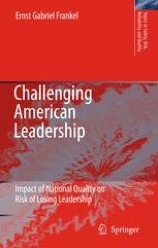
Challenging American Leadership : Impact of National Quality on Risk of Losing Leadership
After leading the world during most of the 20th century in economic, political, technological, military, and even social terms, America’s role is now being challenged. Its values questioned, and its methods often disparaged, America had become the clear example to be followed or even copied, yet its more recent strategic and political decisions gained little international support and a lot of outright opposition. The quality of its national planning and decision making has been severely compromised, and risk management appears to be largely absent. India and China are now emerging as new economic powers, with advancing technological prowess. Their focus is on socioeconomic development, but their capabilities and potentials are much broader and may challenge America's leadership before long, unless it recognizes the changing demands of the new wide open globalized world.
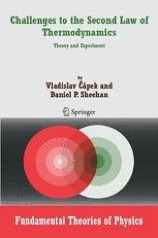
Challenges to the second law of thermodynamics : Theory and experiment
The second law of thermodynamics is considered one of the central laws of science, engineering and technology. For over a century it has been assumed to be inviolable by the scientific community. Over the last 10-20 years, however, more than two dozen challenges to it have appeared in the physical literature - more than during any other period in its 150-year history. The number and variety of these represent a cogent threat to its absolute status. This is the first book to document and critique these modern challenges. Written by two leading exponents of this rapidly emerging field, it covers the theoretical and experimental aspects of principal challenges. In addition, unresolved foundational issues concerning entropy and the second law are explored. This book should be of interest to anyone whose work or research is touched by the second law.

Challenges of Power Engineering and Environment ; Proceedings of the International Conference on Power Engineering 2007
This book is the proceedings of the International Conference on Power Engineering-2007. The fields of this book include power engineering and relevant environmental issues. The recent technological advances in power engineering and related areas are introduced. This book is valuable for researchers, engineers and students majoring in power engineering.

Challenges for next generation network operations and service management : 11th Asia-Pacific network operations and management symposium, APNOMS 2008, Beijing, China, October 22-24, 2008. Proceedings
This book constitutes the refereed proceedings of the 11th Asia-Pacific Network Operations and Management Symposium, APNOMS 2008, held in Beijing, China, in October 2008.
Challenges for Computational Intelligence
Computational Intelligence (CI) is used as a name to cover many existing branches of science, with artificial neural networks, fuzzy systems and evolutionary computation forming its core. In recent years CI has been extended by adding many other subdisciplines and it became quite obvious that this new field also requires a series of challenging problems that will give it a sense of direction. Without setting up clear goals and yardsticks to measure progress on the way many research efforts are wasted.The book written by top experts in CI provides such clear directions and the much-needed focus on the most important and challenging research issues, showing a roadmap how to achieve ambitious goals.
Challenges and Solutions for Sustainable Smart City Development
Discusses advances in smart and sustainable development of smart environments. The authors discuss the challenges faced in developing sustainable smart applications and provide potential solutions. The solutions are aimed at improving reliability and security with the goal of affordability, safety, and durability. Topics include health care applications, sustainable smart transportation systems, intelligent sustainable wearable electronics, and sustainable smart building and alert systems. Authors are from both industry and academia and present research from around the world. Addresses problems and solutions for sustainable development of smart cities; Includes applications such as healthcare, transportation, wearables, security, and more ; Relevant for scientist and researchers working on real time smart city development.
Ceramic materials : Science and engineering
Ceramic Materials: Science and Engineering is an up-to-date treatment of ceramic science, engineering, and applications in a single, integrated text. Building on a foundation of crystal structures, phase equilibria, defects and the mechanical properties of ceramic materials, students are shown how these materials are processed for a broad diversity of applications in today's society. Concepts such as how and why ions move, how ceramics interact with light and magnetic fields, and how they respond to temperature changes are discussed in the context of their applications. References to the art and history of ceramics are included throughout the text. The text concludes with discussions of ceramics in biology and medicine, ceramics as gemstones and the role of ceramics in the interplay between industry and the environment. The text is extensively illustrated and includes references and questions for the student.
Ceramic and Glass Materials : Structure, Properties and Processing
Ceramic and Glass Materials: Structure, Properties and Processing is a concise and comprehensive guide to the key ceramic and glass materials used in modern technology. Each chapter focuses on the structure-property relationships for these important materials and expands the reader’s understanding of their nature by simultaneously discussing the technology of their processing methods. In each case, the resulting understanding of the contemporary applications of the materials provides insights as to their future roles in twenty first century engineering and technology. Organized to be a practical and comprehensive resource, each chapter is dedicated to a specific material such as: alumina, mullite, sillimanite minerals, aluminates, quartz and silicas, refractory oxides, clays, concrete and cement, lead compounds, and zirconia.

Centrifugal Pumps
This book gives an unparalleled, up-to-date, in-depth treatment of all kinds of flow phenomena encountered in centrifugal pumps including the complex interactions of fluid flow with vibrations and wear of materials.
Central European Functional Programming School : 2nd Summer School, CEFP 2007, Cluj-Napoca, Romania, June 23-30, 2007, Revised Selected Lectures
This volume presents texts from selected lectures given by leading researchers at the Second Central European Functional Programming School, CEFP 2007, held in Cluj-Napoca, Romania, in June 2007.

Cell-secreted vesicles : Methods and protocols
Pesents hands-on technological protocols used to target an array of cell-secreted extracellular vesicles (EVs) in a variety of biological systems. Beginning with methods for EV purification and analysis, the book continues with sections on the study of EV functions as well as specific systems and models allowing for the study of EVs of different origin. Written for the highly successful Methods in Molecular Biology series, chapters include introductions to their respective topics, lists of the necessary materials and reagents, step-by-step and readily reproducible laboratory protocols, and tips on troubleshooting and avoiding known pitfalls.
Cells and Robots : Modeling and Control of Large-Size Agent Populations
Cells and Robots is an outcome of the multidisciplinary research extending over Biology, Robotics and Hybrid Systems Theory. It is inspired by modeling reactive behavior of the immune system cell population, where each cell is considered as an independent agent. In our modeling approach, there is no difference if the cells are naturally or artificially created agents, such as robots. This appears even more evident when we introduce a case study concerning a large-size robotic population scenario. Under this scenario, we also formulate the optimal control of maximizing the probability of robotic presence in a given region and discuss the application of the Minimum Principle for partial differential equations to this problem. Simultaneous consideration of cell and robotic populations is of mutual benefit for Biology and Robotics, as well as for the general understanding of multi-agent system dynamics.The text of this monograph is based on the PhD thesis of the first author. The work was a runner-up for the fifth edition of the Georges Giralt Award for the best European PhD thesis in Robotics, annually awarded by the European Robotics Research Network (EURON).

Cell Technology for Cell Products ; Proceedings of the 19th ESACT Meeting, Harrogate, UK, June 5-8, 2005
The 19th ESACT meeting was to highlight the novel capabilities of the industry to move the products towards the clinic and was attended by a wide range of workers in the industry and for many it was their first ESACT meeting. The meeting was started with a session on Transcription to Secretion with a notable set of presentations on the emerging issues. The other sessions that followed Therapeutic Cell Engineering, Gene Medicine, Cells to Tissue, Protein products and Process Technology guided the delegates through the advances made for the progression of the biotechnology towards the industrial application of the products from cells. The meeting was supported by some exceptional invited speakers from around the world whose contributions complemented the emerging technologies and the changes being made at the industrial end of the ESACT spectrum.

Cell Separation : Fundamentals, Analytical and Preparative Methods
This special volume on cell separations discusses fundamental and applied aspects of the analytical and preparative cell-separation technologies. The aim is to enlighten the reader with the new developments in cell-separation technologies and at the same time provide sufficient knowledge with other existing and more commonly used techniques. The volume is comprised of contributions from subject experts from both academia and industry, focuses on the research and commercial aspects of cell-separation technology, and provides readers with broader choice. Unlike protein separation, the major challenge in cell separation has been the recovery of the cells in viable form after they are bound to the separation matrix, as cells bind more strongly through multipoint attachment. This is an important focus of the present work and one we believe will provide new insight to researchers in this field
Cell Motility
Cell motility is a fascinating example of cell behavior which is fundamentally important to a number of biological and pathological processes. It is based on a complex self-organized mechano-chemical machine consisting of cytoskeletal filaments and molecular motors. In general, the cytoskeleton is responsible for the movement of the entire cell and for movements within the cell. The main challenge in the field of cell motility is to develop a complete physical description on how and why cells move. For this purpose new ways of modeling the properties of biological cells have to be found. This long term goal can only be achieved if new experimental techniques are developed to extract physical information from these living systems and if theoretical models are found which bridge the gap between molecular and mesoscopic length scales. Cell Motility gives an authoritative overview of the fundamental biological facts, theoretical models, and current experimental developments in this fascinating area.
Cell Engineering : Apoptosis
A reference on the development of cellular systems for the production of recombinant glycoproteins, gene and cell therapies, drug screening and tissue engineering. It intends to review the in-depth assessments of this type of programmed cell death. It is suitable for biotechnologists and researchers in apoptosis, cell biology, and cell culture.
Cell Culture Engineering
Many patients suffering with life-threatening diseases or chronic dysfunctions, which were medically untreatable not long ago, can attest to the wonder these drugs have achieved. Although the first generation of p- tein therapeutics was produced in recombinant Escherichia coli, most recent products use mammalian cells as production hosts. Not long after the first p- duction of recombinant proteins in E. coli, it was realized that the complex tasks of most post-translational modifications on proteins could only be efficiently carried out in mammalian cells.
CEB-FIP Model code 1990 : Design code
This document is a comprehensive design code for concrete. It is the result of a comprehensive revision to the original model code of 1978, which was produced jointly by the Comite Euro-International du Beton (CEB) and the Federation Internationale de la Precontrainte (FIP). Model Code 1990 has more detailed guidelines and explanations than national codes and can be used as a basis for them. It has already influenced the codification work that is being carried out both nationally and internationally and will continue to do so. With the publication of Eurocode 2: Part 1 as a draft pre-standard, this document is a useful reference during the consultative period before Eurocode 2 becomes a European standard. It may be of use to anyone involved in codification work on concrete.

CDMA Radio with Repeaters
This book analyzes the interaction of the CDMA system within a mobile channel environment, emphasizing repeaters, diversities, and other performance-enhancing means. The authors provide a unique and clear description of repeater-embedded networks’ planning, design, and optimization in different scenarios. Simple physically-based expressions are developed and supported by extensive field experience, and provide insight into the network dynamics. CDMA Radio with Repeaters is intended for wireless RF engineers and system architects, and for researchers working on advanced wireless networks, including MIMO systems. The material also provides insight for helping cellular managers and business assess costs and risks. This book is also suitable as a reference book for graduate courses.
Cathodic protection for reinforced concrete structures
For specialist contractors, large consultants and owners of corrosion damaged structures, and looks at international experience with this technique. It examines why corrosion is occurring, the differences in the application of CP with the stark dichotomy in its success and failure, and finally ways in which its performance can be improved on future installations.
