


Refine Results
Sort By
From
To

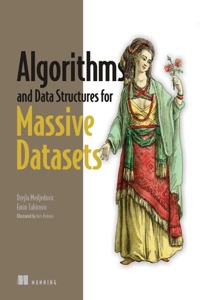
Learn: Probabilistic sketching data structures for practical problems Choosing the right database engine for your application Evaluating and designing efficient on-disk data structures and algorithms Understanding the algorithmic trade-offs involved in massive-scale systems Deriving basic statistics from streaming data Correctly sampling streaming data Computing percentiles with limited space resources Algorithms and Data Structures for Massive Datasets reveals a toolbox of new methods that are perfect for handling modern big data applications. You'll explore the novel data structures and algorithms that underpin Google, Facebook, and other enterprise applications that work with truly massive amounts of data. These effective techniques can be applied to any discipline, from finance to text analysis. Graphics, illustrations, and hands-on industry examples make complex ideas practical to implement in your projects--and there's no mathematical proofs to puzzle over. Work through this one-of-a-kind guide, and you'll find the sweet spot of saving space without sacrificing your data's accuracy. About the Technology Standard algorithms and data structures may become slow--or fail altogether--when applied to large distributed datasets. Choosing algorithms designed for big data saves time, increases accuracy, and reduces processing cost.

This book constitutes the refereed proceedings of the 12th International Conference on Algebraic Methodology and Software Technology, AMAST 2008, held in Urbana, IL, USA, in July 2008.

The Belgian block cipher Rijndael was chosen in 2000 by the U.S. government’s National Institute of Standards and Technology (NIST) to be the successor to the Data Encryption Standard. Rijndael was subsequently standardized as the Advanced Encryption Standard (AES), which is potentially the world’s most important block cipher. In 2002, some new analytical techniques were suggested that may have a dramatic effect on the security of the AES. Existing analytical techniques for block ciphers depend heavily on a statistical approach, whereas these new techniques are algebraic in nature.

AI (artificial intelligence) is predicted to radically change teaching and learning in both schools and industry causing radical disruption of work. AI can support well-being initiatives and lifelong learning but educational institutions and companies need to take the changing technology into account. Moving towards AI supported by digital tools requires a dramatic shift in the concept of learning, expertise and the businesses built off of it. Based on the latest research on AI and how it is changing learning and education, this book will focus on the enormous opportunities to expand educational settings with AI for learning in and beyond the traditional classroom. This book also introduces ethical challenges related to learning and education, while connecting human learning and machine learning.

Supply Chain Event Management (SCEM)" is one of the major topics in application-oriented Supply Chain Management. However, many solutions lack conceptual precision and currently available client-server SCEM-systems are ill-suited for complex supply networks in today's business environment,In this book a thorough analysis of the event management problem domain is the starting point to develop a generic agent-based approach to Supply Network Event Management. The concept is illustrated with prototypical implementations and assessed in a multi-dimensional evaluation of potential benefits. The main focus lies on practical issues of event management (e.g. semantic interoperability) and economic benefits to be achieved with agent technology in this state-of-the-art problem domain.

The field of agent & multi-agent systems is experiencing tremendous growth. At the same time the field of formal methods is blossoming and has proven its importance in industrial and government applications. The FAABS (Formal Approaches to Agent-Based Systems) workshops, merging the concerns of the two fields, provided a timely and compelling platform on which the growing concerns and requirement of agent-based systems users that systems should be accompanied by behavioral assurances, could be discussed. This book has arisen from the overwhelming response to FAABS ’00, ’02 & ’04 and all chapters are updated or represent new research, and are designed to provide a more in-depth treatment of the topic. Examples of how others have applied formal methods to agent-based systems are included, plus formal method tools & techniques that readers can apply to their own systems.

Multi-agent systems are one of the most exciting research areas in Artificial Intelligence. This book reports on the results achieved in this area, discusses the benefits (and drawbacks) that agent-based systems may bring to medical domains and society.

AGENT INTELLIGENCE THROUGH DATA MINING offers a self-contained overview of a relatively young but important area of research: the intersection of agent technology and data mining. This intersection leads to considerable advancements in the area of information technologies, drawing the increasing attention of both research and industrial communities. It can take two forms: a) the more mundane use of intelligent agents for improved data mining and; b) the use of data mining for smarter, more efficient agents. The second approach is the main focus of this volume. this book presents a methodology for developing multi-agent systems, describes available open-source tools to support this process, and demonstrates the application of the methodology on three different cases. AGENT INTELLIGENCE THROUGH DATA MINING is designed for a professional audience composed of researchers and practitioners in industry.

The present book provides an account of the latest work on a variety of aspects related to affect and emotion in human-technology interaction. It covers theoretical issues, user experience and design aspects as well as sensing issues, and reports on a number of affective applications that have been developed in recent years.

Explores the latest techniques and advancements in unmanned aerial vehicle (UAV) detection, classification, and tracking. As UAV technology continues to evolve and become more accessible, there is a growing need for effective methods to detect, identify, and track these devices in various scenarios. This reprint provides a thorough overview of the state-of-the-art approaches for UAV detection, classification, and tracking, covering both theoretical and practical aspects.The reprint begins by introducing the basics of UAVs and their various applications, followed by a detailed overview of the challenges associated with UAV detection, classification, and tracking. The authors then present the latest techniques and algorithms used in the field, including machine-learning-based approaches, computer vision techniques, and sensor fusion techniques. The reprint also covers the challenges of real-world applications, such as dealing with occlusions, sensor noise, and environmental factors.

This edited volume contains the selected papers presented at the scientific board meeting of the German Cluster of Excellence on “Integrative Production Technology for High-Wage Countries”, held in November 2014. The topical structure of the book is clustered in six sessions: Integrative Production Technology, Individualised Production, Virtual Production Systems, Integrated Technologies, Self-Optimising Production Systems and Human Factors in Production Technology. The Aachen perspective on a holistic theory of production is complemented by conference papers from external leading researchers in the fields of production, materials science and bordering disciplines.

"Pervasive Computing and Networking aim at providing ubiquitous, ever-present, adaptable, smart, enveloping and immersive environments in which computing components and humans can interact regardless of the location. The combination of an abundance of computational power of the processors and the communication bandwidth provided by the wireless and mobile networking everywhere and all the time makes such environments within the reach of current technology. Yet, to realize the full potential of such environments, many technical and economical challenges needs to be overcome. These challenges and the perspective on the seminal directions of the research in this area were the subject of the Workshop for Pervasive Computing and Networking at Rensselaer Polytechnic Institute, Troy, NY, USA.

In the era of the internet of things, images have played important roles in human–computer interactions, and with the arrival of big data technology, people have higher requirements regarding image quality, especially for images collected in dark light. This can be addressed through the development of camera hardware quality, i.e., the resolution and exposure time of cameras, which may require high computational costs. As an alternative, image enhancement techniques can exact salient features to improve the quality of captured images according to the differences in diverse features, although they suffer from some challenges, i.e., a low contrast, artifacts, and overexposure, thus making it decidedly necessary to determine how to use advanced image enhancement techniques.
This explosion is a result of the growing use of electronic media. But what is data mining (DM)? A Web search using the Google search engine retrieves many (really many) definitions of data mining. We include here a few interesting ones. One of the simpler definitions is: “As the term suggests, data mining is the analysis of data to establish relationships and identify patterns” [1]. It focuses on identifying relations in data. Our next example is more elaborate: An information extraction activity whose goal is to discover hidden facts contained in databases. Using a combination of machine learning, statistical analysis, modeling techniques and database technology, data mining finds patterns and subtle relationships in data and infers rules that allow the prediction of future results. Typical applications include market segmentation, customer profiling, fraud detection, evaluation of retail promotions, and credit risk analysis .

Optical fiber communication industry has gained unprecedented opportunities and achieved rapid progress in recent years. However, with the increase of data transmission volume and the enhancement of transmission demand, the optical communication field still needs to be upgraded to better meet the challenges in the future development. Artificial intelligence technology in optical communication and optical network is still in its infancy, but the existing achievements show great application potential. In the future, with the further development of artificial intelligence technology, AI algorithms combining channel characteristics and physical properties will shine in optical communication. This reprint introduces some recent advances in optical fiber communication and optical network, and provides alternative directions for the development of the next generation optical fiber communication technology.

About building some of Leonardo da Vinci's most famous inventions with LEGO's breathtaking robot technology, the LEGO MINDSTORMS NXT. In this book, you will revive such fascinating devices as the flying machine, the aerial screw, the revolving bridge, the double leaf spring catapult, and the armored car—five centuries after their creation by the great Renaissance engineer.

Advanced manufacturing technology and systems cover a broad scope involving manufacturing processes, machine tool design, system optimization, smart and flexible manufacturing, theoretical study and metrology. This reprint comprises 19 original papers concerning recent advances in the research and development of AMTSs. Specifically, there are many research fields that are covered: machining processes (six papers), micro-/nano-precision fabrication (four papers), and system optimization (eight papers), in addition to one review.

Provides research on how technologies such as artificial intelligence-based machine learning and deep learning can be applied to remote sensing. Through this, we can see the process of solving the existing problems of image and image signal processing for remote sensing. These techniques are computationally intensive and require the help of high-performance computing devices. With the development of devices such as GPUs, remote sensing technology, and aerial sensing technology, it is possible to monitor the Earth with high-resolution images and to obtain vast amounts of Earth observation data. The papers published in this reprint describe recent advances in big data processing and artificial intelligence-based technologies for remote sensing technology.

Divided into three parts. The first part discusses the architectural and design aspects of Flex 3 application development. It explains the internals of a Flex 3 application and advocates a few best practices to fine-tune your application to ensure maximum performance. It includes tutorials on creating custom components, data binding, and creating AIR-powered desktop applications. The second part concentrates on effectively integrating Flex 3 with server- and client-side technologies. Techniques for integration with Java and PHP are covered in detail, and content covering interaction with client-side technologies is also included. After reading the chapter on JavaScript integration, you will be ready to create applications that can use Ajax and Flex 3 together. The third and final part of the book is a unique and eclectic mix of some advanced topics like mash-ups, collaborative applications, 3D rendering, highly interactive visualization, and audio and video streaming.
An AKM solution is about exploiting the Web as a knowledge engineering medium, and developing knowledge-model-based families of platforms, model-configured workplaces and services.

Daraa Highway - Ghabagheb - Syria
+963-15 2050 - 15 860 380 /1/2/3 - 11 662 3900