


Refine Results
Sort By
From
To

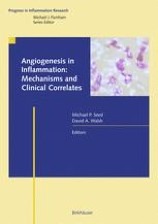
This volume relates the lessons learned from tumour biology applied to inflammation. This issue of Angiogenesis in Inflammation: Mechanisms and Clinical Correlates develops current knowledge on the mechanisms at the molecular and cellular levels as they relate to inflammation, including acute and chronic inflammation, neurogenic initiation, and the role of the multiple cellular components that comprise inflammation: granulocytes, macrophages, fibroblasts, dendritic cells and lymphocytes. This is related to inflammatory disease: not only the familiar angiogenesis dependent diseases of rheumatoid arthritis and psoriasis, but also loci such as the lung, gastric ulcers, the eye with uveitis, wound healing and periodontal disease and their therapy, how this knowledge may be used in the discovery of novel therapeutics. The volume brings together experts in each of these fields to link the molecular and cellular processes in angiogenesis to those of inflammation and disease, culminating in a discourse on areas for future therapies.
Anemia is found in approximately 80% of elderly patients, most often caused by chronic disease and iron deficiency. Hemopoiesis is a crossroad for many aging-related events.Why do older patients become anemic When should a diagnostic work up of anemia be initiated in the older person? What are the clinical consequences of anemia? Can the treatment of anemia delay aging? Have erythropoietic growth factors played a role in age-related anemia? Who should receive an erythropoietin stimulating agent?When should the suspicion for Myelodysplastic Syndrome be ruled out and what are the clues?This book addresses these and many other important questions with a review of the most recent findings.
Andrology for the Clinician consists of two parts: In Part One, the busy clinician can easily find the problem-orientated information he or she needs on such issues as * Male factor fertility problems * Male contraception * Male genital tract infection and tumours Part Two contains in-depth subject-orientated information and adds important scientific background information to the recommendations received in Part One. Several leading experts have contributed to this work, which has been extensively subedited by world-renowned editors to ensure a well-structured didactic design and homogeneous content.
The field of androgen excess disorders has advanced substantially since the original publication of this book. The Androgen Excess Society (AES) was founded to bring together investigators in the field. A better understanding of the screening, progression, and molecular genetics of nonclassic adrenal hyperplasia (NCAH) has improved the clinical care and diagnostic accuracy of these patients. New criteria for the diagnosis of the polycystic ovary syndrome (PCOS) were proposed in Rotterdam, criteria that have resulted in controversy and, hopefully, initiation of new studies. The association of insulin resistance with PCOS has been strengthened, and the role of metformin in tre- ing the infertility of the PCOS has been validated. Risks for diabetes and, more cont- versially, cardiovascular disease in women with PCOS have received substantial investigation. Our understanding of the epidemiology and economic impact of these disorders has expanded, emphasizing their critical importance.
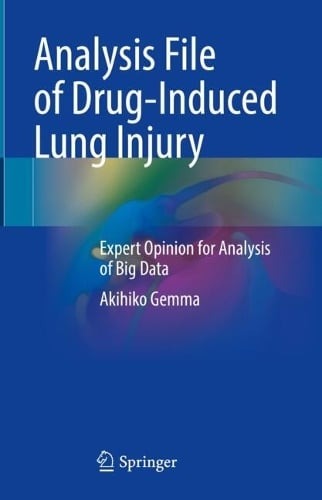
Describes the pathologic conditions of drug-induced lung injuries, monitoring strategies, and guides on how to interpret the evidence. It also dives into particular drugs that caused the disorder, such as EGFR inhibitors, anti-EGFR antibodies, mTOR inhibitors, proteasome inhibitors, immune checkpoint inhibitors, neoangiogenesis inhibitors, and other molecular targeted drugs. It outlines the analysis and interpretation of the post-marketing survey on surveillance of each drug for inducing pulmonary lesions presenting diffuse haziness. The data and analysis from this survey are valuable since a guideline is yet to be established due to limited clinical evidence and cases. As new drugs are developed, establishing treatment and event management is crucial.

Biological control is among the most promising methods for control of pests (including vectors), diseases and weeds. In this book ecological and societal aspects are for the first time treated together. In an ecological approach the aim is to evaluate the significance of certain biological properties like biodiversity and natural habitats. Also, it is important to see biological control from an organic (or ecological) farming point of view. In a societal approach terms like ‘consumer’s attitude’, ‘risk perception’, ‘learning and education’ and ‘value triangle’ are recognised as significant for biological production and human welfare.
This book contains a survey of present-day research into the biomedical fundamentals of Alzheimer’s disease (AD). It contains 20 chapters dealing with widely ranging topics, all of which have a bearing upon the understanding and treatment of AD. Starting with a broad survey of the contribution that the various microscopical techniques (light microscopy, electron microscopy, atomic force microscopy)
Alzheimer’s Disease: Advances in Genetics, Cellular and Molecular Biology provides exciting, comprehensive and up-to-date summaries of the most important recent advances in the genetic, molecular, biochemical, and cell biological studies of AD. The studies and advances described in this volume will help to accelerate the process of rational drug discovery and soon serve to extend and enhance the mental health and lifespan of our burgeoning elderly population.
Few medical or scientific addresses have so unmistakeably made history as the presentation delivered by Alois Alzheimer on November 4th, 1906 in Tübingen. The celebratory event, "Alzheimer 100 Years and Beyond" organized on the initiative of the Alzheimer community in Germany and worldwide, in collaboration with the Fondation Ipsen, at the very site of the original lecture, namely the Institute of Psychiatry at the University of Tübingen in Germany from November 2nd to 5th, 2006, was the highlight of the Alzheimer Year. Over the last century of Alzheimer research (1906-2006), remarkable progress has been achieved. Most of the authors of the major discoveries and the people involved in research in this field will present, during the meeting and in this volume, the pioneering research explaining the conditions under which they were conducted. The goal of this book is to honor the work accomplished, to summarize the most important knowledge and to provide material for the history of science.
Splicing of primary RNA transcript, i.e. removal of introns and joining of exons to produce mature mRNAs competent for translation into proteins, is a quasi-systematic step of gene expression in higher organisms. However, this process is not unequivocal but can follow alternate pathways. Alternative splicing of a given transcript can therefore yield several distinct mRNAs encoding as many different proteins. Its full biological significance has not been appreciated until it was recognized that alternative splicing is so general as to affect about 75% of all human genes. Therefore, alternative splicing not only vastly increases protein diversity but also offers numerous opportunities for aberrant splicing events with pathological consequences.
In this updated third edition of the critically-acclaimed volume, expert physicians assemble user-friendly, clinically-oriented guides to aid in the day-to-day management of the allergic patient. With an emphasis on common allergic diseases and the pharmacological tools to control them, Allergic Diseases: Diagnosis and Treatment, Third Edition disseminates the practical knowledge that practitioners have accumulated through practice and teaching in the field of allergy and immunology.
This book is organized around the indication that allelochemicals can be employed for biological control of plant pathogens and plant diseases. Specifically, this volume focuses on (i) discovery and development of natural product based fungicides for agriculture, (ii) direct use of allelochemicals as well as indirect effects through cover crops and organic amendments for plant parasitic pest control and (iii) application of allelopathy in pest management.
he atlas contains over 400 specially created black and white illustrations describing the anatomical extent of the malignant tumor in the primary site (T), regional lymph nodes (N) and distant metastases (M) for various sites, including the head and neck area, the digestive system, the thorax, the musculoskeletal system, the soft tissues, the breast, the urinary system and the genital system. Each illustration provides precise and detailed descriptions designed to clarify the crucial anatomical structures and to provide the reader with an immediate view of the progressive extension of the disease. The most important anatomical structures are identified by specific definitions.
AIDS-associated viral oncology is a significant healthcare problem. Since the identification of human immunodeficiency virus (HIV)-associated acquired immune disease syndrome (AIDS), the role of viruses in human cancers has become acutely apparent over the past twenty years. The understanding and treatment of AIDS-associated cancers has become a major concern among healthcare organizations. Human cancers that were once rare in the population have now become common within the HIV infected population.
Discusses the integration of artificial intelligence to revolutionize disease detection approaches, with case studies of AI in disease detection as well as insight into the opportunities and challenges of AI in healthcare as a whole. The book explores a wide range of individual AI components such as computer vision, natural language processing, and machine learning as well as the development and implementation of AI systems for efficient practices in data collection, model training, and clinical validation.
Agrobacterium’ is a comprehensive book on Agrobacterium research, including its history, application, basic biology discoveries, and effects on human society. Although the book largely focuses on providing a detailed review of virtually all molecular events of the genetic transformation process, it also provides coverage of ethical and legal issues relevant to the use of Agrobacterium as a "genetic transformation machine". The result is an all-inclusive text which readers—including scientists and students involved in plant genetic engineering—will find useful as a reference source for all major aspects of the Agrobacterium-mediated genetic transformation of plant and non-plant organisms.
Aging and Chronic Disorders brings the most up-to-date answers into clear, readable focus. Focusing on the most prevalent conditions affecting older adults (diabetes, cardiovascular disease, cancer, osteoporosis, osteoarthritis, rheumatoid arthritis, low back pain, and fibromyalgia), Morewitz and Goldstein analyze disabilities and risk factors, stressors and coping strategies, treatment and rehabilitation methods, and patient education and self-management. Separate chapters are devoted to cognitive changes, psychological problems, and trends in health care utilization among seniors, and all chapters are amplified by current research findings and instructive case studies. As in their recent work.
This book gives an overview of the sessions, panel discussions, and outcomes of the Advancing the Science of Cancer in Latinos conference, held in February 2018 in San Antonio, Texas, USA, and hosted by the Mays Cancer Center and the Institute for Health Promotion Research at UT Health San Antonio.
This volume is unique in being devoted solely to the radiation oncology of lung cancer, and will be of great value to all who are involved in the diagnosis and treatment of the disease. Both non-small cell and small cell lung cancer are considered in detail. Current state of the art treatment strategies and novel approaches that promise further improvements in outcome are explained and evaluated, with the aid of high-quality illustrations. Treatment-related toxicity is discussed, and further individual chapters focus on topics such as quality of life studies, prognostic factors and pitfalls in the design and analysis of clinical trials.
Challenging Charcot’s hypothesis that inflammatory response is the primary contributor to demyelination, Dr. Rodriguez and colleagues take a fresh, bold look at the causes and possible treatments of MS.Assuming oligodendrocyte injury as a prerequisite to MS, the authors explore viruses, toxins and genetic defects as possible culprits. They present novel methods to interrupt and reverse demyelination. This book examines the correlation between axonal loss and clinical deficits, including the implied role of the CD8+ T cell and perforin. It assesses proteases, specifically, kallikrein 6, which are strongly associated with active demyelination. By directing natural autoantibodies against oligodendrocytes that demonstrate remyelination in animal models, the authors envision clinical trials for remyelination enhancement.

Daraa Highway - Ghabagheb - Syria
+963-15 2050 - 15 860 380 /1/2/3 - 11 662 3900