


Refine Results
Sort By
From
To

This book takes stock of the needs, expectations and challenges of caring for a cancer patient at home or in hospital. Indeed, if the number of cancer cases is increasing in Western countries, their management is evolving. The emphasis today is on a more humane announcement of the disease, less aggressive treatments and a better quality of life. Better informed patients often wish to be treated at home. As the survival time lengthens, hospital stays are reduced and chosen. Home care teams will soon be relying on the hospital more easily, thanks to specific communication methods and care networks. Here, all the stakeholders involved in the psycho-oncological approach to the patient discuss the choice of place and means of treatment for patients: from the general practitioner to the psychologist, from the oncologist to the mobile palliative care unit.
Updates knowledge on recent advances in computational and bioinformatics tools/techniques and their practical applications in modern drug design and discovery programme. Also it encompasses fundamental principles, advanced methodologies and applications of various CADD approaches including several cutting-edge areas / presenting recent developments covering ongoing trends in the field of computer-aided drug discovery. Having contributions by a global team of experts, the book is expected to be an ideal resource for drug discovery scientists, medicinal chemists, pharmacologists, toxicologists, phytochemists, biochemists, biologists, RandD personnel, researchers, students, teachers and those working in the field of drug discovery. It will fill the knowledge gaps that exist in the current CADD approaches and methodologies/ protocols being widely used in both academic and research practices. Further, a special focus on current status of various computational drug design approaches (SBDD, LBDD, De-novo drug design, Pharmacophore-based search), bioinformatics tools and databases, computational screening and modeling of phytochemicals/natural products, artificial intelligence and machine learning, and network pharmacology and system biology would certainly guide researchers, students or readers to conduct their research in the emerging area(s) of interest. It is also expected to be highly beneficial to different stakeholders working in the pharmaceutical and biotechnology industries (RandD), the academic as well as research sectors. .

There is wide agreement on the need to change the prevalent agricultural models, given their negative impacts and their incompatibility with current societal issues. Agroecological transition has been promoted as a potential solution to the ecological, social and economic problems generated by these models. It however involves a systemic, multi-scale and transdisciplinary process. Due to this complexity, the overall picture of what farms and food systems “actually are” and “might be” may not be apparent at the individual level. Yet individuals’ knowledge and values provide complementary insights on how to proceed in deepening ecological modernisation. Expertise can also provide landmarks to be considered in that process. Because local stakeholders’ experience and skills are key resources in the adaptation and adoption of agroecological transition, new conceptual and methodological frameworks and tools have to be developed to support them in the design process of such a complex transition. This book presents feedback from the ‘Territorial Agroecological Transition in Action’- TATA-BOX research project, which was devoted to these specific issues.

Outlines the challenges of supporting the health and wellbeing of older adults around the world and offers examples of solutions designed by stakeholders, healthcare providers, and public, private and nonprofit organizations in the United States. The solutions presented address challenges including: providing person-centered long-term care, making palliative care accessible in all healthcare settings and the home, enabling aging-in-place, financing long-term care, improving care coordination and access to care, delivering hospital-level and emergency care in the home and retirement community settings, merging health and social care, supporting people living with dementia and their caregivers, creating communities and employment opportunities that are accessible and welcoming to those of all ages and abilities, and combating the stigma of aging. The innovative programs of support and care in Aging Well serve as models of excellence that, when put into action, move health spending toward a sustainable path and greatly contribute to the well-being of older adults.

Component-based software development regards software construction in terms of conventional engineering disciplines where the assembly of systems from readily-available prefabricated parts is the norm. Because both component-based systems themselves and the stakeholders in component-based development projects are different from traditional software systems, component-based testing also needs to deviate from traditional software testing approaches. Gross first describes the specific challenges related to component-based testing like the lack of internal knowledge of a component or the usage of a component in diverse contexts. He argues that only built-in contract testing, a test organization for component-based applications founded on building test artifacts directly into components, can prevent catastrophic failures like the one that caused the now famous ARIANE 5 crash in 1996. This book is the first comprehensive treatment of the intricacies of testing component-based software systems. With its strong modeling background, it appeals to researchers and graduate students specializing in component-based software engineering. Professionals architecting and developing component-based systems will profit from the UML-based methodology and the implementation hints based on the XUnit and JUnit frameworks.
Introduces a novel approach to the design and operation of large ICT systems. It views the technical solutions and their stakeholders as complex adaptive systems and argues that traditional risk analyses cannot predict all future incidents with major impacts. To avoid unacceptable events, it is necessary to establish and operate anti-fragile ICT systems that limit the impact of all incidents, and which learn from small-impact incidents how to function increasingly well in changing environments. The book applies four design principles and one operational principle to achieve anti-fragility for different classes of incidents. It discusses how systems can achieve high availability, prevent malware epidemics, and detect anomalies. Analyses of Netflix’s media streaming solution, Norwegian telecom infrastructures, e-government platforms, and Numenta’s anomaly detection software show that cloud computing is essential to achieving anti-fragility for classes of events with negative impacts.
Manufacturing of products in urban production sites is connected to unique potentials, yet also to specific challenges. Urban factories can provide functional diversity and contribute positive impacts to a city. The concept of urban production receives rising attention in research and industry and it is recognized in its interdisciplinary nature. With a holistic approach from both the urban perspective and the factory perspective, negative impacts can be minimized, positive effects enabled and mutually beneficial, symbiotic combinations created. The presented framework and methods for the evaluation and implementation of sustainable urban production systems allow the assessment of impacts and provide the means to control and utilize the unique strengths of urban factories for cities and industry. This will allow a structured derivation of methods and measures from the concept of urban production for producing enterprises and the urban stakeholders.

This book presents up-to-date analyses of community-based approaches to sustainable resource management of SEPLS (socio-ecological production landscapes and seascapes) in areas where a harmonious relationship between the natural environment and the people who inhabit it is essential to ensure community and environmental well-being as well as to build resilience in the ecosystems that support this well-being.
This book focuses on Switzerland-based medium-sized companies with a longstanding export tradition and a proven dominance in global niche markets. Based upon in-depth documentation and analysis of 36 Swiss companies over their entire history, an expert team of authors presents several parallels in the pathways and success factors which allowed these firms to become dominant and operate from a high-cost location such as Switzerland.
Strong emphasis is placed on things that happen before, around, and after the project itself. So, while the basic disciplines like engaging with stakeholders, managing scope, schedules, costs, risks, issues, changes, and communication, are thoroughly explained, other important aspects are covered. These include: governance of a project and of a portfolio of projects, project selection with its financial and non-financial aspects, effective use of the business case through to benefits realization, procurement, outsourcing and partnership, and also the agile mindset that is valuable beyond Agile projects.

At a time when managers often provide fodder for unseemly headlines, and some are even compared unflatteringly with locusts, today’s business leaders are called upon as never before to demonstrate the moral justification for their activities, and to ensure that it is understood by all the key stakeholders of a company. What is required is nothing less than a management renaissance, based on a thoroughgoing concept of corporate leadership; there is no less a need for decision makers who hold themselves to the highest standards, with a positive perception of their fu- tion as agents of dissemination, and who are committed to the good not only of “their” firm, but also of society in general.
"The book uses an economic lens to identify the main features of climate-smart agriculture (CSA), its likely impact, and the challenges associated with its implementation. This book offers tools and insights for a range of stakeholders to help meet these challenges in the many forms they are manifested."
Tells the Tesla story and then presents chapters that address, in order: corporate governance and project stakeholder or communication management, project portfolios as strategic corporate portfolios, and an executive-level review of the best-practice project management paradigm, as applied to capital projects.
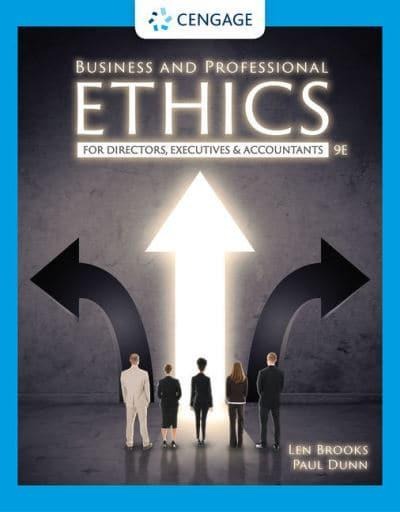
Learn why ethical behavior is so important and how to recognize potential pitfalls that involve much more than memorizing rules. You master the skills to develop a corporate culture of integrity that maintains stakeholder support and enables directors and auditors to complete their jobs. You also learn how to use ethical strategies to make decisions, as this edition examines the latest information on governance scandals, legal liability and professional accounting and auditing issues.

This book tells the story of how Sweden is becoming a virtually cashless society. Its goal is to improve readers’ understanding of what is driving this transition, and of the factors that are fostering and hampering it. In doing so, the book covers the role of central banks, political factors, needs for innovation, and the stakeholders involved in developing a cashless ecosystem. Adopting a historical standpoint, and drawing on a unique dataset, it presents an academic perspective on Sweden’s leading role in this global trend. The global interest in the future of cash payments makes the Swedish case particularly interesting. As a country that is close to becoming a cashless economy, it offers a role model for many other countries to learn from - whether they want to stimulate or reduce the use of cash. This highly topical book will be of interest to politicians, researchers, businesses, financial service providers and payment service providers, as well as fintech start-ups, regulators and other authorities.
Blockchain technology and artificial intelligence (AI) have the potential to transform how the accounting and financial services industries engage with the business, stakeholder and consumer communities. Presenting a blend of technical analysis with current and future applications, this book provides professionals with an action plan to embrace and move forward with these new technologies in financial and accounting organizations.
Aims to explore the aspects of strategic leadership in a digital context together with the cyber-physical relationships whilst performing business activities. Furthermore, this book looks to investigate the interactions from both the organization strategy including the cross-functional actors/stakeholders whom are operating within the organization and the various characteristics of operating in a cyber secure ecosystem.
Investigates why, despite more and more resources devoted to safety training, expectations are not entirely met, particularly in the industrial sectors that have already achieved a high safety level. It not only reflects the most precious viewpoints of experts from different disciplines, different countries, with experiences in various industrial fields at the cutting edge of theories and practices in terms of safety, professionalization and their relationships. It also consolidates the positioning of the Foundation for an Industrial Safety Culture, highlighting what is currently considered at stake in terms of safety training, taking into account the system of constraints the different stakeholders are submitted to. It reports some success stories as well as elements which could explain the observed plateau in terms of outcome. It identifies some levers for evolution for at-risk industry and outlines a possible research agenda to go further with experimental solutions.
Hints of globalization have actually been around for several decades, even though they made only a modest impact; however, the availability of global capital and advances in communication technology have emp- sized the process of internationalization and the tools available to connect and integrate business activities to answer to more complex needs of c- ents. Moreover, the financial scandals and the review of mutual fund trade activity in the US by the Attorney General Elliot Spitzer have highlighted the importance to focus all efforts on renewing the confidence of prof- sional investors and their clients who have entrusted their capital to asset managers. Therefore, there is a growing need in the market to reinforce the concept of “Shared Positive Values” among the entire industry and among its stakeholders.
Presents a systematic, next-generation approach to marketing strategy, demonstrating how success is gained and sustained via continuous innovation to create new value for customers. George S. Day develops the outside-in approach to formulating strategy, while providing compelling insights into key market stakeholders to illustrate how to sustain customer value leadership in the face of mounting market turbulence.

Daraa Highway - Ghabagheb - Syria
+963-15 2050 - 15 860 380 /1/2/3 - 11 662 3900