


Refine Results
Sort By
From
To

Life As we Know It ["LAKI"] covers several aspects of Life, ranging from the prebiotic level, origin of life, evolution of prokaryotes to eukaryotes and finally to various affairs of human beings. Although it is hard to define Life, one can, however, characterize it and describe its features. Topics treated are categories of bacteria, algae and fungi, conscience, philosophy, theology, aesthetics, appearance of sport and life destiny, life after clinical death, and thoughts of the world to come ("Olam Haba"). The various chapters have been written so that they are accessible to all - from the avid lay reader to the specialist – and make available multidisciplinary sources of information about Life. This volume will interest open minded scholars, students at all levels of general sciences, natural and Life science, researchers of philosophy, theology, history of Life, astrobiology, and those who wish to widen their knowledge about "who are we in the universe".
Bionanotechnology is the key integrative technology of the 21st century and aims to use the knowledge, gathered from the natural construction of cellular systems, for the advancement of science and engineering. Investigating the topology and communication processes of cell parts can lead to invention of novel biological devices with exciting applications. Though microscale to nanoscale research offers an excellent space for the development of futuristic technologies, a number of challenges must be overcome. Due to paucity of a dedicated literature on the protein based nanodevices we bring you this monograph that combines collective research works of scientists probing into this fascinating universe of bionanotechnology. The monograph has been written with an aim of surveying engineering design principles of biomolecular nanodevices, prototype nanodevices based on redox proteins, bacteriorhodopsins and natural fibers, and touching upon the future developments in the field.
ALGAE AND CYANOBACTRIA IN EXTREME ENVIRONMENTS is a unique collection of essays, contributed by leading scientists from around the world, devoted to algae – and some related microbes – observed in unexpected harsh habits, which it seems are an oasis or Garden of Eden for these organisms. This timely book on Extremophilic alga, including its especially impressive micrographs, may provide clues about the edges of life on Earth and possibly elsewhere in the universe. This volume is a must for students of the field of biodiversity, as well as those in Phycology, ecology and general biological research.

We are living in the age of the superhero and we cannot deny it. 'Avengers Assemble!' is a vibrant and theoretically informed interrogation of one of the defining and most financially successful film franchises of the new millennium
The questions of our origin and cosmic abundance of life are among the compelling facing humanity. For all of the difficulties facing us however, the planet Mars may act as a cosmic stepping stone in uncovering the answers. This book examines these issues in one of the comprehensive treatments about Mars and our legacy of engagement with it.
Probes the subject of extraterrestrial intelligent life, offering scientific and technological implications, discussing the philosophical and religious connotations and rebuffing pseudo-scientific assertions such as 'rare earth'.
Energy, chemistry, solvents, and habitats -- the basic elements of living systems - define the opportunities and limitations for life on other worlds. This class-tested text examines each of these parameters in crucial depth and makes the argument that life forms we would recognize may be more common in our solar system than many assume. It also considers, however, exotic forms of life that would not have to rely on carbon as basic chemical element, solar energy as a main energy source, or water as primary solvent. Finally the question of detecting bio- and geosignature of such life forms is discussed, ranging from Earth environments to deep space. While speculative considerations in this emerging field of science cannot be avoided, the authors have tried to present their study with the breadth and seriousness that a scientific approach to this issue requires. They seek an operational definition of life and investigate the realm of possibilities that nature offers to realize this very special state of matter and avoid scientific jargon wherever possible to make this intrinsically interdisciplinary subject understandable to a broad range of readers.
In the present book, Pauline Phemister argues against traditional Anglo-American interpretations of Leibniz as an idealist who conceives ultimate reality as a plurality of mind-like immaterial beings and for whom physical bodies are ultimately unreal and our perceptions of them illusory. Re-reading the texts without the prior assumption of idealism allows the more material aspects of Leibniz's metaphysics to emerge. Leibniz is found to advance a synthesis of idealism and materialism. His ontology posits indivisible, living, animal-like corporeal substances as the real metaphysical constituents of the universe; his epistemology combines sense-experience and reason; and his ethics fuses confused perceptions and insensible appetites with distinct perceptions and rational choice. In the light of his sustained commitment to the reality of bodies, Phemister re-examines his dynamics, the doctrine of pre-established harmony and his views on freedom.
Based on material delivered at several summer schools, this book is the first comprehensive textbook at the graduate level encompassing all aspects associated with the emerging field of astrobiology. Volume II gathers another set of extensive lectures covering topics so diverse as the formation and the distribution of elements in the Universe, the concept of habitability from both the planetologists' and the biologists' point of view and artificial life. The contributions are held together by the common goal to understand better the origin of life, its evolution and possible existence outside the Earth's realm.
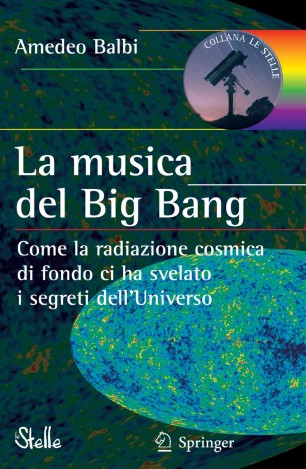
Cosmic microwave background radiation is the residue of the great heat following the Big Bang. A tenuous sign, over 13 billion years old, in which the answers to many of the questions about the nature of our Universe are hidden. Discovered by chance in 1964, in the last forty years this fossil trace of the origins of the Cosmos has been explored with every available means. Two Nobel Prizes in physics have already been awarded for research involving it, the last in 2006 for the results of the COBE satellite. Much of the information encoded in the cosmic background radiation was impressed by the superimposition of acoustic waves present in the early Universe: a "music" of the Big Bang, which cosmologists have tried for years to reconstruct, using techniques similar to those that allow to distinguish the sound of different musical instruments. Only recently have the first notes of this extraordinary cosmic symphony finally been revealed, but the investigation is not over yet. This book illustrates, with a language suitable even for non-specialists, the theories, observations and discoveries that have brought cosmology into a new era.
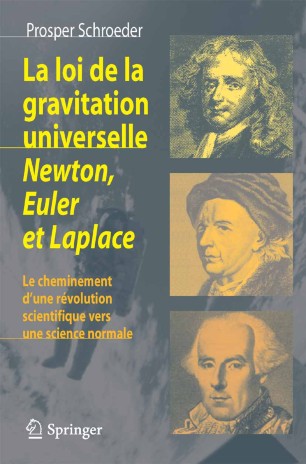
An analysis of Newton's ideas dismisses this hypothesis by the simple fact that the Principia sought to demonstrate the fallacy of earlier approaches. However, Newton suffered a failure in the application of his theory of gravitation to the explanation of the movement of the Moon, failure which marked the development of celestial mechanics throughout the 18th century. Clairaut, d'Alembert and Euler doubted the validity of Newtonian law almost at the same time and their ideas advanced celestial mechanics which reached the state of "normal science" with Laplace's treatise on celestial mechanics, a century after Newton.
Cosmic microwave background radiation is the residue of the great heat following the Big Bang. A tenuous sign, over 13 billion years old, in which the answers to many of the questions about the nature of our Universe are hidden. Discovered by chance in 1964, in the last forty years this fossil trace of the origins of the Cosmos has been explored with every available means. Two Nobel Prizes in physics have already been awarded for research involving it, the last in 2006 for the results of the COBE satellite. Much of the information encoded in the cosmic background radiation was impressed by the superimposition of acoustic waves present in the early Universe: a "music" of the Big Bang, which cosmologists have tried for years to reconstruct, using techniques similar to those that allow to distinguish the sound of different musical instruments. Only recently have the first notes of this extraordinary cosmic symphony finally been revealed, but the investigation is not over yet. This book illustrates, with a language suitable even for non-specialists, the theories, observations and discoveries that have brought cosmology into a new era.
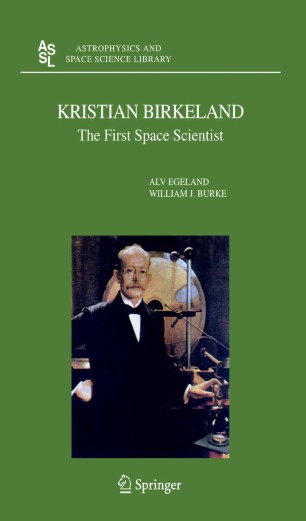
PREFACEThisscientific biography of Kristian Birkeland (1867–1917) was written to bring the story ofa Norwegian national hero to the attention ofthe English-speaking world. Birkeland’sheroic stature was established not on a field of military battle,but in the bitter cold of the Artic wilderness ashe sought to answer basic questions abouthow the Sun controlled northern lights andmag-netic storms. He was also afather of Norsk Hydro one ofNorway’s largest industries. Birkel and died before reaching the age of 50.Because Birkel and never kept adiary, documented information about his family and private life is sparse. Before he died, Olaf Devik, the last of Birke-ffland’s close friends, gave along interview and graciously transferred his personal archive to A.E. Birkeland’s 82 scientific papers and three book-length publications map the progress of his investigations. addressed this book questions that had vexed European scientists for centuries. Why do the northern lights appear overhead when the Earth’s magnetic field is disturbed? How are magnetic storms connected to disturbances on the Sun? To answer these questions Birkeland interpreted his advance laboratory simulations and daring campaigns in the Arctic wilderness in the light of Maxwell’s newly discovered laws of electricity and magnetism. Birkeland’s ideas were dismissed for decades, only to be vindicated when satellites could fly above the Earth’s atmosphere.
Camenzind's Compact Objects in Astrophysics gives a comprehensive introduction and up-to-date overview about the physical processes behind these objects, covering the field from the beginning to most recent results, including all relevant observations.

Many group theorists all over the world have been trying in the last twenty-five years to extend and adapt the magnificent methods of the Theory of Finite Soluble Groups to the more ambitious universe of all finite groups. This is a natural progression after the classification of finite simple groups but the achievements in this area are scattered in various papers.Our objectives in this book were to gather, order and examine all this material, including the latest advances made, give a new approach to some classic topics, shed light on some fundamental facts that still remain unpublished and present some new subjects of research in the theory of classes of finite, not necessarily solvable, groups.

With its many easy-to-follow mathematical examples, this book takes the reader on an almost chronological trip through the fascinating and amazing laws of chance, omnipresent in the natural world and in our daily lives. Along the route many fascinating topics are discussed, such as: challenging probability paradoxes; "paranormal" coincidences; game odds; causes and effects; interpretation of opinion polls; winning chances as a game proceeds; the nature of randomness; entropy and randomness; randomness in life; algorithmic complexity and the undecidability of randomness; possibilities and limitations of learning the laws of a Universe immersed in chance events. This charming book will inform and entertain the scientist and non-scientist alike.
Calibrating the Cosmos describes hard science, but is gently written. It explains in clear, non-mathematical language the measurements and the interpretation of the resulting data that have led to the current understanding of the origin, evolution and properties of our expanding Big Bang universe. Many people have a sketchy idea of the work of cosmologists, but Professor Levin’s experience in teaching both scientific and liberal arts students has enabled him to impart much of our current thinking without resorting to difficult mathematics. Theoretical concepts are emphasized, in particular the symmetries of homogeneity and isotropy enjoyed by our universe on the largest scales, how these symmetries lead to only one quantity being needed to describe the growth of the universe from its infancy to the present time, and how the so-called parameters of the universe are the ingredients used to construct the model universes to which ours – the real thing – is compared.
Axions are peculiar hypothetical particles that could both solve the CP problem of quantum chromodynamics and at the same time account for the dark matter of the universe. Based on a series of lectures by world experts in this field held at CERN (Geneva), this volume provides a pedagogical introduction to the theory, cosmology and astrophysics of these fascinating particles and gives an up-to-date account of the status and prospect of ongoing and planned experimental searches. Learners and practitioners of astroparticle physics will find in this book both a concise introduction and a current reference work to a showcase topic that connects the "inner space" of the elementary particle world with the "outer space" of the universe at large.
"Astrophysics Updates" is intended to serve the information needs of professional astronomers and postgraduate students about areas of astronomy, astrophysics and cosmology that are rich and active research spheres. Observational methods and the latest results of astronomical research are presented as well as their theoretical foundations and interrelations. The contributed commissioned articles are written by leading exponents in a format that will appeal to professional astronomers and astrophysicists who are interested in topics outside their own specific areas of research. This collection of timely reviews may also attract the interest of advanced amateur astronomers seeking scientifically rigorous coverage.
With some justification, many amateur astronomers believe astrophysics is a very difficult subject, requiring at least degree-level mathematics to understand it properly. This isn’t necessarily the case. Mike Inglis' quantitative approach to the subject explains all aspects of astrophysics in simple terms and cuts through the incomprehensible mathematics with which this fascinating subject is all too often associated. Astrophysics is Easy! begins by looking at the H-R diagram and other basic tools of astrophysics, then ranges across the universe, from a first look at the interstellar medium and nebulae, through the birth, evolution and death of stars, to the physics of galaxies and clusters of galaxies.

Daraa Highway - Ghabagheb - Syria
+963-15 2050 - 15 860 380 /1/2/3 - 11 662 3900