



Page 1
Page 1

Mute people aiding application
Communication is an essential tool for human survival. It is a fundamental and effective method of sharing thoughts, needs, feelings, and opinions. However, a large portion of the world's population lacks the ability to communicate with others. Such as the ones suffering from hearing loss, speech disability, or even both. Those disabilities have a significant impact on their lives in terms of work and relationships. The majority of these people are sometimes unable to support themselves financially due to the lack of job opportunities. Given these difficulties, we have decided to develop an application to help them overcome the obstacles they may encounter in their daily lives. After consulting with two deaf and mute people we customized an application that works in two ways. One of which is to translate their sign language in real time by using mobile camera and recognizing hand motion. The other works by converting text-to-voice, and accurately expressing the user’s emotions with the help of the facial emotion recognition.

Medical Emergency Teams : Implementation and Outcome Measurement
Why Critical Care Evolved METs? In early 2004, when Dr. Michael DeVita informed me that he was cons- ering a textbook on the new concept of Medical Emergency Teams (METs), I was surprised. At Presbyterian-University Hospital in Pittsburgh we int- duced this idea some 15 years ago, but did not think it was revolutionary enough to publish. This, even though, our fellows in critical care medicine training were all involved and informed about the importance of “C- dition C (Crisis),” as it was called to distinguish it from “Condition A (Arrest). ”We thought it absurd to intervene only after cardiac arrest had occurred,because most cases showed prior deterioration and cardiac arrest could be prevented with rapid team work to correct precluding problems. The above thoughts were logical in Pittsburgh, where the legendary Dr. Peter Safar had been working since the late 1950s on improving current resuscitation techniques, ?rst ventilation victims of apneic from drowning, treatment of smoke inhalation, and so on. This was followed by external cardiac compression upon demonstration of its ef?ciency in cases of unexpected sudden cardiac arrest. Dr. Safar devoted his entire professional life to improvement of cardiopulmonary resuscitation. He and many others emphasized the importance of getting the CPR team to o- of-hospital victims of cardiac arrest as quickly as possible.

International Law Today : New Challenges and the Need for Reform?
th Rüdiger Wolfrum celebrated his 65 birthday on 13 December 2006. On this special occasion, current and former members of the large circle of his PhD and post-doctorate students (Doktoranden und Habilit- den) organized a symposium on the subject of “International Law - day: New Challenges and the Need for Reform?” to honour him and his academic work as a teacher and researcher.the subjects covered by the speakers and commentators reflect the wide variety of issues he worked on in his long and impressive academic career. They extend from a cri- cal evaluation of the new responsibility to protect and the role of the UN Security Council in post-conflict management, thoughts on the proliferation of international tribunals with regard to the unity or fragmentation of international law, marine genetic resources in the deep sea and environmental protection in Antarctica to human rights issues relating to intellectual property rights and the protection of minorities.

International Handbook of Research in Arts Education
Providing a distillation of knowledge in the various disciplines of arts education (dance, drama, music, literature and poetry and visual arts), the Handbook synthesizes existing research literature, helps define the past, and contributes to shaping the substantive and methodological future of the respective and integrated disciplines of arts education. While research can at times seem distant from practice, the Handbook aims to maintain connection with the lived practice of art and of education, capturing the vibrancy and best thinking in the field of theory and practice. The Handbook is organized into 13 sections, each centering on a major area or issue in arts education research. These areas include: History of arts education, curriculum, evaluation, cultural centers, appreciation, composition, informal learning, child culture, creativity, the body, spirituality, and technology. The individual chapters address cross-cultural research related to the central theme of the section from the perspectives of the particular arts discipline. Interludes provide reflective thoughts on the theme.

Innovative Concepts for Autonomic and Agent-Based Systems ; 2nd International Workshop on Radical Agent Concepts, WRAC 2005, Greenbelt, MD, USA, September 20-22, 2005, Revised Papers
This volume includes revised versions of papers presented at the workshop. The workshop was structured so as to allow adequate time for discussion and interaction, to exchange ideas and reflect on the motivations, scientific grounds and practical consequences of the concepts presented. Many of the ideas are truly “radical”, and so authors were given time to revise their papers to reflect further thoughts on the ideas presented and to reflect feedback received at the workshop. We are grateful to Jeff Kephart for a very interesting keynote speech describing IBM’s current and future work in this field, which fit very well with the aims and scope of the workshop.

Information security and privacy ; 6th Australasian Conference, ACISP 2001, Sydney, Australia, July 11-13, 2001. Proceedings
A Few Thoughts on E-Commerce.- New CBC-MAC Forgery Attacks.- Cryptanalysis of a Public Key Cryptosystem Proposed at ACISP 2000.- Improved Cryptanalysis of the Self-Shrinking Generator.- Attacks Based on Small Factors in Various Group Structures.- On Classifying Conference Key Distribution Protocols.- Pseudorandomness of MISTY-Type Transformations and the Block Cipher KASUMI.- New Public-Key Cryptosystem Using Divisor Class Groups.- First Implementation of Cryptographic Protocols Based on Algebraic Number Fields.- Practical Key Recovery Schemes.- Non-deterministic Processors.- Personal Secure Booting.- Evaluation of Tamper-Resistant Software Deviating from Structured Programming Rules.- A Strategy for MLS Workflow.- Condition-Driven Integration of Security Services.- SKETHIC: Secure Kernel Extension against Trojan Horses with Informat ion-Carrying Codes.- Secure and Private Distribution of Online Video and Some Related Cryptographic Issues.- Private Information Retrieval Based on the Subgroup Membership Problem.

Indiscrete Thoughts
Indiscrete Thoughts gives a glimpse into a world that has seldom been described, that of science and technology as seen through the eyes of a mathematician. The era covered by this book, 1950 to 1990, was surely one of the golden ages of science as well as of the American university. Cherished myths are debunked along the way as Gian-Carlo Rota takes pleasure in portraying, warts and all, some of the great scientific personalities of the period —Stanislav Ulam (who, together with Edward Teller, signed the patent application for the hydrogen bomb), Solomon Lefschetz (Chairman in the 1950s of the Princeton mathematics department), William Feller (one of the founders of modern probability theory), Jack Schwartz (one of the founders of computer science), and many others.

Image Analysis ; 14th Scandinavian Conference, SCIA 2005, Joensuu, Finland, June 19-22, 2005, Proceedings
This proceedings volume collects the scienti?c presentations of the Scandinavian Conference on Image Analysis, SCIA 2005, which was held at the University of Joensuu, Finland, June 19–22, 2005. The conference was the fourteenth in the series of biennial conferences started in 1980. The name of the series re?ects the fact that the conferences are organized in the Nordic (Scandinavian) countries, following the cycle Sweden, Finland, Denmark, and Norway. The event itself has always been international in its participants and presentations. Today there are many conferences in the ?elds related to SCIA. In this s- uation our goal is to keep up the reputation for the high quality and friendly environment of SCIA. We hope that participants feel that it’s worth attending the conference. Therefore, both the scienti?c and social program were designed to support the best features of a scienti?c meeting: to get new ideas for research and to have the possibility to exchange thoughts with fellow scientists.

Hot cracking phenomena in welds II
This is the second in a series of compendiums devoted to weld hot cracking phenomena, where this subject has been further scrutinized, bringing to bare the most current thoughts on this complex and diverse subject. With 22 technical papers in total, this book is divided in such a way that specific classifications of hot cracks are examined in detail, including solidification, liquation, and ductility dip cracking. The first chapter looks at solidification cracking theory, applying the most modern approaches to modelling weld solidification. Also provided here is a comprehensive review of cracking models. This is followed by two chapters characterizing solidification cracking behaviour for specific alloy systems: ferrous plus nickel-based alloys and aluminium alloys, respectively. The fourth chapter considers liquation cracking in ferrous alloys, and the fifth examines ductility-dip cracking.

Global Archaeological Theory : Contextual Voices and Contemporary Thoughts
This book focuses on the fundamental theoretical issues found in the discipline and thus both engages and represents the very rich plurality of the post-processual approach to archaeology. The book is divided into four sections: Issues in Archaeological Theory, Archaeological Theory and Method in Action, Space and Power in Material Culture, and Images as Material Discourse.

Frontiers of Fundamental Physics ; Proceedings of the Sixth International Symposium "Frontiers of Fundamental and Computational Physics", Udine, Italy, 26-29 September 2004
The Sixth International Symposium "Frontiers of Fundamental and Computational Physics", Udine, Italy, 26-29 September 2004, aimed at providing a platform for a wide range of physicists to meet and share thoughts on the latest trends in various, mainly cross-disciplinary research areas. This includes the exploration of frontier lines in High Energy Physics, Theoretical Physics, Gravitation and Cosmology, Astrophysics, Condensed Matter Physics, Fluid Mechanics. Such frontier lines were unified by the use of computers as an, often primary, research instruments, or dealing with issues related to information theory.

Essentials of consumer behavior
Essentials of consumer behavior offers an unique material on vulnerable consumers and ethics. Balancing a strong academic foundation with a practical approach, Stephens emphasizes that consumer behavior does not simply equate to buyer behavior. She examines the thoughts, feelings, and behaviors that shape consumers’ attitudes and motivations in relation to brands, products, and marketing messages. Providing a concise guide to the discipline, the author covers key themes such as vulnerable consumers, new technologies, and collaborative consumption.

Discrete Thoughts : Essays on Mathematics, Science, and Philosophy
This is a volume of essays and reviews that delightfully explore mathematics in all its moods — from the light and the witty, and humorous to serious, rational, and cerebral. Topics include: logic, combinatorics, statistics, economics, artificial intelligence, computer science, and applications of mathematics broadly. You will also find history and philosophy covered, including discussion of the work of Ulam, Kant, Heidegger among others. these papers reflect on mathematics and its influence on human society. They can help the specialist to notice what is going on around him, and they may lead educated people from other domains to a better understanding of mathematics.
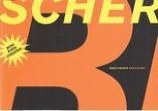
Make It Bigger
Scher candidly reveals her thoughts on design practice, drawing on her own experiences as one of the leading designers in the United States, and possibly the most famous female graphic designer in the world. Pointed and funny, it is an instructive guide for all those who navigate the difficult path between clients, employees, corporate structures, artists, and design professionals.
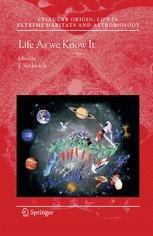
Life as We Know It
Life As we Know It ["LAKI"] covers several aspects of Life, ranging from the prebiotic level, origin of life, evolution of prokaryotes to eukaryotes and finally to various affairs of human beings. Although it is hard to define Life, one can, however, characterize it and describe its features. Topics treated are categories of bacteria, algae and fungi, conscience, philosophy, theology, aesthetics, appearance of sport and life destiny, life after clinical death, and thoughts of the world to come ("Olam Haba"). The various chapters have been written so that they are accessible to all - from the avid lay reader to the specialist – and make available multidisciplinary sources of information about Life. This volume will interest open minded scholars, students at all levels of general sciences, natural and Life science, researchers of philosophy, theology, history of Life, astrobiology, and those who wish to widen their knowledge about "who are we in the universe".

Component models and systems for grid applications ; Proceedings of the Workshop on Component Models and Systems for Grid Applications held June 26, 2004 in Saint Malo, France.
This first volume of the CoreGRID series addresses such vital issues as the architecture of the Grid, the way software will influence the development of the Grid, and the practical applications of Grid technologies for individuals and businesses alike. Part I of the book, Application-Oriented Designs, focuses on development methodology and how it may contribute to a more component-based use of the Grid. Middleware Architecture, the second part, examines portable Grid engines, hierarchical infrastructures, interoperability, as well as workflow modeling environments. The final part of the book, Communication Frameworks, looks at dynamic self-adaptation, collective operations, and higher-order components. With Component Models and Systems for Grid Applications, editors Vladimir Getov and Thilo Kielmann offer the computing professional and the computing researcher the most informative, up-to-date, and forward-looking thoughts on the fast-growing field of Grid studies.
Comparative Corporate Governance : Shareholders as a Rule-maker
It is fairly easy for a Finnish Jurist to understand German Company law. On the other hand, UK Company law seems very confusing. What is even more confusing is that the UK corporate govemance model is often regarded as one of the best in the World. Clearly German law cannot be as bad as it is often said to be. This books results from these kinds of thoughts and an interest in comparative law, Company law and securities markets law. I wanted to find out whether the functional method would give anything new to say about the regulation of corpo rate govemance in Germany and the UK. As I have been lecturing on Company law and corporate govemance myself, I also wanted to write a book that I could use as a textbook in my courses. For this reason, I focused on one of the key questions in corporate govemance: the regula tion of shareholder activism.

Brain thoughts recognition
Humans controlling machines with their minds may sound like something from a scifi movie, but it’s becoming a reality through brain-computer interfaces BCI. Where BCI technology allows a human brain and an external device to talk to each other—to exchange signals. It gives humans the ability to directly control machines, without the physical constraints of the body. There are two ways to implement the BCI: Noninvasive tools often use sensors applied on or near the head to track and record brain activity, or Invasive BCI would require surgery. Electronic devices would need to be implanted beneath the skull, directly into the brain, to target specific sets of neurons. In order to implement a non-invasive BCI in a mobile phone, this study developed a mobile application to help paralyzed people who do not have the ability to use their phones to spend their basic daily needs, such as using the keyboard and interacting with PDF, etc.
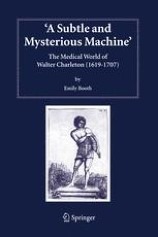
A Subtle and Mysterious Machine : The Medical World of Walter Charleton (1619-1707)
Walter Charleton (1619-1707) has been widely depicted as a natural philosopher whose intellectual career mirrored the intellectual ferment of the ‘scientific revolution’. Instead of viewing him as a barometer of intellectual change, I examine the previously unexplored question of his identity as a physician. Examining three of his vernacular medical texts, this volume considers Charleton’s thoughts on anatomy, physiology and the methods by which he sought to understand the invisible processes of the body.
