


Refine Results
Sort By
From
To

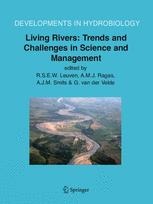
All over the world, sustainable river basin management is a leading principle of policy plans and legal instruments for water management (e.g. the European Water Framework Directive). The evidence, however, to underpin the full scope of sustainability is rather scanty. In this book an integrative perspective on trends and challenges in river science and management is demonstrated. The three pillars underneath sustainable water management, ecology, economy and sociology, are elaborated by experts in their fields. A number of papers integrate the current knowledge on the structure, functioning and management of ‘living rivers’. The book includes data and experiences concerning the rivers Allier, Meuse, Rhine, Sava and Tagliamento in Europe and the river Illinois in the USA. Sustainable river basin management asks for un-orthodox rehabilitation programmes and ecosystem based and transboundary management approaches.
It is a compilation of case studies that provide useful knowledge and lessons that derive from on-the-ground activities and contribute to policy recommendations, focusing on the interlinkages between biodiversity and multiple dimensions of health (e.g., physical, mental, and spiritual) in managing socio-ecological production landscapes and seascapes (SEPLS). This book provides insights on how SEPLS approaches can contribute to more sustainable management of natural resources, achieving global biodiversity and sustainable development goals, and good health for all. It is also expected to offer useful knowledge and information for an upcoming three-year thematic assessment of “the interlinkages among biodiversity, water, food, and health” (the so-called “nexus assessment”) by the Intergovernmental Science-Policy Platform on Biodiversity and Ecosystem Services (IPBES). The book begins with an introductory chapter followed by eleven case study chapters demonstrating the nexus between biodiversity, health, and sustainable development, and then a synthesis chapter clarifying the relevance of the case study findings to policy and academic discussions. It will be of interest to scholars, policymakers, and professionals in the field related to sustainable development.
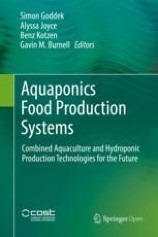
This book, written by world experts in aquaponics and related technologies, provides the authoritative and comprehensive overview of the key aquaculture and hydroponic and other integrated systems, socio-economic and environmental aspects. Aquaponic systems, which combine aquaculture and vegetable food production offer alternative technology solutions for a world that is increasingly under stress through population growth, urbanisation, water shortages, land and soil degradation, environmental pollution, world hunger and climate change.
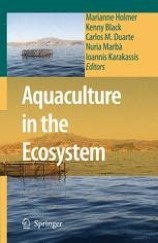
This book provides a scientific forecast of the development in aquaculture with a focus on the environmental, technological, social and economic constraints that need to be resolved to ensure sustainable development of the industry and allow the industry to be able to feed healthy seafood products to the future generations. The chapters included discuss the most critical bottlenecks of the development encompassing subjects of understanding the environmental impacts, the current state-of-art in monitoring programs and in coastal zone management, the important interactions between wild and cultured organisms including release of non-native species into the wild, the current trends within the development of aquafeeds along with human health aspects as well as the political, socio-economic and economic trends within the industry including a chapter on approaches taken by Non Governmental Organisations (NGOs) to aquaculture. Finally the last chapter provides different future scenarios of the industry based on the identified bottlenecks.
There is wide agreement on the need to change the prevalent agricultural models, given their negative impacts and their incompatibility with current societal issues. Agroecological transition has been promoted as a potential solution to the ecological, social and economic problems generated by these models. It however involves a systemic, multi-scale and transdisciplinary process. Due to this complexity, the overall picture of what farms and food systems “actually are” and “might be” may not be apparent at the individual level. Yet individuals’ knowledge and values provide complementary insights on how to proceed in deepening ecological modernisation. Expertise can also provide landmarks to be considered in that process. Because local stakeholders’ experience and skills are key resources in the adaptation and adoption of agroecological transition, new conceptual and methodological frameworks and tools have to be developed to support them in the design process of such a complex transition. This book presents feedback from the ‘Territorial Agroecological Transition in Action’- TATA-BOX research project, which was devoted to these specific issues.
This book aims to present an overview of China and the world from diverse angles. It brings together essays by ambassadors to China on a range of bilateral and multilateral issues, including trade and investment, regional economic cooperation, sustainable development, technology and innovation, and entrepreneurship. Given their familiarity with China and extensive international experience, the insights of these ambassadors are useful for policymakers, academics, entrepreneurs, students, and anyone trying to make sense of our rapidly changing world.
Discusses advances in smart and sustainable development of smart environments. The authors discuss the challenges faced in developing sustainable smart applications and provide potential solutions. The solutions are aimed at improving reliability and security with the goal of affordability, safety, and durability. Topics include health care applications, sustainable smart transportation systems, intelligent sustainable wearable electronics, and sustainable smart building and alert systems. Authors are from both industry and academia and present research from around the world. Addresses problems and solutions for sustainable development of smart cities; Includes applications such as healthcare, transportation, wearables, security, and more ; Relevant for scientist and researchers working on real time smart city development.
Focuses on different algorithms and models related to AI, big data and IoT used for various domains. It enables the reader to have a broader and deeper understanding of several perspectives regarding the dynamics, challenges, and opportunities for sustainable development using artificial intelligence, big data and IoT. Applications of Artificial Intelligence, Big Data and Internet of Things (IoT) in Sustainable Development focuses on IT-based advancements in multidisciplinary fields such as healthcare, finance, bioinformatics, industrial automation, and environmental science.
Manufacturing of products in urban production sites is connected to unique potentials, yet also to specific challenges. Urban factories can provide functional diversity and contribute positive impacts to a city. The concept of urban production receives rising attention in research and industry and it is recognized in its interdisciplinary nature. With a holistic approach from both the urban perspective and the factory perspective, negative impacts can be minimized, positive effects enabled and mutually beneficial, symbiotic combinations created. The presented framework and methods for the evaluation and implementation of sustainable urban production systems allow the assessment of impacts and provide the means to control and utilize the unique strengths of urban factories for cities and industry. This will allow a structured derivation of methods and measures from the concept of urban production for producing enterprises and the urban stakeholders.
This book presents up-to-date analyses of community-based approaches to sustainable resource management of SEPLS (socio-ecological production landscapes and seascapes) in areas where a harmonious relationship between the natural environment and the people who inhabit it is essential to ensure community and environmental well-being as well as to build resilience in the ecosystems that support this well-being.
This volume collects emerging issues in Environmental and Civil Engineering, originating from outstanding doctoral dissertations discussed at Politecnico di Milano in 2021. The advanced innovative insights provided are presented with reference to the relevant sustainable development goals (SDGs), hoping that scientists, technicians and decision makers will find them as a valid support to face future sustainability challenges.
This book provides a compendium of material properties, demonstrates several successful examples of bio-based materials’ application in building facades, and offers ideas for new designs and novel solutions. It features a state-of-the-art review, addresses the latest trends in material selection, assembling systems, and innovative functions of facades in detail. Selected case studies on buildings from diverse locations are subsequently presented to demonstrate the successful implementation of various biomaterial solutions, which defines unique architectural styles and building functions. The structures, morphologies and aesthetic impressions related to bio-based building facades are discussed from the perspective of art and innovation; essential factors influencing the performance of materials with respect to functionality and safety are also presented. Special emphasis is placed on assessing the performance of a given facade throughout the service life of a building, and after its end.
Highlights Singapore’s development into a city in which water and greenery, along with associated environmental, technical, social and political aspects have been harnessed and cultivated into a liveable sustainable way of life. It is also a story about a unique and thoroughgoing approach to large-scale and potentially transferable water sustainability, within largely urbanized circumstances, which can be achieved, along with complementary roles of environmental conservation, ecology, public open-space management and the greening of buildings, together with infrastructural improvements.
Many people see a weak association between marketing and sustainable development and even consider them as two incompatible fields. However, marketing benefits from an extremely powerful position to encourage transformations at the production level and to guide consumers towards responsible behaviors. From its inception, marketing has been positioned as a support for the relationship between the company and its customers, with the quest for well-being set in the very foundations of the discipline.
Our underlying objectives are to contribute to the provision, mana- ment, and sharing of knowledge, and to enhance the value of knowledge and its uses by different constituencies in diverse contexts and at different stages of development. The central theme of this book, connecting its different parts, is about ways of transcending critical barriers to the effective uses of knowledge and e-networking. Of special relevance is the development of new approaches to the provision and transmission – from local sources to global networks and from global sources to local networks. In many ways, this is a book of theory and methods, as well as policy and performance.
Discusses the essential principles that guide macroeconomic policy formulation and implementation to stimulate strong economic growth for sustainable development, especially for emerging economies. it includes twelve chapters over three sections: "macroeconomics of economic growth", "labour market and employment", and "the financial system and macroeconomic performance". key conclusions illustrate that the efficacy of regulatory frameworks to create enabling conditions for nurturing and bolstering robust value-adding production structures anchored on appropriate macroeconomic management are the fundamental building blocks of strong economic growth.

Proceedings of the NATO Advanced Research Workshop on Assessment of Hydrogen Energy for Sustainable Development: Energy & Environmental Security, Istanbul, Turkey, 7-10 August 2006
Sustainable development, climate policy, and biodiversity conservation are examples of issues on the current political agenda in many countries. These themes are also subject to economic research, and economic insights are increasingly finding their way into the design of environmental policy. Still, the reception of academic findings by policy makers as well as the timely identification of policy-relevant questions by economic researchers often seem to be problematic. This volume attempts to vitalise the exchange between policy makers and academics. It offers a snapshot of environmental economic research on a range of policy-relevant problems.
This book provides a clear holistic conceptual framework of CISS-F (competitiveness, inclusiveness, sustainability, scalability and access to finance) to analyse the efficiency of value chains of high value agricultural commodities in India. It is based on the understanding that agriculture is an integrated system that connects farming with logistics, processing and marketing. Farmer’s welfare being central to any agricultural policy makes it very pertinent to study how a value chain works and can be strengthened further to realize this policy goal.

Offers an in‑depth examination of multi‑capital accounting, which has already been integrated within the corporate sustainability reporting directive and will follow on from sustainability reporting. the LIFTS model (limits and foundations towards sustainability accounting model) used in this book combines various scientific and practical contributions to develop budgets for environmental impacts and social obligations on an organisational scale. it proposes an accounting mechanism that enables an organization to manage each of its budgets and measure variances between forecast and actual. it provides an introduction to the principles of this model and its conditions of application and describes its implementation in numerous companies.

Daraa Highway - Ghabagheb - Syria
+963-15 2050 - 15 860 380 /1/2/3 - 11 662 3900