


Refine Results
Sort By
From
To

covers new methods, surveys, case studies, and policy with almost all machine learning techniques and analytics for cloud security solutions
As part of this objective, ICT (information and communication technologies) services should become available for every citizen, and for all schools, homes and businesses. The book you have in front of you is about Semantic Web technology and law. Law is something omnipresent; all citizens — at some points in their lives — have to deal with it. In addition, law involves a large group of professionals, and is a mul- billion business world wide. Information technology is important because it that can improve citizens’ interaction with law, as well as improve legal professionals’ work environment. Legal professionals dedicate a significant amount of their time to finding, reading, analyzing and synthesizing information in order to take decisions, and prepare advice and trials, among other tasks. As part of the “Semantic-Based Knowledge and Content Systems” Strategic Objective, the European Commission is funding projects to construct technology to make the Semantic Web vision come true. 1 The articles in this book are related to two current foci of the Strategic Objective : • Knowledge acquisition and modelling, capturing knowledge from raw information and multimedia content in webs and other distributed repositories to turn poorly structured information into machi- processable knowledge.
The authors see mapping software as a set of visual tools for reading and writing in a networked age. In an information ocean, the primary challenge is to find meaningful patterns around which we can weave plausible narratives. Maps of concepts, discussions and arguments make the connections between ideas tangible and disputable.With 17 chapters from the leading researchers and practitioners, the reader will find the current state–of-the-art in the field. Part 1 focuses on educational applications in schools and universities, before Part 2 turns to applications in professional communities.
AI (artificial intelligence) is predicted to radically change teaching and learning in both schools and industry causing radical disruption of work. AI can support well-being initiatives and lifelong learning but educational institutions and companies need to take the changing technology into account. Moving towards AI supported by digital tools requires a dramatic shift in the concept of learning, expertise and the businesses built off of it. Based on the latest research on AI and how it is changing learning and education, this book will focus on the enormous opportunities to expand educational settings with AI for learning in and beyond the traditional classroom. This book also introduces ethical challenges related to learning and education, while connecting human learning and machine learning.
This book presents theoretical and practical research relating to the vast, publicly financed program for the construction of new schools and the reorganization of existing educational buildings in Italy.
The present collection of formulas has been composed for students of economics or management science at universities, colleges and trade schools. It contains basic knowledge in mathematics, financial mathematics and statistics in a compact and clearly arranged form. This volume is meant to be a reference work to be used by students of undergraduate courses together with a textbook and by researchers in need of exact statements of mathematical results. People dealing with practical or applied problems will also find this collection to be an efficient and easy-to-use work of reference.
This collection of formulas constitutes a compendium of mathematics for eco nomics and business. It contains the most important formulas, statements and algorithms in this significant subfield of modern mathematics and addresses primarily students of economics or business at universities, colleges and trade schools. But people dealing with practical or applied problems will also find this collection to be an efiicient and easy-to-use work of reference. First the book treats mathematical symbols and constants, sets and state ments, number systems and their arithmetic as well as fundamentals of com binatorics. The chapter on sequences and series is followed by mathematics of finance, the representation of functions of one and several independent vari ables, their differential and integral calculus and by differential and difference equations. In each case special emphasis is placed on applications and models in economics. The chapter on linear algebra deals with matrices, vectors, determinants and systems of linear equations. This is followed by the representation of struc tures and algorithms of linear programming. Finally, the reader finds formu las on descriptive statistics (data analysis, ratios, inventory and time series analysis), on probability theory (events, probabilities, random variables and distributions) and on inductive statistics (point and interval estimates, tests). Some important tables complete the work.
Intelligence is wasted on problems that themselves have been caused by an excess of intelligence. Lean Brain Management strives toward uncompromising Lean Brain Quality. Lean Brain stands for consistent economization of intelligence in all realms of life: Intelligent systems will only be operated by unskilled workers. Education, universities, and schools would become obsolete. A week of training would be enough for virtually any job. ("You are now the physician for the measles in the State of Ohio. In response to phone calls, send this prescription.") Lean Brain is not aimed at dumbing down! Lean Brain can survive on just a very small amount of central intelligence. Potential savings amount to trillions! This is demonstrated using Germany as an example. With this book, Dueck presents a radical suggestion for world improvement. The desire to laugh infinitely about it will eventually segue into a collective rude awakening. The book contains concrete advice for managers to economize on intelligence, and is thus--in keeping with the theme--written in an easy-to-read fashion.
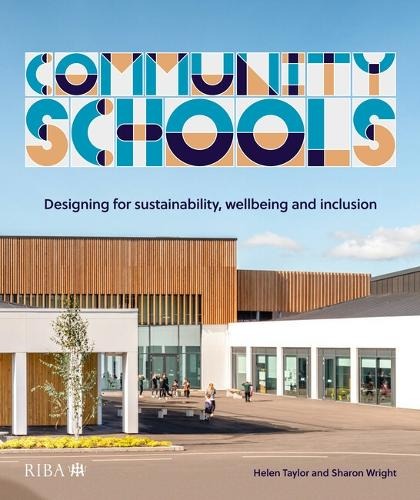
Reconsiders what is required from physical school environments, building on the learning gathered from the sector over the past two decades. To meet the new social, environmental and economic challenges it advocates designing differently, both in terms of the form that buildings take and the evaluation of their impact and performance. By calling for a reframing of the way that schools are regarded as community-wide amenities, this book explores the potential for architects to deliver design in a manner that supports healthy lifestyles and promotes wellbeing. Through encouraging social connections, new possibilities open up for educational facilities to become open, welcoming and inclusive. Featuring: Over 12 international case studies from practices including: Architype, Argyll + Bute, Bogle Architects, DRMM, Revaerk, Scott Brownrigg and XDGA. Key themes of wellbeing, connectivity, inclusion, indicators and evaluation. Practical guidance and learning points throughout. A new design brief for community schools
Russian mathematics (later Soviet mathematics, and Russian mathematics once again) occupies a special place in twentieth-century mathematics. In addition to its well-known achievements, Russian mathematics established a unique style of research based on the existence of prominent mathematical schools. These schools were headed by recognized leaders, who became famous due to their talents and outstanding contributions to science. The present collection is intended primarily to gather in one book the t- timonies of the participants in the development of mathematics over the past century. In their articles the authors have expressed their own points of view on the events that took place. The editors have not felt that they had a right to make any changes, other than stylistic ones, or to add any of their own commentary to the text. Naturally, the points of view of the authors should not be construed as those of the editors. The list of mathematicians invited to participate in the present edition was quite long.

Based on lecture notes of two summer schools with a mixed audience from mathematical sciences, epidemiology and public health, this volume offers a comprehensive introduction to basic ideas and techniques in modeling infectious diseases, for the comparison of strategies to plan for an anticipated epidemic or pandemic, and to deal with a disease outbreak in real time. It covers detailed case studies for diseases including pandemic influenza, West Nile virus, and childhood diseases. Models for other diseases including Severe Acute Respiratory Syndrome, fox rabies, and sexually transmitted infections are included as applications. Its chapters are coherent and complementary independent units. In order to accustom students to look at the current literature and to experience different perspectives, no attempt has been made to achieve united writing style or unified notation.
“Materials for springs” is basically intended for engineers related to spring materials and technologies who graduated from metallurgical or mechanical engineering courses in technical high school, or in other higher engineering schools, as well as those who are related to the purchase or sales of spring materials. The first chapter introduces into the fundamental selection processes of spring materials including the information sources on materials database. It is followed by the basic mechanisms and theories of spring failures such as fatigue fracture, creep/stress relaxation and stress corrosion cracking of metallic materials.
In many countries, schools, universities and other traditional learning institutions are not providing for the educational needs of all members of the community. In many communities, particularly in regional, rural and disadvantaged areas, there are only limited options for people to undertake learning. Limited participation in learning has the danger of reinforcing people’s alienation from mainstream education and from participation and inclusion in social institutions and economic and community life more generally. This book addresses the challenge of identifying effective ways of accommodating the learning needs of all people and in so doing achieving the goals of lifelong learning for all.
This book critically reviews a diverse body of scholarship and practice that informs the conceptualization, curriculum, teaching and measurement of life skills in education settings around the world. It discusses life skills as they are implemented in schools and non-formal education, providing both qualitative and quantitative evidence of when, with whom, and how life skills do or do not impact young women’s and men’s lives in various contexts. Specifically, it examines the nature and importance of life skills, and how they are taught.
Based on material delivered at several summer schools, this book is the first comprehensive textbook at the graduate level encompassing all aspects associated with the emerging field of astrobiology. Volume II gathers another set of extensive lectures covering topics so diverse as the formation and the distribution of elements in the Universe, the concept of habitability from both the planetologists' and the biologists' point of view and artificial life. The contributions are held together by the common goal to understand better the origin of life, its evolution and possible existence outside the Earth's realm.
This book critically examines equality, equity and democracy in education, globally as well as from various perspectives. Globally, there are increasing arguments both for the democratization of education and for the use of education to promote a democratic society. It is argued that democratic schools would better prepare for active citizenship and for a strong civil society which are seen to be the foundation of a democratic state. The book further argues that while there are inspiring examples of schools that engage in peace education or emancipatory pedagogy that work across various ethnic or religious divides, on balance, the forms, structures, ideologies and purposes of formal education interact to make national and international conflict more likely.
Over the past decade, community schools similar to those supported by Save the Children have been established in many developing countries, and especially in sub-Saharan Africa. As large numbers of children attend schools started and managed by their own communities and/or by nongovernmental organizations, questions have come up about the impact of such schools at large scale: "Can village-based or community schools have a national impact on access to education, spur improved long-term development strategies and education policy, or achieve or influence Education for All? This book explores these and related questions, drawing on Save the Children’s experience with community-based schooling in four countries: Ethiopia, Malawi, Mali, and Uganda.
This book contains a selection of lectures from the first Summer School organized by the Center for Functional Nanostructures (CFN) at the University of Karlsruhe. The mission of the CFN is to carry out research in the following areas: nanophotonics, nanoelectronics, molecular nanostructures and nanostructured materials. The aim of the summer schools is mainly to exchange new ideas and illustrate emerging research methodologies through a series of lectures. This is reflected by both the selection of topics addressed in the present volume as well as the tutorial aspect of the contributions.
Aims to present a general survey of algebra, of its basic notions and main branches.Those parts of the book devoted to the systematic treatment of notions and results of algebra make very limited demands on the reader: we presuppose only that the reader knows calculus, analytic geometry and linear algebra in the form taught in many high schools and colleges. The extent of the prerequisites required in our treatment of examples is harder to state; an acquaintance with projective space, topological spaces, differentiable and complex analytic manifolds and the basic theory of functions of a complex variable is desirable, but the reader should bear in mind that difficulties arising in the treatment of some specific example are likely to be purely local in nature, and not to affect the understanding of the rest of the book.
Alternative streams of education have been and remain an important but difficult theme for teachers, parents, policy-makers, and scholars. By focusing on case studies of six countries (Bolivia, Thailand, Australia, USA, The Netherlands, and Denmark), and by comprehensively analysing these by means of international comparative methodologies, the author approaches the nuts and bolts issues of alternative and mainstream education systems. The case studies include Charter Schools in the USA and Waldorf Schools in Australia. The study presents not only an insightful analysis of alternative forms of education with regard to actual issues in societies and also legal and administrative features of education. It provides insights into the kind of school development that could be appropriate in the 21st century and the types of educational communities we should seek to create in the age of globalisation.

Daraa Highway - Ghabagheb - Syria
+963-15 2050 - 15 860 380 /1/2/3 - 11 662 3900