


Refine Results
Sort By
From
To


Aims to tie together various perspectives, insights and constructions pertaining to landscapes and landscape representations from different theoretical and methodological positions as well as from diverse geographical and historical contexts in order to elucidate and illustrate processes of cultural transformation inscribed in space.

The goal of this book is to address the use of several important machine learning techniques into computer vision applications. An innovative combination of computer vision and machine learning techniques has the promise of advancing the field of computer vision, which contributes to better understanding of complex real-world applications. The effective usage of machine learning technology in real-world computer vision problems requires understanding the domain of application, abstraction of a learning problem from a given computer vision task, and the selection of appropriate representations for the learnable (input) and learned (internal) entities of the system. In this book, we address all these important aspects from a new perspective: that the key element in the current computer revolution is the use of machine learning to capture the variations in visual appearance, rather than having the designer of the model accomplish this. As a bonus, models learned from large datasets are likely to be more robust and more realistic than the brittle all-design models.
This textbook covers logical and relational learning in depth, and hence provides an introduction to inductive logic programming (ILP), multirelational data mining (MRDM) and (statistical) relational learning (SRL). These subfields of data mining and machine learning are concerned with the analysis of complex and structured data sets that arise in numerous applications, such as bio- and chemoinformatics, network analysis, Web mining, natural language processing, within the rich representations offered by relational databases and computational logic.
The LNCS Journal on Data Semantics is devoted to the presentation of notable work that, in one way or another, addresses research and development on issues related to data semantics. The scope of the journal ranges from theories supporting the formal definition of semantic content to innovative domain-specific applications of semantic knowledge. The journal addresses researchers and advanced practitioners working on the semantic web, interoperability, mobile information services, data warehousing, knowledge representation and reasoning, conceptual database modeling, ontologies, and artificial intelligence.
This book highlights basic paradigms of problem analysis and algorithm design in the context of core bioinformatics problems. Mathematically demanding themes are put across to the reader by properly chosen representations with the aid of lots of illustrations.
This book includes a self-contained approach of the general theory of quadratic forms and integral Euclidean lattices.It explains how the new advances in the Langlands program mentioned above pave the way for a solution. This study proves to be very rich, leading us to classical themes such as theta series, Siegel modular forms, the triality principle, L-functions and congruences between Galois representations.

Provides an accessible introduction to knot theory, focussing on Vassiliev invariants, quantum knot invariants constructed via representations of quantum groups, and how these two apparently distinct theories come together through the Kontsevich invariant. Consisting of four parts, the book opens with an introduction to the fundamentals of knot theory, and to knot invariants such as the Jones polynomial. The second part introduces quantum invariants of knots, working constructively from first principles towards the construction of Reshetikhin-Turaev invariants and a description of how these arise through Drinfeld and Jimbo's quantum groups. Its third part offers an introduction to Vassiliev invariants, providing a careful account of how chord diagrams and Jacobi diagrams arise in the theory, and the role that Lie algebras play. The final part of the book introduces the Konstevich invariant. This is a universal quantum invariant and a universal Vassiliev invariant, and brings together these two seemingly different families of knot invariants. The book provides a detailed account of the construction of the Jones polynomial via the quantum groups attached to sl(2), the Vassiliev weight system arising from sl(2), and how these invariants come together through the Kontsevich invariant.

This book presents a unified and systematic description of a wide class of miscellaneous problems of inconsistent knowledge management, analyzed by traditional mathematical methods using relational and logical representations.
Local Newforms for GSp(4) describes a theory of new- and oldforms for representations of GSp(4) over a non-archimedean local field. This theory considers vectors fixed by the paramodular groups, and singles out certain vectors that encode canonical information, such as L-factors and epsilon-factors, through their Hecke and Atkin-Lehner eigenvalues. While there are analogies to the GL(2) case, this theory is novel and unanticipated by the existing framework of conjectures. An appendix includes extensive tables about the results and the representation theory of GSp(4).
The theory of linear algebraic monoids culminates in a coherent blend of algebraic groups, convex geometry, and semigroup theory. The book discusses all the key topics in detail, including classification, orbit structure, representations, universal constructions, and abstract analogues. An explicit cell decomposition is constructed for the wonderful compactification, as is a universal deformation for any semisimple group. A final chapter summarizes important connections with other areas of algebra and geometry. The book will serve as a solid basis for further research. Open problems are discussed as they arise and many useful exercises are included.

It focuses on two fundamental questions in the theory of semisimple Lie groups: the geometry of Riemannian symmetric spaces and their compactifications; and branching laws for unitary representations, i.e., restricting unitary representations to (typically, but not exclusively, symmetric) subgroups and decomposing the ensuing representations into irreducibles.Ji's introductory chapter motivates the subject of symmetric spaces and their compactifications with carefully selected examples. A discussion of Satake and Furstenberg boundaries and a survey of the geometry of Riemannian symmetric spaces in general provide a good background for the second chapter, namely, the Borel–Ji authoritative treatment of various types of compactifications useful for studying symmetric and locally symmetric spaces. Borel–Ji further examine constructions of Oshima, De Concini, Procesi, and Melrose, which demonstrate the wide applicability of compactification techniques. Kobayashi examines the important subject of branching laws. Important concepts from modern representation theory, such as Harish–Chandra modules, associated varieties, microlocal analysis, derived functor modules, and geometric quantization are introduced. Concrete examples and relevant exercises engage the reader.

Lie groups has been an increasing area of focus and rich research since the middle of the 20th century. Procesi's masterful approach to Lie groups through invariants and representations gives the reader a comprehensive treatment of the classical groups along with an extensive introduction to a wide range of topics associated with Lie groups: symmetric functions, theory of algebraic forms, Lie algebras, tensor algebra and symmetry, semisimple Lie algebras, algebraic groups, group representations, invariants, Hilbert theory, and binary forms with fields ranging from pure algebra to functional analysis.

This book, designed for advanced graduate students and post-graduate researchers, provides an introduction to Lie algebras and some of their applications to the spectroscopy of molecules, atoms, nuclei and hadrons. In the first part, a concise exposition is given of the basic concepts of Lie algebras, their representations and their invariants. The second part contains a description of how Lie algebras are used in practice in the treatment of bosonic and fermionic systems. Physical applications considered include rotations and vibrations of molecules (vibron model), collective modes in nuclei (interacting boson model), the atomic shell model, the nuclear shell model, and the quark model of hadrons. One of the key concepts in the application of Lie algebraic methods in physics, that of spectrum generating algebras and their associated dynamic symmetries, is also discussed. The book contains many examples that help to elucidate the abstract algebraic definitions. It provides a summary of many formulas of practical interest, such as the eigenvalues of Casimir operators and the dimensions of the representations of all classical Lie algebras.
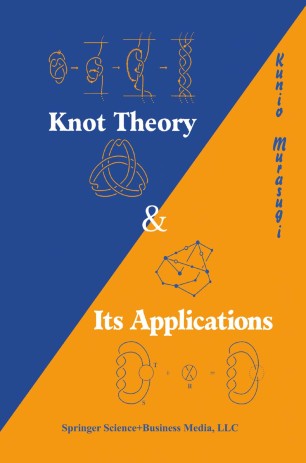
The book contains most of the fundamental classical facts about the theory, such as knot diagrams, braid representations, Seifert surfaces, tangles, and Alexander polynomials; also included are key newer developments and special topics such as chord diagrams and covering spaces. The work introduces the fascinating study of knots and provides insight into applications to such studies as DNA research and graph theory. In addition, each chapter includes a supplement that consists of interesting historical as well as mathematical comments.

By highlighting relations between experimental and theoretical work, this volume explores new ways of addressing one of the central challenges in the study of language and cognition. The articles bring together work by leading scholars and younger researchers in psychology, linguistics and philosophy. An introductory chapter lays out the background on concept composition, a problem that is stimulating much new research in cognitive science. Researchers in this interdisciplinary domain aim to explain how meanings of complex expressions are derived from simple lexical concepts and to show how these meanings connect to concept representations.

This book is devoted to the spectral theory of commutative C*-algebras of Toeplitz operators on the Bergman space and its applications. For each such commutative algebra there is a unitary operator which reduces Toeplitz operators from this algebra to certain multiplication operators, thus providing their spectral type representations. This yields a powerful research tool giving direct access to the majority of the important properties of the Toeplitz operators studied herein, such as boundedness, compactness, spectral properties, invariant subspaces.
Braids and braid groups have been at the heart of mathematical development over the last two decades. Braids play an important role in diverse areas of mathematics and theoretical physics. The special beauty of the theory of braids stems from their attractive geometric nature and their close relations to other fundamental geometric objects, such as knots, links, mapping class groups of surfaces, and configuration spaces. In this presentation the authors thoroughly examine various aspects of the theory of braids, starting from basic definitions and then moving to more recent results. The advanced topics cover the Burau and the Lawrence--Krammer--Bigelow representations of the braid groups, the Alexander--Conway and Jones link polynomials, connections with the representation theory of the Iwahori--Hecke algebras, and the Garside structure and orderability of the braid groups.

The papers in this volume represent the results of a workshop on the syntax, semantics and acquisition of aspect held in 2002 whose purpose was to foment active cross-disciplinary communication. A number of the papers examine the syntactic representation of lexical or situation aspect, while others focus on the syntactic interaction of lexical aspect with grammatical aspect, and of grammatical aspect and tense. Other papers examine the role of aspect in discourse representations, while a third group of papers reports on results of empirical studies on the acquisition of aspect in both first and second language acquisition, and patterns of loss of morphosyntactic reflexes of aspect in language attrition.
Focusing on the manipulation and representation of geometrical objects, this book explores the application of geometry to computer graphics and computer-aided design (CAD). An introduction to transformations of the plane and three-dimensional space describes how objects can be constructed from geometric primitives and manipulated. This leads into a treatment of projections and the method of rendering objects on a computer screen by application of the complete viewing operation. Subsequently, the emphasis is on the two principal curve and surface representations, namely, Bézier and B-spline (including NURBS).

This volume introduces an entirely new pseudodifferential analysis on the line, the opposition of which to the usual (Weyl-type) analysis can be said to reflect that, in representation theory, between the representations from the discrete and from the (full, non-unitary) series, or that between modular forms of the holomorphic and substitute for the usual Moyal-type brackets. This pseudodifferential analysis relies on the one-dimensional case of the recently introduced anaplectic representation and analysis, a competitor of the metaplectic representation and usual analysis.

Daraa Highway - Ghabagheb - Syria
+963-15 2050 - 15 860 380 /1/2/3 - 11 662 3900