


Refine Results
Sort By
From
To

Provides information on the basic science and tissue interactions of dental lasers and documents the principal current clinical uses of lasers in every dental discipline. The applications of lasers in restorative dentistry, endodontics, dental implantology, pediatric dentistry, periodontal therapy, and soft tissue surgery are clearly described and illustrated. Information is also provided on laser-assisted multi-tissue management, covering procedures such as crown lengthening, gingival troughing, gingival recontouring, and depigmentation.
The application of photonics technologies and principles to medicine and life sciences is known as biophotonics. Laser is one of the most important inventions of the twentieth century in biophotonic technology. This book a concise but comprehensive body of information, written in a simple tone, attempting to cruise the readers' vision through every perspective, to seek objective information on all aspects of the instrument and its uses, fostering a preliminary step towards efficient laser diagnosis and therapy.
The development of a direct, inexpensive, and efficient method for converting solar energy into a portable, clean fuel would allow elimination of the growing problems associated with the ever increasing use of fossil fuels and the reality of their rapid depletion. As the title suggests, Light, Water, Hydrogen: The Solar Generation of Hydrogen by Water Photoelectrolysis, considers the combination of water and light with a suitable semiconductor to achieve a safe, renewable and therefore inexhaustable means for hydrogen generation via the splitting of the water molecule, or photoelectrolysis.

Laser Fabrication and Machining of Materials introduces readers to the fundamental properties and physical phenomena of laser machining and its applications on the macro, micro, and nano scales. Examples of existing, emerging, and potential techniques are discussed, giving students and practicing engineers alike the opportunity to expand their use of lasers in such disciplines as mechanical processes, electronics, materials, and manufacturing.

Charge migration through DNA has been the focus of considerable interest in recent years. A deeper understanding of the nature of charge transfer and transport along the double helix is important in fields as diverse as physics, chemistry and nanotechnology. It has also important implications in biology, in particular in DNA damage and repair. This book presents contributions from an international team of researchers active in this field.

This book contains a selection of lectures from the first Summer School organized by the Center for Functional Nanostructures (CFN) at the University of Karlsruhe. The mission of the CFN is to carry out research in the following areas: nanophotonics, nanoelectronics, molecular nanostructures and nanostructured materials. The aim of the summer schools is mainly to exchange new ideas and illustrate emerging research methodologies through a series of lectures. This is reflected by both the selection of topics addressed in the present volume as well as the tutorial aspect of the contributions.

Biophotonics and Coherent Systems in Biology offers a timely research volume derived from papers submitted at the 3rd International Alexander Gurwitsch Conference. Biophotonics and Coherent Systems in Biology covers the major aspects of modern biophotonics and related biological and biophysical problems of interest to researchers today.Key topics include: Coherency of biophoton emission and its related physical and biological properties , Biological effects of microwaves, Photon emission from living samples, starting from human bodies up to cell cultures, Fundamental role of water in bioenergetics and the influence of electromagnetic fields upon hydrophobic-hydrophilic balance
Biophotonics: Optical Science and Engineering in the 21st Century serves as an ideal aid to the research and development of these areas integrating light, photonics, and biological systems.Key topics include: Fluctuation Correlation Spectroscopy in Cells: Determination of Molecular Aggregation ,Using GFP and FRET Technologies for Studying Signaling Mechanisms of Apoptosis in a Single Living Cell, Study on Protein-Protein Interaction in Single Living Cells, Functional Optical Coherence Tomography: Simultaneous In Vivo Imaging of Tissue Structure and Physiology, Imaging –Photo- and Sonodynamic Diagnosis of Cancer Mediated by Chemiluminescence Probes, Biophotonic Analysis of Spontaneous Self-Organizing Oxidative Processes in Aqueous Systems, Biophoton Emission and Defense Systems in Plants
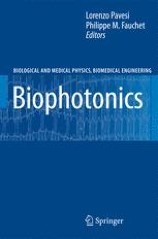
More profound understanding of the nature of light and light-matter interactions in biology has enabled many applications in the biology and medical fields. So a new discipline is born, namely biophotonics. The aim of this book is to review the current state-of-the-art of the field by means of authoritative chapters written by the world leaders of the respective fields. Biosensors, biochips, optical tomography, optical microsurgery, photodynamics therapy, bioactivation of gene, photobiology of skin, and nanobiophotonics are each introduced and recent advances presented. This book will be useful not only to physicians, biologists, physicists, chemists, materials scientists, and engineers but also to graduate students who are interested in these rapidly developing fields.
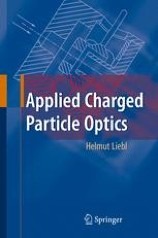
Authored by a pioneer of the field, this overview of charged particle optics provides a solid introduction to the field for all physicists wishing to design their own apparatus or better understand the instruments with which they work. Applied Charged Particle Optics begins by introducing electrostatic lenses and fields used for acceleration, focussing and deflection of ions or electrons. Subsequent chapters give detailed descriptions of electrostatic deflection elements, uniform and non-uniform magnetic sector fields, image aberrations, and, finally, fringe field confinement. A chapter on applications is added.
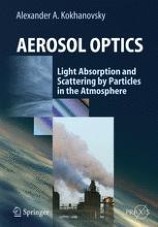
Provides a comprehensive review of available techniques for the remote sensing of aerosols. Although mostly satellite remote sensing is considered, ground-based techniques are also discussed.describes techniques for the determination of the column concentration of aerosol particles and their optical sizing using spaceborne optical instrumentation. The majority of the techniques described in this book use a so-called "library method". This method relies upon the precalculated top-of-atmosphere reflectances (TOAR) for vaious atmospheric aerosol types. The comparison of measured and calculated TOARS allows one to characterize the optically-equivalent aerosol state.

Daraa Highway - Ghabagheb - Syria
+963-15 2050 - 15 860 380 /1/2/3 - 11 662 3900