



Page 1
Page 1

Mutagenic Impurities : Strategies for Identification and Control
In Mutagenic Impurities: Strategies for Identification and Control, distinguished chemist Andrew Teasdale delivers a thorough examination of mutagenic impurities and their impact on the pharmaceutical industry. The book incorporates the adoption of the ICH M7 guideline and focuses on mutagenic impurities from both a toxicological and analytical perspective.

Molecular genetics, structures, mechanisms, and functions : Principles of gene manipulation and genomics ; Vol.1
Provides an overview of the future of genetic engineering and delves into the role of biotechnology and its applications in genetic engineering. It discusses the tools of recombinant technology, which have brought about revolution in our understanding of various complex biological phenomena. Chapters cover mutagenesis, construction, and sequencing of DNA libraries along with applications of genetic engineering for improving health, preventing genetic diseases, enhancing food resources, managing environmental bioremediation, and more. Topics include genetic engineering tools for restriction enzymes and vectors, gene and cell division, mutation detection and screening in plants, population genetics, sexuality in bacteria, and more. Several chapters focus on the tools of recombinant technology, such as restriction enzymes, vectors, etc., that have paved the way for creating organisms of choice and opened new horizons in the field of medicine, agriculture, and industry for human welfare.

Insulin resistance
Insulin is a peptide hormone secreted by the B cells of the pancreatic islets of Langerhans and maintains normal blood glucose levels by facilitating cellular glucose uptake, regulating carbohydrate, lipid and protein metabolism and promoting cell division and growth through its mutagenic effects.

Efficient Screening Techniques to Identify Mutants with TR4 Resistance in Banana : Protocols
The Joint FAO/IAEA Centre of Nuclear Techniques in Food and Agriculture implemented a Coordinated Research Project (CRP) ‘Efficient Screening Techniques to Identify Mutants with Disease Resistance for Coffee and Banana” (2015-2020). This CRP brought together experts from Asia, Europe and Africa in addition to experts of the Joint FAO/IAEA Centre to develop resistance against TR4 through mutation-assisted breeding. Induced mutagenesis is particularly attractive in case of banana since most cultivated bananas are seedless, thus hampering conventional cross breeding

Conditional Mutagenesis : An Approach to Disease Models
Leading experts provide timely and comprehensive information on methods for conditional mutagenesis in the mouse (part 1) and their application to model human physiology and pathophysiology (part 2). It illustrates how sophisticated genetic manipulations of the mouse genome are employed to model human diseases and to identify underlying molecular mechanisms. Finally the book considers the development of new drugs to treat them.
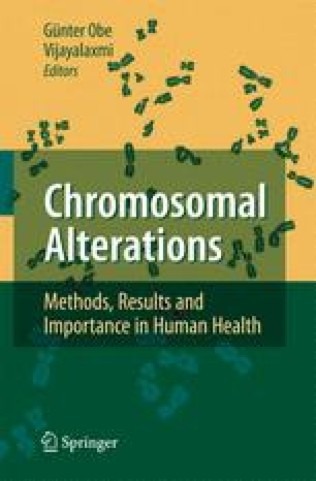
Chromosomal alterations : Methods, results and importance in human health
Cytogenetics is a very important research tool in basic and applied research. The uses of cytogenetics in human-population monitoring, in biological dosimetry in radiation accidents and in astronauts and as a predictive measure of cancer are topics discussed in this book. The book will help the reader to better understand cytogenetics and the intricacies of the methodology. The different methods of fluorescence in situ hybridization are discussed and the results achieved are presented. The book provides a comprehensive review of basic and applied aspects of cytogenetics and therefore will be of interest to all who are interested in chromosomes and their alterations by different types of mutagens, including chemical mutagens and ionizing and nonionizing radiation, with special reference to electromagnetic fields.
Biotechnologies for plant mutation breeding : Protocols
This book offers 19 detailed protocols on the use of induced mutations in crop breeding and functional genomics studies, which cover topics including chemical and physical mutagenesis, phenotypic screening methods, traditional TILLING and TILLING by sequencing, doubled haploidy, targeted genome editing, and low-cost methods for the molecular characterization of mutant plants that are suitable for laboratories in developing countries. The collection of protocols equips users with the techniques they need in order to start a program on mutation breeding or functional genomics using both forward and reverse-genetic approaches. Methods are provided for seed and vegetatively propagated crops (e.g. banana, barley, cassava, jatropha, rice) and can be adapted for use in other species.
Bio-Applications of Nanoparticles
In this edited book, we highlight the central players in the Bionanotechnology field, which are the nanostructures and biomolecules. The book starts by describing how nanostructures are synthesized and by describing the wide variety of nanostructures available for biological research and applications. Also shown are the techniques used to synthesize a wide variety of biological molecules. Next, there is a focus on the assembly of nanostructures with biological molecules, which could lead to the design of multi-functional nanosystems. In the following chapters, examples of the unique properties of nanostructures are provided along with the current applications of these nanostructures in biology and medicine. Some applications include the use of gold nanoparticles in diagnostic applications, quantum dots and silica nanoparticles for imaging, and liposomes for drug delivery. In the final chapters of the book, the toxicity of nanostructures are described. This book provides broad examples of current developments in Bionanotechnology research and would be an excellent introduction to the field.
Advances in Bioactivation Research
This volume provides researchers with recent information on bioactivation reactions of drugs and toxicants. In other sections, focus is on recent applications of bioactivation research in pharmacology, toxicology, and environmental health sciences, where contributors demonstrate the integration of bioactivation research.
25 Years of P53 Research
Communication, awareness and access to information: Given the complexity of the field and the fact that data pertaining to each particular aspects of p53 biology or deregulation are scattered in many different publications, it is extremely difficult to access the full scale of relevant information of any specific p53-related topic. This book may help in this task by putting into perspective both general considerations on the p53 pathway and more specific information on various aspects of p53. In the longer term, however, open access to p53 complexity will require the development of knowledge bases accessible through the web and using simple navigation tools to guide users towards the specific information they need. Several efforts are currently being developed in that direction. They need to be strenghtened and better integrated within the rapidly growing galaxy of web-based information sources on molecular and individual variations in cancer. 2. Reference functional assays and structural analysis: Given the huge diversity of cellular and animal models for wild-type or mutant p53 functions, it will be important to set up standard, universally accepted assays to measure critical p53 protein functions.
