


Refine Results
Sort By
From
To

Records 5 species of resin, 74 species of animals, 41 species of minerals and fossils. There are resins such as Liquidambar orientalis, Commiphore myrrha, Boswellia carterii, Garcinia hanburyi; animals such as Solenognathus hardwickii, , Cervus nippon, Scolopendra subspinipes, Cryptotympana pustulata, Agkistrodon acutus, Bombyx mori, Collocalia esculenta, Moschus moschiferus, Hippocampus kelloggi, Gekko gekko; minerals and fossils such as mercury, gypsum, alum, mirabilite, cinnabar, actinolite, calomel, keel, dens draconis, lithodes, fossilia spiriferis.
Biomining is the biotechnology that uses microorganisms to recover metals, in particular copper and gold, from ores and concentrates. Having developed from a very simple operational (in terms of both engineering and biology) process, biomining has developed into a multifaceted technology, to the extent that many of the largest industrial stirred tanks and heaps throughout the world are employed for bioprocessing minerals. This book has a strong applied approach and describes emerging and established industrial processes, as well as the underlying theory of the process, and the biology of the microorganisms involved. Chapters have been written by personnel from leading biomining companies, consultants and internationally recognized researchers and academics
Presents an updated discussion on the chemical composition and biological properties of the main bee products, which until now have been presented separately in different editions This book scoops out studies about bee products most used in marketing and in traditional medicine such as honey, royal jelly, propolis, bee pollen and bee venom Discusses chemical composition and biological function of the different bee products on topics such as nutrition, aging and age-related diseases, cancer, neurodegenerative diseases and pathogen infections Bee products are rich in several essential nutrients and non essential nutrients, as sugars, minerals, proteins, free amino acids, vitamins, enzymes and polyphenols, that seem to be closely related to their biological functions. The effects of these products in nutrition, aging and age-related diseases, cancer, neurodegenerative diseases and pathogen infections are discussed.
A Sea Change in a Changing Sea The oceans, seas and coastal areas encompass over 70% of the earth’s surface. They are a critical driver of the earth’s hydrologic cycle and climate system, important for c- merce, transport, and tourism, a source of economically important living marine resources, minerals such as hydrocarbons, as well as new pharmaceutical compounds. The marine environment provides essential habitats for thousands of marine living 1 2 resources, which in turn contribute significantly to global food security, employment, 3 and trade. Overall, the sea’s contribution to human welfare, in terms of market and non-market resources and environmental services, has been estimated at US$21 trillion/year (Costanza, 2000). However, despite the importance of the ocean realm to humans, there is a growing sense that human impacts are destabilizing this system. Some experts believe that current fishing levels are approaching or exceeding the total 4 productivity of the ocean ecosystem (National Research Council, 1999).
Microbial activities influence water-rock interaction processes and chemical transport between the major geochemical reservoirs and the formation/transformation of minerals and rocks, whereas geological processes and geochemical controls influence the microbial ecology in extreme environments. How biological activity influences geological processes and what role these processes played in the geological evolution of the Earth are fundamental questions.
Here is a comprehensive and up to-do-date presentation of the origins, and properties of clay minerals at the Earths surface. Concluding chapters show that clay minerals can form in variety of different environments: meteorites, lavas, subduction zones, among others.
Ceramic and Glass Materials: Structure, Properties and Processing is a concise and comprehensive guide to the key ceramic and glass materials used in modern technology. Each chapter focuses on the structure-property relationships for these important materials and expands the reader’s understanding of their nature by simultaneously discussing the technology of their processing methods. In each case, the resulting understanding of the contemporary applications of the materials provides insights as to their future roles in twenty first century engineering and technology. Organized to be a practical and comprehensive resource, each chapter is dedicated to a specific material such as: alumina, mullite, sillimanite minerals, aluminates, quartz and silicas, refractory oxides, clays, concrete and cement, lead compounds, and zirconia.
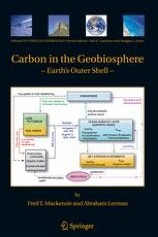
Carbon and carbon dioxide always played an important role in the geobiosphere that is part of the Earth’s outer shell and surface environment. The book’s eleven chapters cover the fundamentals of the biogeochemical behavior of carbon near the Earth’s surface, in the atmosphere, minerals, waters, air-sea exchange, and inorganic and biological processes fractionating the carbon isotopes, and its role in the evolution of inorganic and biogenic sediments, ocean water, the coupling to nutrient nitrogen and phosphorus cycles, and the future of the carbon cycle in the Anthropocene. This book is mainly a reference text for Earth and environmental scientists; it presents an overview of the origins and behavior of the carbon cycle and atmospheric carbon dioxide, and the human effects on them. The book can also be used for a one-semester course at an intermediate to advanced level addressing the behavior of the carbon and related cycles.
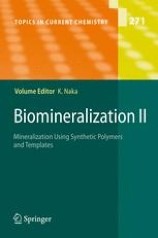
In nature, biological organisms produce mineralized tissues such as bone, teeth, diatoms, and shells. Biomineralization is the sophisticated process of production of these inorganic minerals by living organisms. Construction of organic–inorganic hybrid materials with controlled mineralization analogous to those produced by nature has recently received much attention because it can aid in understanding the mechanisms of the biomineralization process and development of biomimetic materials processing. The biomineralization processes use aqueous solutions at temperatures below 100 ◦C and no toxic intermediates are produced in these systems. This series presents critical reviews of the present position and future trends in modern chemical research. The short and concise reports on chemistry are each written by world renowned experts. This series is still valid and useful after 5 or 10 years.
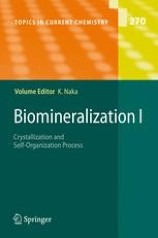
The five chapters of Biomineralization, volume 1, provide a bridge between the mineralogy and the organic substrates that enable the mineral formation by organisms in nature and under laboratory conditions. The book is a most useful reference for all concerned with biomineralization and biogenic minerals.In nature, biological organisms produce mineralized tissues such as bone, teeth, diatoms, and shells. Biomineralization is the sophisticated process of production of these inorganic minerals by living organisms. Construction of organic–inorganic hybrid materials with controlled mineralization analogous to those produced by nature has recently received much attention because it can aid in understanding the mechanisms of the biomineralization process and development of biomimetic materials processing.
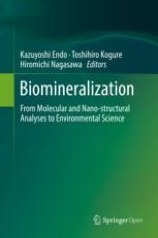
Over the past 45 years, biomineralization research has unveiled details of the characteristics of the nano-structure of various biominerals; the formation mechanism of this nano-structure, including the initial stage of crystallization; and the function of organic matrices in biominerals, and this knowledge has been applied to dental, medical, pharmaceutical, materials, agricultural and environmental sciences and paleontology. As such, biomineralization is an important interdisciplinary research area, and further advances are expected in both fundamental and applied research.

Daraa Highway - Ghabagheb - Syria
+963-15 2050 - 15 860 380 /1/2/3 - 11 662 3900