


Refine Results
Sort By
From
To

Explains how artificial intelligence is applied to medicine, illustrating not only its enormous potential but also ancillary issues and the limits and risks inherent in its use on a large scale. The book focuses on the intersection between medicine and AI and its implications on the impact of human health care delivery. Topics discussed include wearable devices, health data, Internet of Things, virtual reality, robotic assistance system, and digital intelligence in the health sector. Additionally, sections discuss diagnostics and decision-making systems and machine/deep learning in clinical setting.

Learning the diagnostic elements of lung pathology requires not only great familiarity with a wide diversity of cases, but also a sharp eye for analyzing pictorial images. In Lung Pathology: A Consultative Atlas, leading experts offer a novel and substantive approach to the teaching of pulmonary pathology. Drawing on 263 challenging, yet exemplary, referral cases taken from files collected over 20 years by internationally renowned lung pathologist, Dr. Eugene Mark, the authors introduce his state-of-the-art approach to the interpretation of pulmonary pathology. This text includes the primary and/or differential diagnosis and the pertinent histological features of each case, as well as clinical history, when available. Key words or phrases in the text are highlighted and digitally hyperlinked to associated images or regions of interest within those images to assist the readers in their correlation. Novel and user friendly, Lung Pathology: A Consultative Atlas describes a cutting-edge diagnostic approach to pulmonary pathology, describing its principles and demonstrating its application in text and full-color illustrations drawn from 263 difficult cases of human lung pathologies.

Help students navigate the complex discipline of biochemistry with a clear and coherent presentation. Renowned authors David Nelson, Michael Cox, and new co-author Aaron Hoskins have focused this eighth edition around the fundamental principles to help students understand and navigate the most important aspects of biochemistry. Text features and digital resources in the new Achieve platform emphasize this focus on the principles, while coverage of recent discoveries and the most up-to-date research provide fascinating context for learning the dynamic discipline of biochemistry.

This book is the first academic book on the controversial issue of including spiritual care in integrated electronic medical records (EMR). Based on an international study group comprising researchers from Europe (The Netherlands, Belgium and Switzerland), the United States, Canada, and Australia, this edited collection provides an overview of different charting practices and experiences in various countries and healthcare contexts.
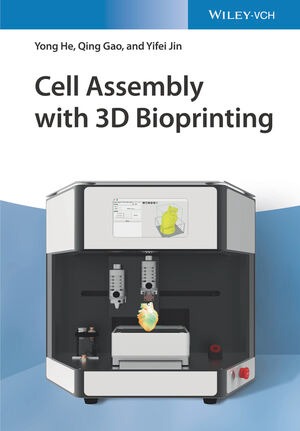
Detailed, highly illustrated chapters cover different bioprinting approaches and their applications, including coaxial bioprinting, digital light projection, direct ink writing, liquid support bath-assisted 3D printing, and microgel-, microfiber-, and microfluidics-based biofabrication. The book includes practical examples of 3D bioprinting, a protocol for typical 3D bioprinting, and relevant experimental data drawn from recent research.

Source of the latest innovative research and technical development in biomanufacturing systems. It is organised into 2 parts: 1) Manufacturing of recombinant therapeutic proteins (e.g. therapeutic antibodies, biosimilars/biogenerics) and 2) Manufacturing aspects of cell and gene therapy. Each with selected chapters on the following topics for both up- and downstream, such as: Advanced process strategies, especially continuous manufacturing, Advanced culture techniques, especially single-use systems, Process transfer, scale-up/scale-down models, Processing advances/Manufacturing productivity/efficiency, Model-assisted process understanding and development/Digital Twins, Process controls and analytics, Quality control, Quality by design, Facility design and full-scale commercial systems, manufacturing technology innovation.

Helping to accelerate Alzheimer’s disease drug development. Addressing the latest advances in preclinical and clinical research, including new insights into the molecular mechanisms and emerging therapeutic strategies, the book continues by exploring digital biomarkers and advanced neuroimaging analysis which will transform how clinical trials in the Alzheimer’s disease field are performed.
This book presents selected works of contemporary evolutionary morphologists and includes such topics as broad scale reconstructions of the brain and ear of dinosaurs, inference of locomotor habits from cancellous bone architecture in fossil primates, and a comparison of the independently evolved manipulating apparatuses in the lesser and giant pandas. Insight is provided into the application of modern noninvasive technologies, including digital imaging techniques and virtual 3D reconstruction, to the investigation of complex anatomical features and coherences. In combination with traditional methods, this allows for the formulation of improved hypotheses on coordinated function and evolution. The creation of virtual translucent specimens makes it possible to realize the age-old dream of the classical anatomists: looking through the skin into the inner organization of an organism. On full display here is the dramatic and promising impact that modern imaging techniques have on scientific progress in evolutionary morphology.

Explores the relevance of global trade law for data, big data and cross-border data flows. Contributing authors from different disciplines including law, economics and political science analyze developments at the World Trade Organization and in preferential trade venues by asking what future-oriented models for data governance are available and viable in the area of trade law and policy. The collection paints the broad picture of the interaction between digital technologies and trade regulation as well as provides in-depth analyses of critical to the data-driven economy issues, such as privacy and AI, and different countries' perspectives.
The field of artificial intelligence (AI) and the law is on the cusp of a revolution. This book - designed to explain computational processes to non-programmers - describes how text analytic programs will change the practice of law, specifically by connecting computational models of legal reasoning directly with legal text.

This book was finalized while countries around the world were still confronting a global public health crisis caused by the COVID-19 pandemic. Many came to rely on digital services as an infrastructure for social interaction and professional endeavors, including academic and educational work. The pandemic seems to have precipitated a further shift towards digital technologies and artificial intelligence. It is our hope that this book will contribute to an informed discussion about the relevance of and implications for international economic law beyond the pandemic"

Offers a comprehensive study on Advancements in Cybercrime Investigation and Digital Forensics, highlighting the most up-to-date tools that help to mitigate cyber-attacks and that extract digital evidence for forensic investigations to recover lost, purposefully deleted, or damaged files Vast manpower and resources are needed to investigate cybercrimes
Explores ways to leverage information technology and machine learning to combat disease and promote health, especially in resource-constrained settings. It focuses on digital disease surveillance through the application of machine learning to non-traditional data sources.
Challenges in complexity and variability of multimedia data have led to revolutions in machine learning techniques. Multimedia data, such as digital images, audio streams and motion video programs, exhibit richer structures than simple, isolated data items. A number of pixels in a digital image collectively conveys certain visual content to viewers. A TV video program consists of both audio and image streams that unfold the underlying story. To recognize the visual content of a digital image, or to understand the underlying story of a video program, we may need to label sets of pixels or groups of image and audio frames jointly.

Offers the first systematic guide to machine ethics, bridging between computer science, social sciences and philosophy. Based on a dialogue between an AI scientist and a novelist philosopher, the book discusses important findings on which moral values machines can be taught and how. In turn, it investigates what kind of artificial intelligence (AI) people do actually want.
Key to our culture is that we can disseminate information, and then maintain and access it over time. While we are rapidly advancing from vulnerable physical solutions to superior, digital media, preserving and using data over the long term involves complicated research challenges and organization efforts. Uwe Borghoff and his coauthors address the problem of storing, reading, and using digital data for periods longer than 50 years. They briefly describe several markup and document description languages like TIFF, PDF, HTML, and XML, explain the most important techniques such as migration and emulation, and present the OAIS (Open Archival Information System) Reference Model. To complement this background information on the technology issues the authors present the most relevant international preservation projects, such as the Dublin Core Metadata Initiative, and experiences from sample projects run by the Cornell University Library and the National Library of the Netherlands. A rated survey list of available systems and tools completes the book.

Laser-based additive manufacturing (LAM) is a revolutionary advanced digital manufacturing technology developed in recent decades, which is also a key strategic technology for technological innovation and industrial sustainability. This technology unlocks the design and constraints of traditional manufacturing and meets the needs of complex geometry fabrication and high-performance part fabrication. A deeper understanding of the design, materials, processes, structures, properties and applications is desired to produce novel functional devices, as well as defect-free structurally sound and reliable LAM parts.The topics in this Special Issue reprint include macro- and micro-scale additive manufacturing with lasers, such as structure/material design, fabrication, modeling and simulation, in situ characterization of additive manufacturing processes and ex situ materials characterization and performance, with an overview that covers various applications in aerospace, biomedicine, optics and energy.
This book is part of the LAMBDA Project (Learning, Applying, Multiplying Big Data Analytics), funded by the European Union, GA No. 809965. Data Analytics involves applying algorithmic processes to derive insights.
– semantic caching – data warehousing and semantic data mining – spatial, temporal, multimedia and multimodal semantics – semantics in data visualization – semantic services for mobile users – supporting tools – applications of semantic-driven approaches These topics are to be understood as speci?cally related to semantic issues. Contributions submitted to the journal and dealing with semantics of data will be considered even if they are not within the topics in the list. While the physical appearance of the journal issues looks like the books from the well-known Springer LNCS series, the mode of operation is that of a journal. Contributions can be freely submitted by authors and are reviewed by the Editorial Board. Contributions may also be invited, and nevertheless carefully reviewed, as in the case for issues that contain extended versions of best papers from major conferences addressing data semantics issues. Special issues, focusing on a speci?c topic, are coordinated by guest editors once the proposal for a special issue is accepted by the Editorial Board. Finally, it is also possible that a journal issue be devoted to a single text.
This book addresses the application of computing to cultural heritage and the discipline of Digital Humanities that formed around it. Digital Humanities research is transforming how the Human record can be transmitted, shaped, understood, questioned and imagined and it has been ongoing for more than 70 years. However, we have no comprehensive histories of its research trajectory or its disciplinary development. The authors make a first contribution towards remedying this by uncovering, documenting, and analysing a number of the social, intellectual and creative processes that helped to shape this research from the 1950s until the present day.

Daraa Highway - Ghabagheb - Syria
+963-15 2050 - 15 860 380 /1/2/3 - 11 662 3900