


Refine Results
Sort By
From
To

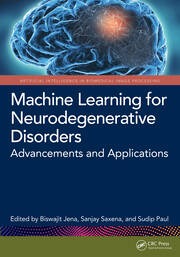
Explores the application of machine learning to the understanding, early diagnosis, and management of neurodegenerative disorders. With a specific focus on its role in ongoing clinical trials, the book covers essential topics such as data collection, pre-processing, feature extraction, model development, and validation techniques. It delves into the applications of neuroimaging techniques like magnetic resonance imaging (MRI), computed tomography (CT), and positron emission tomography (PET) in the diagnosis and understanding of neurodegenerative disorders. Additionally, the book examines various machine-learning algorithms employed for biomarker discovery in neurodegenerative disorders. It highlights the role of neuroinformatics and big data analysis in advancing the understanding and management of neurodegenerative disorders. Furthermore, the book reviews future prospects and presents the ethical considerations and regulatory challenges associated with implementing machine learning approaches in the diagnosis, treatment, and prevention of neurodegenerative disorders.
Analysis of Waiting-Time Data in Health Services Research asks critical questions linking waiting times to health care outcomes. Generously illustrated with charts and tables, the book places this type of data collection, analysis, and reporting firmly in the context of health services research, the study of outcomes of health care delivery to a population.
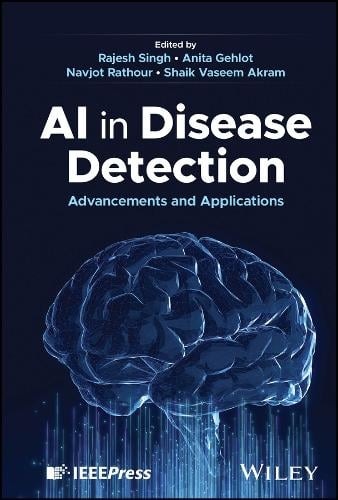
Discusses the integration of artificial intelligence to revolutionize disease detection approaches, with case studies of AI in disease detection as well as insight into the opportunities and challenges of AI in healthcare as a whole. The book explores a wide range of individual AI components such as computer vision, natural language processing, and machine learning as well as the development and implementation of AI systems for efficient practices in data collection, model training, and clinical validation.
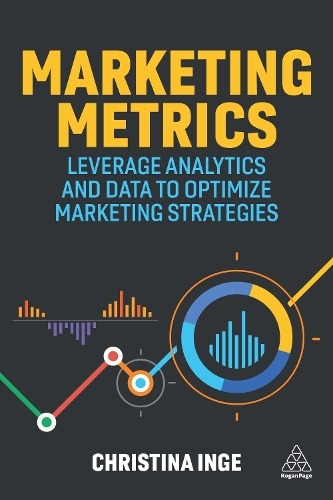
Featuring examples from a range of organizations including Coca-Cola and Mercedes-Benz, it shows how to create a strategy which leverages consumer data for customer-centric marketing, establishes the ROI of channels and campaigns, strengthens brands and creates data-driven product strategies. Covering the range of new global laws that impact consumer privacy and data collection and usage, Marketing Metrics shows how to use data in a non-invasive, secure and ethical way.

The following issues are addressed: background issues on climate change, whole-life performance and design collaboration generic strategies for energy efficient, low-carbon design health and wellbeing and post occupancy evaluation building ventilation air conditioning and HVAC system selection thermal energy generation and distribution systems low-energy approaches for thermal control electrical systems, data collection, controls and monitoring building thermal load assessment building electric power load assessment space planning and design integration with other disciplines.
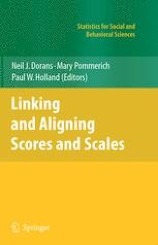
In this book, experts in statistics and psychometrics describe classes of linkages, the history of score linkings, data collection designs, and methods used to achieve sound score linkages. They describe and critically discuss applications to a variety of domains including equating of achievement exams, linkages between computer-delivered exams and paper-and-pencil exams, concordances between the current version of the SAT® and its predecessor, concordances between the ACT® and the SAT®, vertical linkages of exams that span grade levels, and linkages of scales from high-stakes state assessments to the scales of the National Assessment of Educational Progress (NAEP).
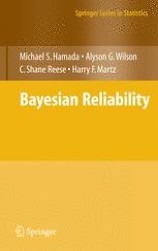
Bayesian Reliability presents modern methods and techniques for analyzing reliability data from a Bayesian perspective. The adoption and application of Bayesian methods in virtually all branches of science and engineering have significantly increased over the past few decades. This increase is largely due to advances in simulation-based computational tools for implementing Bayesian methods. The authors extensively use such tools throughout this book, focusing on assessing the reliability of components and systems with particular attention to hierarchical models and models incorporating explanatory variables. Such models include failure time regression models, accelerated testing models, and degradation models. The authors pay special attention to Bayesian goodness-of-fit testing, model validation, reliability test design, and assurance test planning. Throughout the book, the authors use Markov chain Monte Carlo (MCMC) algorithms for implementing Bayesian analyses--algorithms that make the Bayesian approach to reliability computationally feasible and conceptually straightforward.
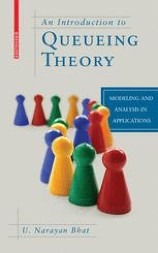
This introductory textbook is designed for a one-semester course on queueing theory that does not require a course in stochastic processes as a prerequisite. By integrating the necessary background on stochastic processes with the analysis of models, the work provides a sound foundational introduction to the modeling and analysis of queueing systems for a broad interdisciplinary audience of students in mathematics, statistics, and applied disciplines such as computer science, operations research, and engineering.

Daraa Highway - Ghabagheb - Syria
+963-15 2050 - 15 860 380 /1/2/3 - 11 662 3900