


Refine Results
Sort By
From
To

Acute heart failure is one of the oldest described medical conditions. However, although its clinical symptomatology is fairly obvious and known to everyone: dyspnea, liver pain, crackles on auscultation, the epidemiology has only been explored for very recent years. In all of the cardiology and resuscitation books of the past 40 years, acute heart failure has been considered a catch-all ranging from acute simple lung edema in hypertensive crisis to cardiogenic shock following heart attack. myocardium. It was all called "acute heart failure." This book is based on the recent Recommendations of the European Society of Cardiology and the European Society of Intensive Care Medicine which advocate the designation "Acute heart failure syndrome" in which the decompensation of heart failure chronic, hypertensive surge, cardiogenic shock, right heart failure, and high output heart failure are separate entities.

Explores alternative therapeutics, lantibiotics and other novel drugs. This book provides concrete information to readers regarding lantibiotics and various types of antimicrobial peptides with their mode of actions in treating various multidrug resistant organisms. It explains various techniques that are involved in analyzing antimicrobial peptides and their mode of actions. The development of antibiotic resistance has now reached a point of crisis where innovative methods and application of novel compounds and methods are required to prevent the spread of drug resistant infections.
This book brings an updated state of the art of phylogenetic diversity in conservation biology. Nineteen chapters written by scientists from research institutions of fourteen countries demonstrate that approaches for preserving the evolutionary heritage are now very tuned into human impacts and sustainability issues. The questions, methods and applications around which it is organized show the importance of phylogenetic diversity in avoiding biodiversity losses in the present extinction crisis. They touch important points such as the way we value phylogenetic diversity, the importance of thinking at a much wider sample of the Tree of Life, the choice of adequate measures. In methods section, new solutions, such as dealing with abundances, sampling effort, or with information coming from conflicting phylogenetic trees are provided. Application section includes study cases of different groups of organi
Through a set of incisive essays, this incredibly timely book shows how much the COVID-19 pandemic has exposed both vulnerabilities and opportunities - for (racial) capitalism and its discontents alike to intervene in food supply chains. A most welcome publication! This book takes the upheaval of the global COVID-19 pandemic as a springboard from which to interrogate a larger set of structural, environmental and political fault lines running through the global food system. In a context in which disruptions to the production, distribution, and consumption of food are figured as exceptions to the smooth, just-in-time efficiencies of global supply chains, these essays reveal the global food system as one that is inherently disruptive of human lives and flourishing, and of relationships between people, places, and environments. The pandemic thus represents a particular, acute moment of disruption, offering a lens on a deeper, longer set of systemic processes, and shining new light on transformational possibilities.
Explores key issues such as the use and legitimacy of surveillance to address a global health crisis, the role of surveillance in the experience of indigenous peoples in post-colonial societies, how surveillance interacts with gender, race, ethnicity, and social class, and the interaction between technology, surveillance, and changing attitudes to expression. how philosophy and sociology can help to correct biases and law and politics can offer new approaches to the legitimacy, use and implications of surveillance.
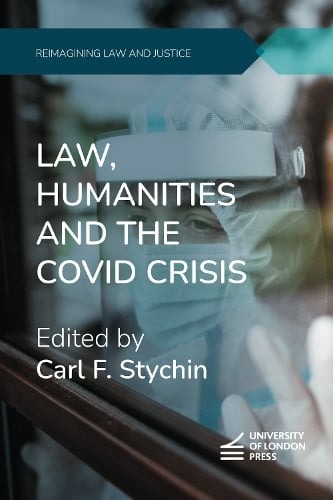
Seeks to address the immediacy of COVID-19 by focusing on the implications of the virus in a wider interdisciplinary context Law, Humanities and the COVID Crisis</i> sets out a framework for understanding the COVID-19 virus beyond its epidemiological constraints, asking us to question the very definition of what it means to be human. Researchers from around the world offer their critical reflections on the past, present, and future of this period of sociocultural upheaval and the tremendous suffering that has laid bare fundamental imbalances in our society.
This book was finalized while countries around the world were still confronting a global public health crisis caused by the COVID-19 pandemic. Many came to rely on digital services as an infrastructure for social interaction and professional endeavors, including academic and educational work. The pandemic seems to have precipitated a further shift towards digital technologies and artificial intelligence. It is our hope that this book will contribute to an informed discussion about the relevance of and implications for international economic law beyond the pandemic"
Expands on the previous editions’ explorations of management essentials including handling stress, building diverse teams, running inclusive meetings, and how to lead in times of crisis. The education of a great leader never stops, and Lopp applies crucial insights to help continue your never-ending leadership education. Whether it is approaching a myriad of engineering personalities or handling unexpected conflict, you will come away with the wisdom to handle any team situation.
This book reveals, next to monetary policy and financial crisis, less well known topics such as insolvency, collective action clauses, international mediation and management of central banks.
This book investigates the origins and evolution of Asia’s new institutional architecture in trade, finance, and security from both a theoretical and empirical perspective. The traditional institutional equilibrium in Asia has come under heavy strain in the "post triple shocks period" - the post-Cold War, the post-financial crisis of 1997-98, and the post-9-11 attacks. The new dynamics of rivalry and cooperation among states at both the intraregional and transregional levels is now shaping a new institutional architecture. Political and business leaders from Northeast and Southeast Asia interact with each other more frequently. South Asia’s participation in the rest of Asia in recent years is truly impressive. As we show, the future institutional trajectory of Asia is still open, but we believe that the book provides a timely examination of key shifts in the region. In doing so, our hope is to provide policymakers and analysts with an institutional road map for the future.
Topicality of Asian economy has refused to fade for almost four decades; if anything it has been levitating. The Asian economy has changed markedly since the economic and financial crisis of 1997-1998 and is continuing to evolve. As a scholarly subject matter, Asian economy has not stopped attracting academicians, policy mandarins, decision makers in the arena of business and students of Asian economy. The Asian crisis was a cataclysmic event for the region and brought to the surface several systemic limitations, like those in the financial sector, corporate governance, regulatory oversight, legal framework, and exchange rate management. Managers of Asian economy need to get to the bottom of these acutely problematical systemic issues. Additionally, Asian economies need to change with the demands of time and devise their post-crisis development strategy. Asia’s growth model, that served it so well for four decades, is overdue for renewal so that it can re-strengthen its bonds with the ever-evolving regional and global economic reality. The old growth model is likely to be less relevant and effective in the post-crisis future of the Asian economies. It is sure to run into the wall of diminishing returns.
Explores practical applications of how business ethics impacts working lives, allowing readers to reflect on their own moral compass through the use of ethical dilemmas. Highlighting the extensive breadth of issues related to business ethics, the authors introduce and analyze ethical and unethical behaviors of firms through numerous real -life examples including Patagonia, Costco, LVMH, Bill Gates, Muhummad Yunus, Enron, WorldCom, Samsung, Purdue Pharma, Vale Mining and the COVID-19 crisis.
The book details how these crises have led to a new urban vision—from avantgarde modern design to an artisan aesthetic that calls for simplicity and the everyday, from the sustainable development paradigm to a resilient vision that defends de-growth and the re-wilding of cities, from a homogenizing globalism to a new localism that values what is distinctive and nearby, from the privatization of the public realm to the commoning and self-governance of urban resources, and from top-down to bottom-up processes based on the engagement and empowerment of communities.
In Europe, the idea of Lifelong Learning has developed from an education policy to the most important pedagogic paradigm. The concept was created as an answer to the international education crisis, diagnozed by Philip H. Coombs in 1967. Since the European Year of Lifelong Learning in 1996, it has been regarded as an alternative to deal with the rapid social, political and economic changes of the modern world. Andrea Óhidy shows the genesis of the concept and its development towards a pedagogic paradigm. She investigates the relations between the concept of Lifelong Learning and school education and points out the most important links between Lifelong Learning and adult education.
Focuses on theoretical and empirical intersections between governance, knowledge and space from an interdisciplinary perspective. The contributions elucidate how knowledge is a prerequisite as well as a driver of governance efficacy, and conversely, how governance affects the creation and use of knowledge and innovation in geographical context.

Global warming has worsened the water resource crisis in many arid zones worldwide, from Africa to Asia, affecting millions of people and putting them at risk of hunger. Effective management of arid zone resources, including understanding the risks of toxic trace and heavy elements to humans, coupled with the need to produce more food to feed the world’s growing population, has thus become increasingly important. This very timely book, the only one of its kind on the market, fills the gap of our knowledge of trace elements in these regions. This book begins by introducing the nature and properties of arid zone soil, followed by an updated overview and comprehensive coverage of the major aspects of the trace elements and heavy metals of most concern in the world’s arid and semi-arid soils. These aspects include: - content and distribution - solution chemistry - solid-phase chemistry - selective sequential dissolution techniques - transfer fluxes - bioavailability - pollution and remediation In order to illustrate the themes, a comprehensive and focused case study on transfer fluxes of trace elements in Israeli arid soils is presented. Finally it closes with the global perspectives on anthropogenic interferences in the natural trace elements’ distribution.

Intellectual origins & orientations We begin by providing an overview of Bourdieu’s life as a scholar and a public intellectual. The numerous obituaries and memorial tributes that have appeared following Bourdieu’s untimely death have revealed something of his life and career, but few have stressed the intersection of his social origins, career trajectory, and public intellectual life with the changing political and social context of France. This is precisely what David Swartz’s “In memoriam” attempts to accomplish. In it he emphasizes the coincidence of Bourdieu’s young and later adulthood with the period of decolonization, the May 1968 French university crisis, the opening up of France to privatization of many domains previously entrusted to the state (l’état providence), and, most threatening to post-World War II reforms, the emergence of globalization as the hegemonic structure of the 21st century.
This book brings together a collection of cutting-edge insights into how action can and is already being taken against climate change at multiple levels of our societies, amidst growing calls for transformative and inclusive climate action. In an era of increasing recognition regarding climate and ecological breakdown, this book offers hope, inspiration and analyses for multi-level climate action, spanning varied communities, places, spaces, agents and disciplines, demonstrating how the energy and dynamism of local scales are a powerful resource in turning the tide.
This book helps readers combine history, politics, and ethics to address the most pressing problem facing the world today: environmental survival. In A Climate of Justice, Marvin Brown connects the environmental crisis to basic questions of economic, social, and racial justice. Brown shows how our current social climate maintains systemic injustices, and he uncovers resources for change through a civic ethics of repair and reciprocity.

Daraa Highway - Ghabagheb - Syria
+963-15 2050 - 15 860 380 /1/2/3 - 11 662 3900