


Refine Results
Sort By
From
To

Discovery in the use of chitosan-based nanocomposites in biomedical applications, including the scope to which these novel materials have been incorporated by the community. It provides an exceptional insight into the strategies for the synthesis and chemical modifications of chitosan, characterization techniques, their use as anticancer agents, antimicrobial, antiviral, and antifungal agents, their role in the biomedical field, and applications in drug delivery, gene therapy, dentistry, orthopedics, etc. This book will also emphasize the challenges with previous signs of progress and way for further research, details relating to the current pioneering technology, and future perspectives with a multidisciplinary approach. Furthermore, it presents up-to-date information on the economics, toxicity, and regulations related to these novel materials.
A team of renowned technologists and engineers delivers a practice guide to chemical product design. Offering real-world case studies for disinfectant formulation, the optimization of defined media, and the formulation of biocomposites, the book contains introduction to the current product design process. A practical approach to the essentials of product design, related statistical techniques and optimization, patents, green chemistry and gives real life case studies.
Focuses on enhancing antimicrobial and mechanical properties of polymeric materials and composites for dentistry. In recent years, special attention has been focused on the possibility of giving materials new or improved properties by the introduction of nano or submicron size additives, fibers or whiskers. Another area of research is the application of antibacterial monomers, which can be copolymerized in resins to kill oral pathogenic microflora. In addition, we are currently looking for new data regarding colonization of dental materials by pathogenic microbes and their influence on the other properties. Further, there are many new commercially available materials which should be investigated to verify their properties, which is important from the point of view of clinical practice. Original new research and reviews related to any of the topics mentioned above indicate the current directions of development of dental materials.
Dedicated to all relevant aspects of bulk fill materials and their uses in clinical practice. Today, we count over 30 different bulk fill materials, which can be used in the dental clinic. The composition of bulk fill materials and their different modes of application for moderate to large direct resin restorations placement are explained in this book. It is written by a group of international specialists and allows the reader to evaluate available materials, learn predictable techniques and evaluate long term survival as well as future developments. The book covers all fields related to the history of bulk fill composites, their composition and physical properties, and a step by step guide to their successful clinical applications.
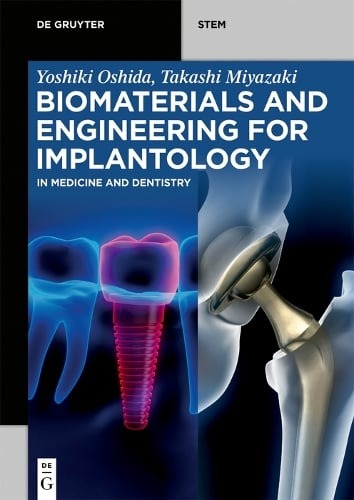
Biomaterials are composed of metallic materials, ceramics, polymers, composites and hybrid materials. Biomaterials used in human beings require safety regulations, toxicity, allergic reaction, etc. When used as implantable materials their biological compatibility, biomechanical compatibility, and morphological compatibility must be acessed. This book explores the design and requirements of biomaterials for the use in implantology.
Presents a focused overview of biocompatible nanocomposites, emphasizing recent advancements in material design, synthesis techniques, and their expanding applications in biomedicine. It spans key areas such as regenerative medicine, drug delivery, cancer therapy, biosensing, diagnostic imaging, and vaccine delivery —illustrating how these materials are transforming modern healthcare. The book reviews widely used biomaterials including polycaprolactone, bioactive ceramics, and polymer-based hybrids, discussing their roles in cardiovascular, orthopedic, dental, maxillofacial, and ophthalmic applications.
This book focuses on hydraulic calcium silicate-based materials available in clinical dentistry, used as pulp capping materials, root canal sealers, root-end fillers, or root repair materials and which offer improved properties and easier clinical application compared with the original mineral trioxide aggregate. The book introduces the current classification of bioceramic materials and explains their characterization and their physicochemical and biological properties.
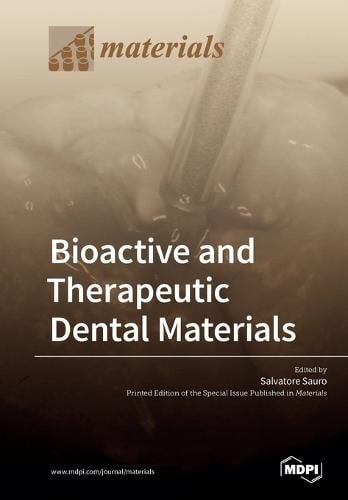
Special attention has been given to bioactive materials developed to induce cells differentiation/stimulation, hard tissue formation and exert antimicrobial actions. New innovations are necessary to continue to help reinforcing existing technologies and to introduce new paradigms for treating dental disease and restoring teeth seriously compromised by caries lesions via biomimetic and more biological operative approaches. Dental bioactive materials is arguably the latest research area in dentistry and thus the amount of new research is overwhelming. However, in this day and age of evidence based practice it important for this new information to be distilled into a practical and understandable format.
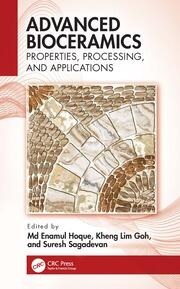
Offers a comprehensive view of properties and processing of bioceramics. Highlights applications in dentistry, orthopaedic and maxillofacial implants, and regenerative and tissue engineering. Covers ISO/ASTM specifications such as processing, clinical applications, recycling/reuse and disposal standards.
Pesents buildings developed using modular assembly approaches based on lightweight and corrosion-resistant fiber reinforced polymer (FRP) composites. Construction methods and the choice of building materials offer great opportunities for more productive and environmentally friendly solutions. This book includes valuable experimental data on large-scale structural components (beams, slabs, amd columns), connections (shear connections, wall stud connections, beam-column connections, column-column connections) and structures (composite floor system, structural sandwich assemblies, and full-scale structural demonstrations), supported with detailed numerical modelling and analytical methods.
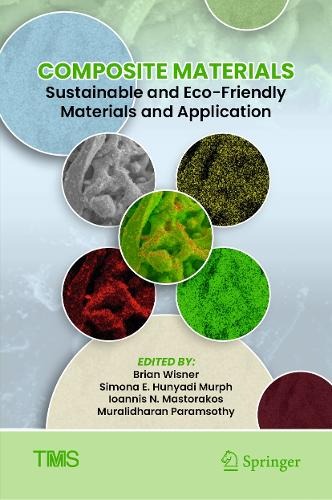
Covers innovations in the field of composite materials with a specific focus on eco-friendly and environmentally sustainable systems. All composite fields are explored, including polymer, metal, and ceramic matrix composites with an emphasis on sourcing raw materials in a sustainable way as well as the development of composite materials for environmental sustainability.

Provides the latest practical guidance on designing buildings to optimise their resilience to blast loading. Focused specifically on the design of commercial buildings, it is an indispensible guide to help engineers reduce the risks posed to building occupants and businesses from terrorist and other explosions. This book provides the engineer with a single and comprehensive source of reference for all the main elements of blast engineering design in modern practice. Industry-accepted methods for the design of glazing to resist blast loading are published for the first time, as well as a new chapter on hostile vehicle mitigation techniques. Guidance on structural steelwork and reinforced concrete design is extended and enhanced, supplemented with material on design in new materials such as steel-concrete-steel composites, this latter addition being published for the first time.

This book is a practical guide to the detection and remedy of faults in claddings and fixings on buildings. It sets out the problems involved in common cladding systems for buildings, and relates these problems to all the materials used: stone, masonry, concrete and glass-reinforced composites.

The 15 project-based lessons show key step-by-step techniques for working in Photoshop, including how to correct, enhance, and distort digital images, create image composites, and prepare images for print and the web. In addition to learning the essential elements of the Photoshop interface, this revised edition for the 2018 release covers features like search capabilities, Content-Aware Crop, Select and Mask, Face-Aware Liquify, designing with multiple artboards, creating and organising enhanced brush presets, and much more!

“Materials for springs” is basically intended for engineers related to spring materials and technologies who graduated from metallurgical or mechanical engineering courses in technical high school, or in other higher engineering schools, as well as those who are related to the purchase or sales of spring materials. The first chapter introduces into the fundamental selection processes of spring materials including the information sources on materials database. It is followed by the basic mechanisms and theories of spring failures such as fatigue fracture, creep/stress relaxation and stress corrosion cracking of metallic materials.

Machining is one of the most important manufacturing processes. Parts manufactured by others processes often require further operations before the product is ready for application. Machining is the broad term used to describe the removal of material from a work-piece. Machining processes can be applied to work metallic and non-metallic materials such as polymers, wood, ceramics and composites.
The book contains atomistic and continuum numerical methods and experimental validation for composite materials reinforced with particles or fibres, porous materials, homogenization and other important topics for research in this field.
This book deals with the mechanical and physical behavior of composites as influenced by composite geometry. This monograph provides a comprehensive introduction for researchers and students to modern composite materials research with a special emphasis on the influence of geometry to materials properties. Composite Materials enables the reader to a better understanding of the behavior of natural composites, improvement of such materials, and design of new materials with prescribed properties.
The five chapters of Biomineralization, volume 1, provide a bridge between the mineralogy and the organic substrates that enable the mineral formation by organisms in nature and under laboratory conditions. The book is a most useful reference for all concerned with biomineralization and biogenic minerals.In nature, biological organisms produce mineralized tissues such as bone, teeth, diatoms, and shells. Biomineralization is the sophisticated process of production of these inorganic minerals by living organisms. Construction of organic–inorganic hybrid materials with controlled mineralization analogous to those produced by nature has recently received much attention because it can aid in understanding the mechanisms of the biomineralization process and development of biomimetic materials processing.

This book gives a mathematical treatment of a novel concept in material science that characterizes the properties of dynamic materials—that is, material substances whose properties are variable in space and time. Unlike conventional composites that are often found in nature, dynamic materials are mostly the products of modern technology developed to maintain the most effective control over dynamic processes. These materials have diverse applications: tunable left-handed dielectrics, optical pumping with high-energy pulse compression, and electromagnetic stealth technology, to name a few. Of special significance is the participation of dynamic materials in almost every optimal material design in dynamics.

Daraa Highway - Ghabagheb - Syria
+963-15 2050 - 15 860 380 /1/2/3 - 11 662 3900