


Refine Results
Sort By
From
To

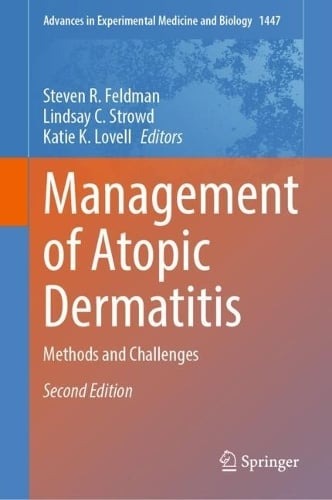
This new edition builds upon the foundational knowledge covered in the first edition, covering the epidemiology, pathogenesis, and clinical presentation of atopic dermatitis in both pediatric and adult patients. It provides an overview of the mechanism and presentation of atopic dermatitis and focuses on the management methods experienced dermatologists have used to successfully manage atopic dermatitis. The book includes new chapters describing the special considerations for atopic dermatitis in skin of color patients, dedicated chapters on topical and oral prescription management reflected the latest FDA-approved treatments, and also a chapter covering the updated guidelines from the American Academy of Dermatology. A final chapter includes updates on the future of atopic dermatitis treatment.

Timely coverage of cleaning validation for the pharmaceutical industry, a dynamic area in terms of health-based limits. Encourages pharmaceutical manufacturers, and particularly upper management, to meet the challenges of the science-based and riskbased approaches to cleaning validation. Draws on the author’s vast experience in the field of cleaning validation and hazardous materials. Discusses EMA vs. ISPE on Cleaning Limits and revised Risk-MaPP for highly hazardous products in shared facilities. A diverse list of topics from protocol limits for yeasts and molds to cleaning validation for homeopathic drug products.

A comprehensive and authoritative exploration of Tempol (4-Hydroxy-TEMPO), an exceptional chemical compound with diverse applications in both scientific research and medical practice. This book delves into Tempol's unique properties, mechanisms of action, and its potential role in combating oxidative stress-related disorders. Includes a chapter devoted to the safe handling, storage, and disposal of Tempol in compliance with pharmaceutical regulations. The authors pay particular attention to pharmaceutical regulations in the industry.
proposes a framework for assessing countries’ levels of compliance with international space law and norms. It begins by exploring the development of two movements – the evidence-based policymaking and programming movement, and the rise of ratings and rankings research – and their growth across various disciplines. The analysis suggests that such efforts are useful in gauging the behavior of countries in space according to how well they adhere to existing space law and norms. To date, there is no comprehensive, periodic, and systematic measure of countries’ efforts to comply with space law and norms; this work endeavors to fill that gap by offering a framework in which to assess compliance.
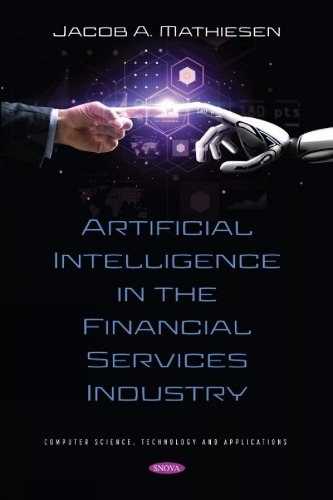
Today, the financial services sector is facing a period of rapid disruption and innovation, and artificial intelligence (AI) is at the heart of these changes. Artificial intelligence can be used to gather enormous amounts of data, detect abnormalities, and solve complex problems. Financial institutions are already experimenting extensively with AI strategies to enhance and streamline financial institutions, BSA and AML compliance, CRA requirements, fraud detection, and real estate valuations, all while reducing cost levels. This book looks at how artificial intelligence is affecting the financial services industry.
LEGAL PROGRAMMING: Designing Legally Compliant RFID and Software Agent Architectures for Retail Processes and Beyond provides a process-oriented discussion of the legal concerns presented by agent-based technologies, processes and programming. It offers a general outline of the potential legal difficulties that could arise in relation to them, focusing on the programming of negotiation and contracting processes in a privacy, consumer and commercial context. The authors will elucidate how it is possible to create form of legal framework and design methodology for transaction agents, applicable in any environment and not just in a specific proprietary framework, that provides the right level of compliance and trust. Key elements considered include the design and programming of legally compliant methods, the determination of rights in respect of objects and variables, and ontologies and programming frameworks for agent interactions. Examples are used to illustrate the points made and provide a practical perspective.
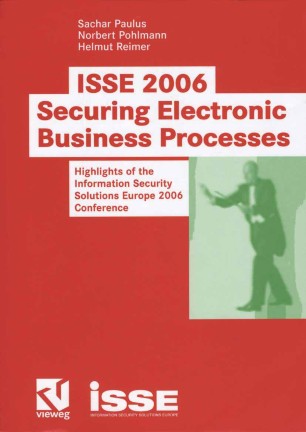
Presents the most interesting talks given at ISSE 2006 - the forum for the interdisciplinary discussion of how to adequately secure electronic business processes. The topics include: Smart Token and e-ID-Card Developments and their Application - Secure Computing and how it will change the way we trust computers - Risk Management and how to quantify security threats - Awareness raising, Data Protection and how we secure corporate information. Adequate information security is one of the basic requirements of all electronic business processes. It is crucial for effective solutions that the possibilities offered by security technology can be integrated with the commercial requirements of the applications. The reader may expect state-of-the-art: best papers of the Conference ISSE 2006.
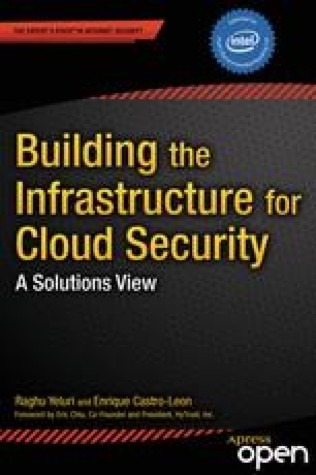
For cloud users and providers alike, security is an everyday concern, yet there are very few books covering cloud security as a main subject. This book will help address this information gap from an Information Technology solution and usage-centric view of cloud infrastructure security. The book highlights the fundamental technology components necessary to build and enable trusted clouds. Here also is an explanation of the security and compliance challenges organizations face as they migrate mission-critical applications to the cloud, and how trusted clouds, that have their integrity rooted in hardware, can address these challenges.
This book is important reading for both tax policymakers and business leaders. It breaks the mold of conventional thinking by demonstrating that formulary apportionment is a practical way to solve the income-allocation problems confronting the European Union. Equally important, the book gives the advocates of arm’s-length allocation methods some challenging food for thought.
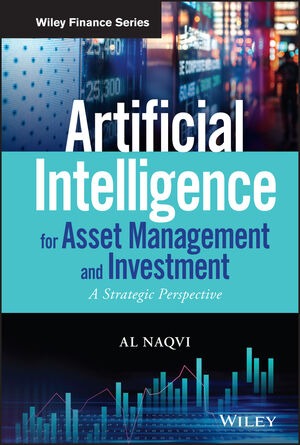
The rise of artificial intelligence is nothing short of a technological revolution. AI is poised to completely transform asset management and investment banking, yet its current application within the financial sector is limited and fragmented. Existing AI implementations tend to solve very narrow business issues, rather than serving as a powerful tech framework for next-generation finance. Artificial Intelligence for Asset Management and Investment provides a strategic viewpoint on how AI can be comprehensively integrated within investment finance, leading to evolved performance in compliance, management, customer service, and beyond.
Covers: Payment cards and protocols / EMV contact chip and contactless transactions / Disputes, arbitration, and compliance / Data security standards in the payment card industry / Validation algorithms / Code tables / Basic cryptography / Pin block formats and algorithms

Takes a taxpayer's perspective to the relations taxation creates between people and their state. Larsen proposes that in order to understand tax compliance and cheating, we have to look beyond law, psychological experiments and surveys to include tax collectors and taxpayers' practices. The text explores the view of taxes seen as citizen’s explicit economic relation to the state and implicit economic relation to all other compatriots. Larsen suggests how to build and increase tax compliance if we take the idea of taxation creating reciprocal relations seriously.

In recent years the question of the legitimacy of international law has been discussed quite intensively. Such questions are, for example, whether international law lacks legitimacy in general; whether international law or a part of it has yielded to the facts of power; whether adherence to international legal commitments should be subordinated to self-defined national interests; whether international law or particular rules of it – such as the prohibition of the use of armed force – have lost their ability to induce compliance (compliance pull); and what is the relevance of non-enforcement or failure to obey for the legitimacy of that particular international norm? This book contains fresh perspectives on these questions, offered at an international and interdisciplinary conference hosted by the Max Planck Institute for Comparative Law and International Law.

Deals with the acquisition and extraction of the various morphological features of the electrocardiogram signals.In the first chapters the book first presents data fusion and different data mining techniques that have been used for the cardiac state diagnosis. The second part deals with heart rate variability (HRV), a non-invasive measurement of cardiovascular autonomic regulation. Next, visualization of ECG data is discussed, an important part of the display in life threatening state. Here, the handling of data is discussed which were acquired during several hours. In the following chapters the book discusses aortic pressure measurement which is of significant clinical importance. It presents non-invasive methods for analysis of the aortic pressure waveform, indicating how it can be employed to determine cardiac contractility, arterial compliance, and peripheral resistance. In addition, the book demonstrates methods to extract diagnostic parameters for assessing cardiac function. Further the measurement strategies for contractile effort of the left ventricle are presented. Finally, the book concludes about the future of cardiac signal processing leading to next generation research topics which directly impacts the cardiac health care.

Daraa Highway - Ghabagheb - Syria
+963-15 2050 - 15 860 380 /1/2/3 - 11 662 3900