



Page 1
Page 1

New Frontiers in Artificial Intelligence ; JSAI 2006 Conference andWorkshops
The objectives of this book are to present the award papers of the 20th annual conference of JSAI 2006 and selected papers from the three co-located international workshops and to promote the study exchange among researchers worldwide.

Neuro–Fuzzy Associative Machinery for Comprehensive Brain and Cognition Modelling
Neuro–Fuzzy Associative Machinery for Comprehensive Brain and Cognition Modelling" is a graduate–level monographic textbook. It represents a comprehensive introduction into both conceptual and rigorous brain and cognition modelling. It is devoted to understanding, prediction and control of the fundamental mechanisms of brain functioning. The reader will be provided with a scientific tool enabling him to perform a competitive research in brain and cognition modelling.

MDATA : A New Knowledge Representation Model: Theory, Methods and Applications
This book introduces a new knowledge representation model called MDATA (Multi-dimensional Data Association and inTelligent Analysis). By modifying the representation of entities and relations in knowledge graphs, dynamic knowledge can be efficiently described with temporal and spatial characteristics. The MDATA model can be regarded as a high-level temporal and spatial knowledge graph model, which has strong capabilities for knowledge representation. This book introduces some key technologies in the MDATA model, such as entity recognition, relation extraction, entity alignment, and knowledge reasoning with spatiotemporal factors. The MDATA model can be applied in many critical applications and this book introduces some typical examples, such as network attack detection, social network analysis, and epidemic assessment.

Intelligent tutoring systems ; 9th International Conference, ITS 2008, Montreal, Canada, June 23-27, 2008 Proceedings
This book constitutes the refereed proceedings of the 9th International Conference on Intelligent Tutoring Systems, ITS 2008, held in Montreal, Canada, in June 2008.The 63 revised full papers and 61 poster papers presented together with abstracts of 5 keynote talks were carefully reviewed and selected from 207 submissions. The papers are organized in topical sections on emotion and affect, tutor evaluation, student modeling, machine learning, authoring tools , tutor feedback and intervention, data mining, e-learning and Web-based ITS, natural language techniques and dialogue, narrative tutors and games, semantic Web and ontology, cognitive models, and collaboration.

Intelligent Tutoring Systems ; 8th International Conference, ITS 2006, Jhongli, Taiwan, June 26-30, 2006 Proceedings
This book constitutes the refereed proceedings of the 8th International Conference on Intelligent Tutoring Systems, ITS 2006, held in Jhongli, Taiwan in June 2006. The 67 revised full papers and 40 poster papers presented together with abstracts of 6 keynote talks were carefully reviewed and selected from over 200 submissions. The papers are organized in topical sections on assessment, authoring tools, bayesian reasoning and decision-theoretic approaches, case-based and analogical reasoning, cognitive models, collaborative learning, elearning and web-based intelligent tutoring systems, error detection and handling, feedback, gaming behavior, learner models, motivation, natural language techniques for intelligent tutoring systems, scaffolding, simulation, as well as tutorial dialogue and narrative.

Image recognition : progress, trends and challenges
Focuses on research trends in image processing and recognition and corresponding developments. Among them, the book focuses on recent research, especially in the field of advanced human-computer interaction and intelligent computing. Given the existing interaction and recognition of the station, some novel topics are proposed, including how to establish a cognitive model in human-computer interaction and how to express and transfer human knowledge into human-machine image recognition. In an interactive implementation, how to implement user experience through image recognition during machine interaction

Engineering psychology and cognitive ergonomics ; 7th International Conference, EPCE 2007, Held as Part of HCI International 2007, Beijing, China, July 22-27, 2007, Proceedings
This book address the latest research and development efforts and highlight the human aspects of design and use of computing systems. It cover the entire field of Human-Computer Interaction, addressing major - vances in knowledge and effective use of computers in a variety of application areas. This volume contains papers in the thematic area of En- neering Psychology and Cognitive Ergonomics, addressing the following major topics: Cognitive and Affective Issues in User Interface Design, Cognitive Workload and Human Performance, Cognitive Modeling and Measuring, Safety Critical Applications and Systems

Engineering Multi-Agent Systems ; 7th International Workshop, EMAS 2019, Montreal, QC, Canada, May 13–14, 2019, Revised Selected Papers
This book constitutes the thoroughly refereed post-conference proceedings of the 7th International Workshop on Engineering Multi-Agent Systems, EMAS 2019, held in Montreal, QC, Canada, in May 2019. The 13 revised full papers presented in this book were carefully selected and reviewed from 20 submissions. The papers are grouped in the following topical sections: Multi-Agent Interaction and Organization; Simulation; Social Awareness and Explainability; Learning and Reconfiguration; and Implementation Techniques and Tools.

Computers and Games ; 6th International Conference, CG 2008, Beijing, China, September 29 - October 1, 2008. Proceedings
This book constitutes the refereed proceedings of the 6th International Conference on Computers and Games, CG 2008, held in Beijing, China, in September/October 2008 co-located with the 13th Computer Olympiad and the 16th World Computer-Chess Championship.

Computational Cognitive Modeling and Linguistic Theory
This book introduces a general framework that allows natural language researchers to enhance existing competence theories with fully specified performance and processing components. Gradually developing increasingly complex and cognitively realistic competence-performance models, it provides running code for these models and shows how to fit them to real-time experimental data. This computational cognitive modeling approach opens up exciting new directions for research in formal semantics, and linguistics more generally, and offers new ways of (re)connecting semantics and the broader field of cognitive science.
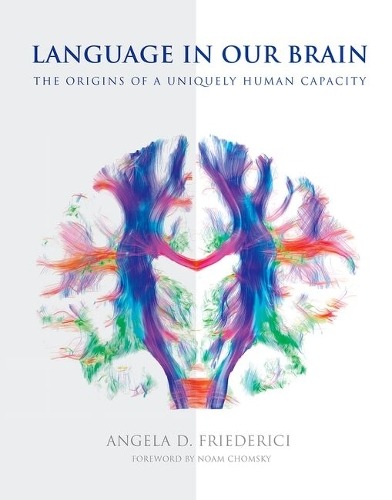
Language in our brain : The origins of a uniquely human capacity
Friederici describes the basic language functions and their brain basis; the language networks connecting different language-related brain regions; the brain basis of language acquisition during early childhood and when learning a second language, proposing a neurocognitive model of the ontogeny of language; and the evolution of language and underlying neural constraints. She finds that it is the information exchange between the relevant brain regions, supported by the white matter tract, that is the crucial factor in both language development and evolution.

KI 2005 : Advances in Artificial Intelligence ; 28th Annual German Conference on AI, KI 2005, Koblenz, Germany, September 11-14, 2005, Proceedings
Constitutes the refereed proceedings of the 28th Annual German Conference on Artificial Intelligence, KI 2005, held in Germany. This work presents papers organized in topical sections on knowledge representation and reasoning, machine learning, diagnosis, neural networks, planning, robotics, and cognitive modeling, philosophy, natural language.
Building information modeling : BIM in current and future practice
"Thought leaders from universities and professional practice composed essays exploring BIM's potential to improve the products and processes of architectural design including the structure and content of the tools themselves. These authors provide insights for assessing the current practice and research directions of BIM and speculate about its future. Design Thinking and BIM / BIM Analytics / Comprehensive BIM / Reasoning with BIM / Professional BIM / BIM Speculations"
Brain, vision, and artificial intelligence ; 1st International Symposium, BVAI 2005, Naples, Italy, October 19-21, 2005, Proceedings
This book constitutes the refereed proceedings of the First International Symposium on Brain, Vision and Artificial Intelligence, BVAI 2005, held in Naples, Italy in October 2005. The 48 revised papers presented together with 6 invited lectures were carefully reviewed and selected from more than 80 submissions for inclusion in the book. The papers are addressed to the following main topics and sub-topics: brain basics - neuroanatomy and physiology, development, plasticity and learning, synaptic, neuronic and neural network modelling; natural vision - visual neurosciences, mechanisms and model systems, visual perception, visual cognition; artificial vision - shape perception, shape analysis and recognition, shape understanding; artificial inteligence - hybrid intelligent systems, agents, and cognitive models.
Anticipatory Behavior in Adaptive Learning Systems : From Brains to Individual and Social Behavior
Anticipatory behavior in adaptive learning systems is steadily gaining the - terest of scientists, although many researchers still do not explicitly consider the actual anticipatory capabilities of their systems.The introductory chapter of this volume therefore does not only provide an overview of the contributions included in this volume but also proposes a taxonomy of how anticipatory mechanisms can improve adaptive behavior and learning in cognitive systems. During the workshop it became clear that ant- ipations are involved in various cognitive processes that range from individual anticipatory mechanisms to social anticipatory behavior.

Abstraction, Reformulation, and Approximation ; 7th International Symposium, SARA 2007, Whistler, Canada, July 18-21, 2007, Proceedings
This volume contains the proceedings of SARA 2007, the seventh symposium, held at Whistler Village, British Columbia, Canada, July 18-21. Three distinguished speakers were invited to give keynote presentations, and their abstracts are included herein,It has been recognized since the inception of artificial intelligence that abstractions, problem reformulations and approximations (AR&A) are central to human common-sense reasoning and problem solving and to the ability of systems to reason effectively in complex domains.AR&A techniques have been used in a variety of problem-solving settings, including automated reasoning, cognitive modelling.
