



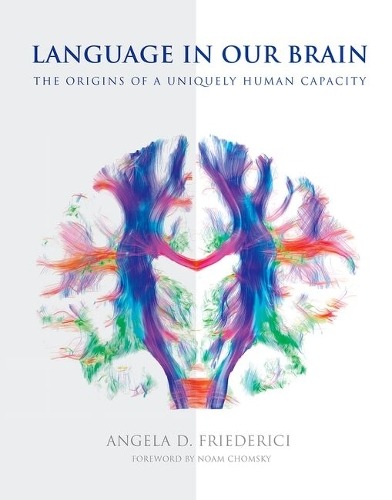
Language in our brain : The origins of a uniquely human capacity
Friederici describes the basic language functions and their brain basis; the language networks connecting different language-related brain regions; the brain basis of language acquisition during early childhood and when learning a second language, proposing a neurocognitive model of the ontogeny of language; and the evolution of language and underlying neural constraints. She finds that it is the information exchange between the relevant brain regions, supported by the white matter tract, that is the crucial factor in both language development and evolution.
Related Books
Language Production
This comprehensive text presents an up-to-date overview of the key topics in the field, providing important theoretical and empirical challenges to the traditional and accepted modal view of language production. Each chapter explores in detail a different aspect of language production, covering traditional methods including written and signed production alongside emerging research on joint action production. Emphasizing the neurobiological underpinnings of language, chapter authors showcase research that moves from a monologue-only approach to one that that considers production in more ecologically valid circumstances.
Language, Expressivity and Cognition
The book presents how language shapes communicative and cognitive processes but at the same time is also shaped by those processes. The chapters put forward a number of disciplinary and methodological perspectives encompassing insights from cognitive and social psychology, (critical) discourse analysis, cognitive linguistics, corpus linguistics and sociolinguistics. Both intralingual as well as contrastive, each chapter also engages with qualitative and quantitative methods.

A Short Media History of English Literature
Explores the history of literature as a history of changing media and modes of communication, from manuscript to print, from the codex to the computer, and from paper to digital platforms. It argues that literature has evolved, and continues to evolve, in sync with material forms and formats that engage our senses in multiple ways. Because literary experiences are embedded in, and enabled by, media, the book focuses on literature as a changing combination of material and immaterial features.
Language Learning Motivation and L2 Pragmatic Competence
It presents an original study that not only enriches our knowledge of the feasibility of modern technology in collecting large-scale data related to pragmatic competence but also eminently connects L2 pragmatics more closely with mainstream second language acquisition research by focusing on the role of motivation in pragmatic learning.
