



Page 1
Page 1

On Line Citizenship : Emerging Technologies for European Cities
The book presents e-government issues from an institutional as well as a practical point of view through the contributions of distinguished authors representative of the European Union, the European network of cities (Telecities) and the Italian Government. On Line Citizenship offers an innovative approach in the analysis of technology's evolutionary paths in e-government through a comparison with e-business trends.

Northern Lights on Civic and Citizenship Education : A Cross-national Comparison of Nordic Data from ICCS
This book presents an in depth analysis of data from ICCS. An international group of scholars critically address the state of civic and citizenship education in the four Nordic countries that participated in the IEA International Civic and Citizenship Education Study (ICCS) in 2009 and 2016. The findings are of particular relevance to educators at all levels, from school education through to teacher education.

Neo-Liberalism, State Power and Global Governance
Part One explores the pattern of national differences in the exercise of state power in a variety of industrialized and developing economies, despite the pressure to converge towards the dominant neo-liberal paradigm. Part Two analyses a variety of trans-national policy prescriptions for neo-liberalism and state power. Part Three explores whether the governance of labour markets is a special case in the global economy. Part Four sets out the need for institutional reform of the neo-liberal order in trade and finance. The volume concludes that there is the prospect of a more plural approach to state power and global governance, and one that recognizes the importance of the public domain of citizenship for delivering the global public goods of security, prosperity and environmental sustainability in the twenty-first century.

Neo-Liberalism, Globalization and Human Capital Learning : Reclaiming Education for Democratic Citizenship
Throughout the world, neoliberalism functions to decouple learning from the most important elements of civic education, transforming education into training and students into consumers. Neoliberalism, Globalization, and Human Capital Learning is an enormously important book that reveals in painstaking detail how neoliberal ideology destroys critical education. But it does much more. It also provides the insights and tools for educators to both overcome the market-based attack on critical education and address schooling as a democratic public sphere and the classroom as a laboratory for the nurturing of critical agency and social responsibility. This dynamic book should stir a public outcry among concerned citizens and educators through out the globe.

Moral Education : Beyond the Teaching of Right and Wrong
This volume is unique in providing a comprehensive discussion of moral education in the light of a range of ethical theories. In a balanced, thoughtful and penetrating account, all of these are shown to have a contribution to make to our moral understanding, and hence to moral education, even if none provides a definitive criterion of moral conduct. Though divine command is rejected as a source of moral justification, the possible contribution of some religious traditions to moral education is sympathetically considered. Fashionable relativism and recent moves towards inculcatory authoritarianism are both firmly rejected. The argument is philosophically rigorous throughout. Contemporary issues addressed include the links between personal morality and citizenship, including world citizenship, family values and sexual morality.

Migration to and from Welfare States : Lived Experiences of the Welfare–Migration Nexus in a Globalised World
This book explores the role of family, public, market and third sector welfare provision for individual and households’ decisions regarding geographical mobility. It challenges the state-centred approach in research on welfare and migration by emphasising migrants’ own reflections and experiences.
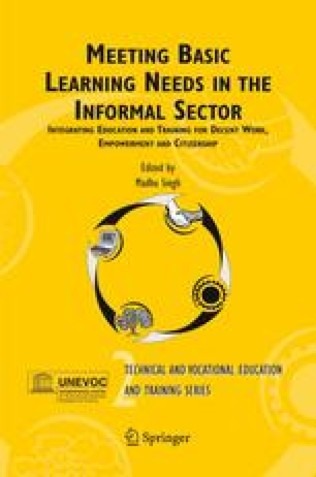
Meeting Basic Learning Needs in the Informal Sector : Integrating Education and Training for Decent Work, Empowerment and Citizenship
This anthology brings together basic facts and features about basic learning needs and skills of people working and living in the informal economy and presents case studies from different countries examining educational and training strategies for meeting these learning needs. It portrays the grave problems facing educational and training systems vis-á-vis informal sector workers, even as they look at holistic solutions that take into account principles of lifelong learning and innovations in informal, non-formal and formal adult learning, and show a growing awareness that education is a human right of fundamental significance to promoting decent work and humane living conditions.

Influences of the IEA Civic and Citizenship Education Studies : Practice, Policy, and Research Across Countries and Regions
This book identifies the multiple ways that IEA’s studies of civic and citizenship education have contributed to national and international educational discourse, research, policymaking, and practice. The IEA International Civic and Citizenship Education Study (ICCS), first conducted in 2009, was followed by a second cycle in 2016. The project was linked to the earlier IEA Civic Education Study (CIVED 1999, 2000). IEA’s ICCS remains the only large-scale international study dedicated to formal and informal civic and citizenship education in school. It continues to make substantial contributions to understanding the nature of the acquired civic knowledge, attitudes, and participatory skills. It also discusses in-depth how a wide range of countries prepare their young people for citizenship in changing political, social, and economic circumstances. The next cycle of ICCS is planned for 2022.

Global Citizenship Education : Critical and International Perspectives
This book takes a critical and international perspective to the mainstreaming of the Global Citizenship Concept and analyses the key issues regarding global citizenship education across the world. In that respect, it addresses a pressing need to provide further conceptual input and to open global citizenship agendas to diversity and indigeneity.

Gender and migration : IMISCOE short reader
This short reader offers a critical review of the debates on the transformation of migration and gendered mobilities primarily in Europe, though also engaging in wider theoretical insights. Building on empirical case studies and grounded in an analytical framework that incorporates both men and women, masculinities, sexualities and wider intersectional insights, this reader provides an accessible overview of conceptual developments and methodological shifts and their implications for a gendered understanding of migration in the past 30 years. It explores different and emerging approaches in major areas, such as: gendered labour markets across diverse sectors beyond domestic and care work to include skilled sectors of social reproduction; the significance of families in migration and transnational families.

European citizenship after Brexit : Freedom of movement and rights of residence
This book investigates European citizenship after Brexit, in light of the functionalist theory of citizenship. No matter its shape, Brexit will impact significantly on what has been labelled as one of the major achievements of EU integration: Citizenship of the Union. For the first time an automatic and collective lapse of status is observed. It is a form of involuntary loss of citizenship en masse, imposed by the automatic workings of the law on EU citizens of exclusively British nationality. It does not however create statelessness and it is likely to be tolerated under international law. This loss of citizenship is connected to a reduction of rights, affecting not solely the former Union citizens but also second country nationals in the United Kingdom and their family members.

Ethnic Identity, Social Mobility and the Role of Soulmates
Based on a study among higher-educated adult children of lower-class Turkish and Moroccan immigrants in the Netherlands, this open access book explores processes of identification among social climbers with ethnic minority backgrounds. Using both survey data and open interviews with these ‘minority climbers’, the study details the contextual and temporal nature of identification. The results illustrate how ethnicity is contextual but have tangible and inescapable effects at the same time. Also the findings call for a more reflexive use of terms like ethnic ingroup/outgroup and bonding/bridging. Overall, the book helps us understand the emergence of middle-class segments that articulate their minority identities and as such it will be of great interest to academics, policy makers and all those interested in processes of integration and/or diversity.

Environmental Governance in Latin America
The multiple purposes of nature – livelihood for communities, revenues for states, commodities for companies, and biodiversity for conservationists – have turned environmental governance in Latin America into a highly contested arena. In such a resource-rich region, unequal power relations, conflicting priorities, and trade-offs among multiple goals have led to a myriad of contrasting initiatives that are reshaping social relations and rural territories. This edited collection addresses these tensions by unpacking environmental governance as a complex process of formulating and contesting values, procedures and practices shaping the access, control and use of natural resources. Contributors from various fields address the challenges, limitations, and possibilities for a more sustainable, equal, and fair development. In this book, environmental governance is seen as an overarching concept defining the dynamic and multi-layered repertoire of society-nature interactions, where images of nature and discourses on the use of natural resources are mediated by contextual processes at multiple scales.

Embodiment and Education : Exploring Creatural Existence
Marjorie O'Loughlin shows in this book that embodiment ought to be central to human hopes to be whole persons, who are not merely productive but who are also expressive of our potentiality. Her 'creatural existence' grounds this in our fleshly selves, and she explores it through the emotions, through work, and through citizenship.Her achievement here is profound: in one book, we find an interdisciplinary account of the evidence for creatural existence, presented accessibly in first-person philosophical narrative, based mainly on Merleau-Ponty.

Educational research : The educationalization of social problems
In this book distinguished philosophers and historians of education focus on ‘educationalization’ to expand its meaning through an engagement with educational theory. Topics discussed are the family and the child, the ‘learning society’, citizenship education, widening participation in higher education, progressive education, and schooling movements such as No Child Left Behind. ‘Smeyers’ and Depaepe's book offers great insights into one of the most ambivalent phenomena of today's educational world and especially educational policy. The contributions assembled represent perspectives of some of the most respected scholars in the field.

Education for sustaining peace through historical memory
This is a necessary exercise in deconstruction and reconstruction that challenges conventional and critical approaches to peace education. Schultze-Kraft’s new book is an impressive piece of synthesis, a personal manifesto married to a rigorous interrogation of the theoretical literature. It pushes boundaries enhancing the sustaining peace agenda. As such it deserves the critical attention of policy makers at the highest level, as well as scholar-practitioners.

Educating Students to Improve the World
This book addresses how to help students find purpose in a rapidly changing world. In a probing and visionary analysis of the field of global education Fernando Reimers explains how to lead the transformation of schools and school systems in order to more effectively prepare students to address today’s’ most urgent challenges and to invent a better future.

Early Public Libraries and Colonial Citizenship in the British Southern Hemisphere
This Pivot book is a comparative study of six early colonial public libraries in nineteenth-century Australia, South Africa, and Southeast Asia. Drawing on networked conceptualisations of empire, transnational frameworks, and ‘new imperial history’ paradigms that privilege imbricated colonial and metropolitan ‘intercultures’, it looks at the neglected role of public libraries in shaping a programme of Anglophone civic education, scientific knowledge creation, and modernisation in the British southern hemisphere. The book’s six chapters analyse institutional models and precedents, reading publics and types, book holdings and catalogues, and regional scientific networks in order to demonstrate the significance of these libraries for the construction of colonial identity, citizenship, and national self-government as well as charting their influence in shaping perceptions of social class, gender, and race. Using primary source material from the recently completed ‘Book Catalogues of the Colonial Southern Hemisphere’ digital archive, the book argues that public libraries played a formative role in colonial public discourse, contributing to broader debates on imperial citizenship and nation-statehood across different geographic, cultural, and linguistic borders.

Debating Transformations of National Citizenship
Deconomic, social and political change. It focuses on the emergence of global markets where citizenship is for sale and on how new reproduction technologies impact citizenship by descent. It also discusses the return of banishment through denationalisation of terrorist suspects, and the impact of digital technologies, such as blockchain, on the future of democratic citizenship. The book provides a wide range of views on these issues from legal scholars, political scientists, and political practitioners. It is structured as a series of four conversations in which authors respond to each other. This exchange of arguments provides unique depth to current debates about the future of citizenship.

Debating European Citizenship
This book raises crucial questions about the citizenship of the European Union. Is it a new citizenship beyond the nation-state although it is derived from Member State nationality? Who should get it? What rights and duties does it entail? Should EU citizens living in other Member States be able to vote there in national elections? If there are tensions between free movement and social rights, which should take priority? And should the European Court of Justice determine what European citizenship is about or the legislative institutions of the EU or national parliaments? This book collects a wide range of answers to these questions from legal scholars, political scientists, and political practitioners. It is structured as a series of three conversations in which authors respond to each other. This exchange of arguments provides unique depth to the debate
