



Page 1
Page 1

omputational science and its applications - ICCSA 2005 ; Vol. 3480 ; International Conference, Singapore, May 9-12, 2005, Proceedings, Part I
The four volume set assembled following The 2005 International Conference on Computational Science and its Applications, ICCSA 2005, held in Suntec International Convention and Exhibition Centre, Singapore, from 9 May 2005 till 12 May 2005, represents the ?ne collection of 540 refereed papers selected from nearly 2,700 submissions. Computational Science has ?rmly established itself as a vital part of many scienti?c investigations, a?ecting researchers and practitioners in areas ranging from applications such as aerospace and automotive, to emerging technologies such as bioinformatics and nanotechnologies, to core disciplines such as ma- ematics, physics, and chemistry. Due to the shear size of many challenges in computational science, the use of supercomputing, parallel processing, and - phisticated algorithms is inevitable and becomes a part of fundamental t- oretical research as well as endeavors in emerging ?elds.

New Results in Numerical and Experimental Fluid Mechanics V ; Contributions to the 14th STAB/DGLR Symposium Bremen, Germany 2004
This volume contains the contributions to the 14. Symposium of the STAB (German Aerospace Aerodynamics Association). The volume gives a broad overview over the ongoing work in this field in Germany, with the topics being high-aspect ratio wings, low aspect-ratio wings, bluff bodies, laminar flow control and transition, active flow control, hypersonic flows, aeroelasticity, aeroacoustics, mathematical fundamentals/ numerical simulation, physical fundamentals, and facilities.

Modelling and Control of Mini-Flying Machines
Modelling and Control of Mini-Flying Machines is an exposition of models developed for various types of mini-aircraft. Modelling and Control of Mini-Flying Machines provides valuable insights to the application of real-time nonlinear techniques in an always challenging area.

Microgravity Two-phase Flow and Heat Transfer
Multiphase thermal systems (involving more than one phase or one component) have numerous applications in aerospace, heat-exchanger, transport of contaminants in environmental systems, and energy transport and energy conversion systems. Advances in understanding the behaviour of multiphase thermal systems could lead to higher efficiency energy production systems, improved heat-exchanger design, and safer and enhanced treatment of hazardous waste. But such advances have been greatly hindered by the strong effect of gravitational acceleration on the flow. Depending on the flow orientation and the phase velocities, gravitational forces could significantly alter the flow regime, and hence the pressure-drop and heat-transfer coefficients associated with the flow. A reduced gravity environment (or "microgravity"), provides an excellent tool to study the flow without the masking effects of gravity. This book presents for the first time a comprehensive coverage of all aspects of two-phase flow behaviour in the virtual absence of gravity.

Metal Matrix Composites
Metal matrix composites (MMCs) have become real engineering materials. MMCs have gone from "niche" materials to several high performance applications in aerospace, electronic packaging, automotive, and recreational products. This text focuses on the synergistic relationships among processing, microstructure, and properties of metal matrix composites. An introductory chapter is followed by a chapter each on reinforcements and common matrix materials. A chapter on the very important topic of processing of MMC is then presented. This is followed by a chapter on interfaces in MMCs, their characterization and techniques to obtain interfacial properties. Next there are chapters on monotonic mechanical and physical properties; followed by cyclic fatigue, creep, and wear resistance. We conclude with a chapter on applications of MMCs. The book is well-suited for upper level undergraduate students, graduate students, and as general source of reference on the subject for the professionals in the field.

Mécanique céleste et contrôle des véhicules spatiaux = Celestial mechanics and spacecraft control
The textbook contains two parts: Part 1 is an introduction to celestial mechanics, and part II is devoted to the control of cosmic vehicles motion.The book is written in a clear mathematical style-Definition-Proposition-Lemma-Theorem-Corollary-and is almost self contained.

IP Networking over Next-Generation Satellite Systems ; International Workshop, Budapest, July 2007
Highlights the very latest research output of several EU satellite-related projects and addresses many unresolved issues in next-generation satellite systems, such as efficient deployment of IPv6 over satellites, working with WLAN and WiMax, QoS provisioning over multi-segment networks (including satellite networks), multicast networks and security.

Innovations in fuzzy clustering : Theory and applications
There is a great interest in clustering techniques due to the vast amount of data generated in every field including business, health, science, engineering, aerospace, management and so on. It is essential to extract useful information from the data. Clustering techniques are widely used in pattern recognition and related applications. The following contents are included: Introduction to Fuzzy Clustering / Fuzzy Clustering based Principal Component Analysis / Fuzzy Clustering based Regression Analysis Kernel based Fuzzy Clustering / Evaluation of Fuzzy Clustering / Self-Organized Fuzzy Clustering

Hyperspectral Data Compression
HYPERSPECTRAL DATA COMPRESSION presents the most recent results in the field of compression of remote sensing 3D data, with a focus on multispectral and hyperspectral imagery. This book is essential for researchers working across related fields including: multi-dimensional data compression, multispectral and hyperspectral data archives, remote sensing, scientific image processing, military and aerospace image processing, image segmentation, image classification, and target detection.

High-Pressure Shock Compression of Solids VIII : The Science and Technology of High-Velocity Impact
Research in the field of shock physics and ballistic impact has always been intimately tied to progress in development of facilities for accelerating projectiles to high velocity and instrumentation for recording impact phenomena. The chapters of this book, written by leading US and European experts, cover a broad range of topics and address researchers concerned with questions of material behaviour under impulsive loading and the equations of state of matter, as well as the design of suitable instrumentation such as gas guns and high-speed diagnostics. Applications include high-speed impact dynamics, the inner composition of planets, syntheses of new materials and materials processing. Among the more technologically-oriented applications treated is the testing of the flight characteristics of aeroballistic models and the assessment of impacts in the aerospace industry.

High Performance Tensegrity-Inspired Metamaterials and Structures
New metamaterials, smart materials and structures, and adaptive systems with adjustable behaviour or which use high performance or 'extremal' materials can be applied to bigger structural systems, such as cellular tensegrity lattices with extremal mechanical properties. Numerical analyses justify tensegrities and discrete and continuum models offer two main approaches to the analysis of tensegrity-based mechanical metamaterials and lattices. Two examples of 2D and 3D tensegrity modules and lattices, and potential applications in civil engineering are presented.

Group Coordination and Cooperative Control
Group coordination and cooperative control are topics currently receiving a lot of interest. Coordinating the motion of a group of relatively simple and inexpensive agents can cover a larger operational area and achieve complex tasks exceeding the abilities of a single agent. This enables applications such as teams of robots for de-mining operations, aerospace formation flying for survey, fleets of AUVs for oceanographic mapping, and ships doing coordinated towing operations. This volume contains the contributions of the workshop. The book covers a wide range of subjects within the area of group coordination and cooperative control, and forms a valuable and up-to-date text on the newer trends in group coordination and cooperative control.

Future space-transport-system components under high thermal and mechanical loads : results from the DFG Collaborative Research Center TRR40
This book presents the findings of Collaborative Research Center Transregio 40 (TRR40), initiated in July 2008 and funded by the German Research Foundation (DFG). Gathering innovative design concepts for thrust chambers and nozzles, as well as cutting-edge methods of aft-body flow control and propulsion-component cooling, it brings together fundamental research undertaken at universities, testing carried out at the German Aerospace Center (DLR) and industrial developments from the ArianeGroup

Fundamentals of Structural Dynamics : Theory and Computation
Emphasizes numerical methods, nonlinear response of structures, and the analysis of continuous systems (e.g., wave propagation). Fundamentals of Structural Dynamics: Theory and Computation builds the theory of structural dynamics from simple single-degree-of-freedom systems through complex nonlinear beams and frames in a consistent theoretical context supported by an extensive set of MATLAB codes that not only illustrate and support the principles, but provide powerful tools for exploration. The book is designed for students learning structural dynamics for the first time but also serves as a reference for professionals throughout their careers.

Fundamentals of fluid mechanics : For scientists and engineers
Provides a coherent and structured overview of fluid mechanics, a discipline concerned with many natural phenomena and at the very heart of the most diversified industrial applications and human activities.
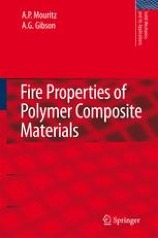
Fire properties of polymer composite materials
This book is the first to deal comprehensively with the important topic of the fire behaviour of polymer composite materials. Composites are used in a diverse range of applications, including land and marine transport, aerospace, the chemical industry, and most branches of civil engineering infrastructure. It is our belief that fire behaviour is the single most important factor limiting the wider use of composites in many of these areas. Our aim in producing this volume is therefore to stimulate the work that is needed to overcome this fundamental problem. The first step in such a journey is, of course, to summarise what is presently known, which is what we have attempted here. The book covers all of the key issues on the behaviour of polymer composites in fire.

Finite Element Methods in Civil and Mechanical Engineering : A Mathematical Introduction
The finite element method is widely employed for numerical simulations in engineering and science due to its accuracy and efficiency. This concise introduction to the mathematical theory of the finite element method presents a selection of applications in civil and mechanical engineering including beams, elastic membranes, the wave equation, heat transfer, seepage in embankment, soil consolidation, incompressible fluids, and linear elasticity.

Exploring the Moon : The Apollo Exped.s
the book develops the scientific theme of lunar geology, and therefore will be of use as background reading for undergraduate students of planetary sciences. In addition, with the prospect of a resumption of human missions, it will help journalists understand what Apollo achieved after the 'flags and footprints' of the Apollo 11 landing in July1969 and will commemorate the fortieth anniversary of that momentous event.

Essentials of mechanical stress analysis
Essentials of Mechanical Stress Analysis, updated for the second edition, covers stress analysis from an interdisciplinary perspective. Discussing techniques and theories essential to analysing structures, the book covers both analytical and numerical approaches. Also covering beams, plates, columns and elastic instability, the book discusses fatigue, life cycle, energy methods and MathCAD sample code.

Embedded Software and Systems Vol. 3605 ; 1st International Conference, ICESS 2004, Hangzhou, China, December 9-10, 2004, Revised Selected Papers
Welcome to the post proceedings of the First International Conference on Embedded Software and Systems (ICESS 2004), which was held in Hangzhou, P. R. China, 9–10 December 2004. Embedded Software and Systems technology is of increasing importance for a wide range of industrial areas, such as aerospace, automotive, telecommunication, and manufacturing automation. Embedded technology is playing an increasingly dominant role in modern society. This is a natural outcome of amazingly fast developments in the embedded field. The ICESS 2004 conference brought together researchers and developers from academia, industry, and government to advance the science, engineering, and technology in embedded software and systems development, and provided them with a forum to present and exchange their ideas, results, work in progress, and experience in all areas of embedded systems research and development. The ICESS 2004 conference attracted much more interest than expected.
