


Refine Results
Sort By
From
To

Sheds light on marketing effectiveness and accountability marketing in small and medium-sized enterprises (SMEs). Using a multi-method investigation, it includes a knowledge inquiry of marketing knowledge and customer knowledge, a qualitative inquiry utilizing semi structured interviews and thematic data analysis, a quantitative analysis utilizing survey and structural equations modelling, and a case study that employs both narrative (storytelling) data analysis and an accountability audit with a techno marketing SME.
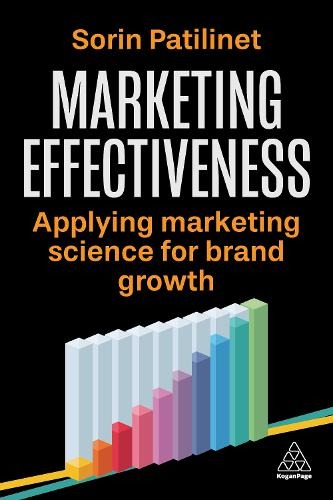
Contrary to popular belief marketing effectiveness is not just about the measuring of ROI. The lens of effectiveness must be applied to all marketing mix elements, from strategy to pricing and product, to media and advertising. It's a strategic shift that demands robust evidence-based decisions and consistent application in order to grow. Written by leading marketing practitioner, Sorin Patilinet, this book enables mid-senior level marketers to integrate the scientific methods and advanced measurements required for true marketing effectiveness into their marketing strategies, in order to reap the benefits of strong customer understanding and developing decision-making processes for growth. Covering everything from neuroscience and its application to marketing to advanced analytics and machine learning models, this book provides a comprehensive practical guide for marketers.
Aims to share fascinating perspectives on marketing communications by discussing the shift in the power of public relations, and highlighting how the small and local use communication effectively to improve performance and shares useful lessons on how to communicate hope by responding to customer emotions during uncertainties. The book contains valuable lessons and insights on communicating corporate social responsibility, effective social media communication, enacting brand purpose through communication, and using aesthetics in point-of-purchase advertising to drive purchase intention.
This is a critical study of the changing relationship between media and marketing communications in the digital age. It examines the growth of content funded by brands, including brands’ own media, native advertising, and the integration of branded content across film, television, journalism and publishing, online, mobile, and social media.
Explores the concept of advertising and the different ways advertising is understood and evaluated. It dives deep into planning, designing, and executing advertising campaigns on different mediums. It discusses the theoretical and research parts of advertising by critically examining how over the years various hierarchical models and theories are developed by advertising experts. It examines various models and theories that explain why and how advertising is successful in persuading customers target audiences to buy a product or accept an idea for behavioural change.
This is the first scholarly book dedicated to reading the work of contemporary filmmakers and their impact on modern marketing and advertising. Drawing from consumer culture theory, film and media studies, the author presents an expansive analysis of a range of renowned filmmakers who have successfully applied their aesthetic and narrative vision to commercial advertising. It challenges some traditional advertising tropes and sheds light on the changing nature of advertising in the contemporary media context. Utilising Deleuze and Guattari’s notion of assemblage, This book addresses themes of spatiality and time, narrative and aesthetics and consumer reception within a new frame of reference that re-contextualises classical concepts of genre, platform and aesthetic categories. These diverse elements are embedded into a larger discussion of the resonance of contemporary advertising for consumer culture and the implications of the hybridity characteristic of convergent media platforms for understanding the potential of advertising in the twenty-first century.
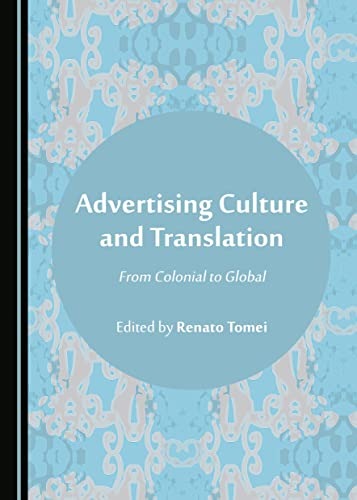
A first comprehensive study combining and integrating advertising, culture and translation within the framework of colonial, Commonwealth, and postcolonial studies, and globalization. It addresses a number of controversial issues evident in two relatively young disciplines, as a result of decades of research and teaching in university courses. A cross-cultural approach to translational issues and the translatability of advertising cohesively is adopted here, exploring the dynamics of the conflict between the 'centre' and the 'periphery'. It introduces the concept of advertising English as lingua franca (AELF), marking new trends in the domain of varieties of English around the world (VEAW). The data examined here show the ambivalent polarity conditioning advertising and translation: both have been mutually exclusive, and both have been subject to bans, censorship and ideological control, racism, propaganda, and stereotyping. In their fundamental principles and concepts of theories and applications, however, neither discipline cannot exist outside a free market and total freedom of expression and trust
Marketing has become one of the most influential forces in contemporary market economies. Yet despite ubiquitous empirical presence, uncountable textbook definitions, and sixty years of scholarly work, a coherent sociological understanding of this powerful concept is still amiss. Drawing on Luhmannian social systems theory, historical analysis, and four qualitative studies, the author theorizes on the marketing function as a self-contained system of communications. It is argued that marketing systems prosper within a host organization if and as long as they successfully influence observers' preferences towards particular brands. On these conceptual foundations a comprehensive brand- and communication-centered theory is developed that fulfills Alderson', Cox' and Bartels' foundational requirements for a general theory of marketing in an unprecedented way.

Daraa Highway - Ghabagheb - Syria
+963-15 2050 - 15 860 380 /1/2/3 - 11 662 3900