



Page 1
Page 1

Modelling the dispersion of radionuclides in the marine environment : An introduction
This book is a practical guide to the subject of numerical modelling of radioactivity dispersion in the marine environment. Thus, the techniques and numerical procedures required are explained in detail, with the aim of enabling the reader to build a real mathematical model. The book covers basic concepts and techniques, such as solving the advection-diffusion equation in a simple 1D form, as well as the most recent developments (full 3D models for non-conservative radionuclides including chemical reactions and speciation). A chapter is dedicated to the basic hydrodynamic modelling that is always required to simulate the dispersion of tracers in the sea; Eulerian and Lagrangian modelling techniques are also described. A chapter describes sensitivity and uncertainty analysis, the final stage in modelling works. A review on some published radionuclide dispersion models is also included.

Homology modeling : Methods and protocols
It Provides state-of-the-art methodologies and reviews of important topics in the field of homology modeling. From homology modeling in the twilight zone and improving accuracy through sequence space analysis to approaches to construct multi-protein complex models, the book explores a wide variety of uses and applications of this valuable technique.

Drawing from the model : Fundamentals of digital drawing, 3D modeling, and visual programming in architectural design
Bridges traditional and contemporary methods of creating architectural design drawings and 3D models through digital tools and computational processes.

IUTAM symposium on relations of shell plate beam and 3D models ; Proceedings of the IUTAM Symposium on the relations of shell, plate, beam, and 3D models, Dedicated to the Centenary of Ilia Vekua’s Birth, held in Tbilisi, Georgia, April 23-27, 2007
Contains papers on the main topics reflecting the scientific programme of the symposium: hierarchical, refined mathematical and technical models of shells, plates, and beams; relation of 2D and 1D models to 3D linear, non-linear and physical models; junction problems. In particular, peculiarities of cusped shells, plates, and beams are emphasized and special attention is paid to junction, multibody and fluid-elastic shell (plate, beam) interaction problems and their applications.
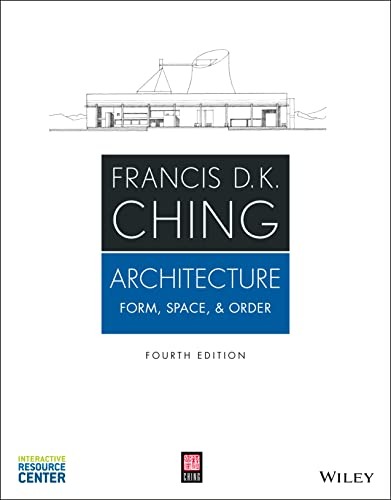
Architecture : Form, Space, and Order ; 4th ed.
The revered architectural reference, updated with contemporary examples and interactive 3D modelsAn access card with redemption code for the online Interactive Resource Center is included with all new, print copies or can be purchased separately.
Architectural graphics ; Vol.1 : Graphics for analysis
Reports on several advances in architectural graphics, with a special emphasis on education, training, and research. It gathers a selection of contributions to the 19th International Conference on Graphic Design in Architecture, EGA 2022, held on June 2–4, 2022, in Cartagena, Spain, with the motto: "Beyond drawings. The use of architectural graphics".
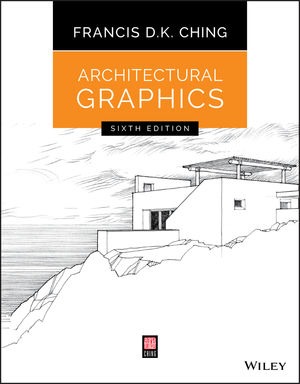
Architectural graphics ; 6th ed.
Offers a comprehensive introduction to using graphic tools and drafting conventions to translate architectural ideas into effective visual presentations, using hundreds of the author's distinctive drawings to illustrate the topic effectively. Includes new information on orthographic projection in relation to 3D models, and revised explanations of line weights, scale and dimensioning, and perspective drawing to clarify some of the most difficult concepts. New examples of modern furniture, APA facilities, and presentation layout provide more up-to-date visuals, and the Reference Center features all new animations, videos, and practice exercises. Architectural graphics are key tools for conveying design through representation on paper or on screen, and this book is the ultimate guide to mastering the skill, then applying your talent to create more effective design communication.

3D design reconstruction
This report will talk about a way to design and rebuild a cheap, true-to-the-truth 3D system using reverse engineering. The system provides the service of reconstructing objects into 3D models by placing the object in a predetermined place facing a set of sensors and cameras at a certain distance and at precise angles, using the angle of rotation for each image and combining the points of triangulation we can build a form of 3D modeling types. These models can be used in digital animation or printed with 3D printers for a wide variety of applications.
