



Page 1
Page 1

Oil-in-Water Nanosized Emulsions for Drug Delivery and Targeting
ompiles the step-by-step investigations made concerning the potential of nanosized emulsions on both drug delivery and drug targeting areas by different group of scientists in various laboratories across the world Inverts the common nano-emulsions coverage trend of focusing on focused on the particulate system itself, instead exploring the way to turn nanosized emulsions as biomedical tool, as well as, treating the in vitro and in vivo aspects after administration Provides an overview of the current state-of-the art regarding the development of tocol emulsions, emulsion adjuvants in immunization research, oxygen-carrying emulsions (called as fluorocarbon emulsion) and emulsions for delivering drugs to nasal and topical (ocular and transdermal) routes

Nuucleic acids in medicinal chemistry and chemical biology : Drug development and clinical applications
Delivers a comprehensive overview of the chemistry and biology of nucleic acids and their therapeutic applications. The book emphasizes the latest research in the field, including new technologies like CRISPR that create novel possibilities to edit mutated genes at the genomic DNA level and to treat inherited diseases and cancers. The authors explore the application of modified nucleosides and nucleotides in medicinal chemistry, a variety of current topics on nucleic acid chemistry and biology, nucleic acid drugs used to treat disease, and more. They also probe new domains of pharmaceutical research, offering the reader a wealth of new drug discovery opportunities emerging in this dynamic field

N-Heterocyclic Carbenes in Transition Metal Catalysis
It was only in the early 1990s that carbenes with the carbene carbon being incorporated in a nitrogen containing heterocycle (N-heterocyclic carbenes or NHCs) were found to be stable enough to be isolated. Since the first report on the application of NHCs as ligands in transition metal catalysis in 1995, NHC have found numerous applications and have been established as a versatile and indispensable class of ligands. For many reactions like metathesis or cross-coupling reactions NHCs have often become the ligands of choice, allowing otherwise difficult transformations. In this book leading experts have surveyed major areas of application of NHC metal complexes in catalysis. The authors have placed a special focus on nickel- and palladium-catalyzed reactions, on applications in metathesis reactions, on oxidation reactions and on the use of chiral NHC-based catalysts. This compilation is rounded out by an introductory chapter and a chapter dealing with synthetic routes to NHC metal complexes.

New Drug Development for Known and Emerging Viruses
This book discusses the entire field of antiviral drug discovery and development from a medicinal chemistry perspective, focusing on antiviral drugs, targets, and viral disease mechanisms. It provides an outlook on emerging pathogens such as Ebola, Zika, West Nile, Lassa, and includes a chapter on SARS Coronoavirus-2 causing the present pandemic.

Neglected tropical diseases and phytochemicals in drug discovery
Neglected Tropical Diseases and Phytochemicals in Drug Discovery delivers a comprehensive exploration of the drug discovery process as it pertains to neglected tropical diseases. The book covers recent advancements in drug discovery, as well as druggable targets and new challenges facing the industry. It offers readers expansive discussions of specific diseases, including protozoan, helminth, bacterial, viral, fungal, and ectoparasitic infections.

Natural product experiments in drug discovery
Explores a wide range of evidence-based complementary medicine and various bio-analytical techniques used to define botanical products. Collecting recent work and current developments in the field of contemporary phytomedicine as well as their future possibilities in human health care, the book includes unique contributions in the form of chapters on phytomedicine and screening biological activities explained with diverse hyphenated techniques, as well as issues related to herbal medications, such as efficacy, adulteration, safety, toxicity, regulations, and drug delivery. Written for the Springer Protocols Handbooks series, chapters feature advice from experts on how to best conduct future experiments. Extensive and practical, Natural Product Experiments in Drug Discovery serves as an ideal reference for students, professors, and researchers in universities, R&D institutes, pharmaceutical and herbal enterprises, and health organizations.

Nanoparticle-Based Drug Delivery in Cancer Treatment
Discusses nanotechnological developments of interfering RNA-based nanoparticles, delivery vehicles, and validated therapeutic RNAi–molecular target interactions and explains the results of clinical and preclinical trials. The book also gives strategies for universal methods of constructing hybrid organic–inorganic nanomaterials that can be widely applied in the biomedical field. Focuses on : Recent advances of nanoparticle-mediated siRNA delivery systems and their application in clinical trials for cancer therapy Material platforms that establish NPs and both localized and controlled gene silencing The most promising systems for clinical application Surveys progress in nanoparticle-based nanomedicine in cancer treatment The most advanced of the nonviral nanocarriers for delivery of oligonucleotides to malignant blood cancer cells

Mutagenic Impurities : Strategies for Identification and Control
In Mutagenic Impurities: Strategies for Identification and Control, distinguished chemist Andrew Teasdale delivers a thorough examination of mutagenic impurities and their impact on the pharmaceutical industry. The book incorporates the adoption of the ICH M7 guideline and focuses on mutagenic impurities from both a toxicological and analytical perspective.

Molecular Pharmacognosy
This book discusses the application of molecular biology in resource science and authentication of traditional Chinese medicine (TCM). It also reviews the latest developments in pharmacognosy, introduces new perspectives and insights, discusses the hotspots and focuses in the field of molecular pharmacognosy, and predicts new directions of study. In the last five years, the technologies and scope of molecular pharmacognosy have constantly expanded and evolved. As such, this new edition includes extra content, such as the molecular phylogeography of medicinal plants, functional genome of medicinal plants, and synthetic biology of active compounds. Elucidating the concept, theory, and methodology of molecular pharmacognosy, it promotes the full use of the newly developed technologies and methodologies within the framework of molecular pharmacognosy to solve problems in the field.

Modeling Chemical Systems using Cellular Automata
The book will be of great value in undergraduate courses in chemistry, physics, biology, applied mathematics, and bioinformatics, and as a supplement for laboratory courses in introductory chemistry, organic chemistry, physical chemistry, medicinal chemistry, chemical engineering and other courses dealing with statistical and dynamic systems. It allows the exploration of a wide range of dynamic phenomena, many of which are not normally accessible within conventional laboratory settings due to limitations of time, cost, and experimental equipment. The book is both a textbook on applied Cellular Automata and a lab manual for chemistry (physics, engineering) courses with lab activity. It would supplement other lab work and be an additonal book the students would use in the course.

Microwave-Assisted Synthesis of Heterocycles
This book is Volume I of a new series by Springer entitled Topics in Heterocyclic Chemistry. At present, there are six such monographs in this series, the overall scope of which is to cover "current trends in heterocyclic chemistry". Given the importance of heterocylic natural products and heterocyclic scaffolds in the realm of medicinal chemistry and drug discovery, an up-todate series on this subject is well warranted, and a survey of the recent impact of microwave-assisted synthesis on this venerable field is both timely and needed

Microwave Methods in Organic Synthesis
We are delighted to present this volume with contributions from some of themost renowned and experienced microwave chemists today.The delivery and introduction of energy has been closely connected withthe discovery and investigation of new chemistry. It is with pleasure thatwe have seen an increased use of microwave irradiation over the years andwe hope that this volume will reflect the current interest in expanding thescope of microwave applications in both organic and medicinal chemistry. Oneimportant explanation behind the growth of microwave-enhanced chemistryhas been the introduction of dedicated microwave reactors.As a result of this development we are proud to present a diverse set of re-views.

Messenger RNA therapeutics
Focuses on the fundamentals and applications of messenger RNA (mRNA)-based therapeutics and discusses the strengths and key challenges of this emerging class of drugs. In the past 30 years, extensive research and technological development in many areas have contributed to the emergence of in vitro transcribed mRNA as a therapeutic that has now reached clinical testing. Formulations that protect the mRNA from nucleases and accelerate its cellular uptake, combined with improvements to the mRNA molecules themselves, have been critical advancements for mRNAs to become viable therapeutics. Though once regarded as a serious impediment, the transient nature of mRNA technology is now considered a major advantage in making mRNA therapies safe and, ultimately, a potential game changer in the field of medicine. This new book in the RNA Technologies series provides a state-of-the-art overview on the emerging field of mRNA therapeutics covering essential strategies for formulation, delivery, and application. It also reviews the promising role in cancer immunotherapy, respiratory diseases, and chronic HBV infection and discusses RNA vaccines in light of the current COVID-19 pandemic. mRNA-based approaches have great potential to revolutionize molecular biology, cell biology, biomedical research, and medicine.

Medicinal plants : Bioprospecting and pharmacognosy
Touches on a diverse selection of topics related to medicinal plants. Chapters look at the use of medicinal plants in healthcare and disease management, such as to treat inflammation, anti-hyperglycemia, and obesity and as immunity boosters. The authors also address the conservation, maintenance, and sustainable utilization of medicinal plants along with postharvest management issues. Topics include consumption, supply chain, marketing, trade, and future directions of research. Some specific plants discussed include fennel, basil, clove, ginger, lavender, turmeric, ginsing, and asparagus in connection with their various therapeutic properties, including anti-rheumatic, anti-asthmatic, anti-diabetic, carminative, diuretic, fever-reducing, and hypotensive. Medicinal Plants: Bioprospecting and Pharmacognosy will prove informative for scientists and researchers in medicinal plants as well as for faculty and students, pharmaceutical researchers, and others.
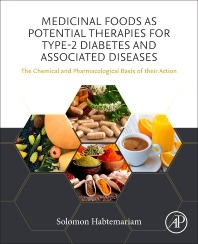
Medicinal foods as potential therapies for type-2 diabetes and associated diseases : The chemical and pharmacological basis of their action
Focuses on active pharmacological principles that modulate diabetes, associated risk factors, complications and the mechanism of action of widely used anti-diabetic herbal plants—rather than just the nutritional composition of certain foods. Provides up-to-date information on acclaimed antidiabetic super fruits, spices and other food ingredients. Sections cover diabetes and obesity at the global level, the physiological control of carbohydrate and lipid metabolism, the pathophysiology of type-2 diabetes, the chemistry and pharmacology of a variety of spices, and much more. This book will be invaluable for research scientists and students in the medical and pharmaceutical sciences, medicinal chemistry, herbal medicine, drug discovery/development, nutrition science, and for herbal practitioners and those from the nutraceutical and pharm industries.

Medicinal Chemistry for Practitioners
Presenting both a panoramic introduction to the essential disciplines of drug discovery for novice medicinal chemists as well as a useful reference for veteran drug hunters, this book summarizes the state-of-the-art of medicinal chemistry. It covers key drug targets including enzymes, receptors, and ion channels, and hit and lead discovery. The book hen surveys a drug's pharmacokinetics and toxicity, with a solid chapter covering fundamental bioisosteres as a guide to structure-activity relationship investigations.

Medicinal Chemistry and Pharmacological Potential of Fullerenes and Carbon Nanotubes
Medicinal Chemistry and Pharmacological Potential of Fullerenes and Carbon Nanotubes features important insights into the applications of fullerenes and carbon nanotubes. It discusses the fullerene and nanotubes derivatives which are effective against viruses, cells, and bacteria and those which are able to interact and inhibit certain enzymes. Also covered in this book are the formation of complex structures between biologically active molecules and carbon materials. Furthermore, the application of fullerenes in certain medical therapies is explored, including the very recent discovery of new bio-compatible media which could be used as carriers in the delivery of fullerenes in vivo. An additional topic of this text is the formation of hybrids between nanotubes and biological molecules and their use as chemical sensors.

Ion Channels
Ion channels play a vital role in basic physiological functions such as generation of electrical activity in nerves and muscle, control of cardiac excitability, intracellular signaling, hormone secretion, cell proliferation and many other biological processes. Because of their prevalence and the critical role they play in virtually all tissue types and organs, ion channels are also involved in a number of pathophysiological conditions. The aim of this volume is to review recent advances in the field of ion channel related diseases. Following an overview chapter summarizing the current state of ion channel screening technologies, five topics covering areas such as cancer, cardiac arrhythmias, cystic fibrosis, and pain have been selected, and the current state of knowledge is presented by leading experts in their field.

Introduction to organic and medicinal chemistry
Designed to be an undergraduate reference textbook for students of chemistry who aim to select degree modules geared towards medicinal chemistry. The first two chapters offer an overview of basic organic chemistry, followed by organic synthesis in Chapter 3, with an emphasis on the importance of synthetic procedures in relation to the chemistry of drug design. In Chapter 4, the book covers foundational aspects of biochemistry and biomedical science to provide a basis for students understanding where and how drugs work on selected targets. Later, the book explains how medicines have been created for selected topics in medicinal chemistry – namely against pathogens, cancer and neurological targets.

Introduction to Drug Disposition and Pharmacokinetics
The application of knowledge of drug disposition, and skills in pharmacokinetics, are crucial to the development of new drugs and to a better understanding of how to achieve maximum benefit from existing ones. The book takes the reader from basic concepts to a point where those who wish to will be able to perform pharmacokinetic calculations and be ready to read more advanced texts and research papers.
