



Page 98
Page 98
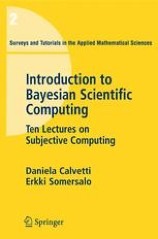
Introduction to Bayesian Scientific Computing : Ten Lectures on Subjective Computing
Inverse problems are closely related to statistical inference problems, where the observations are used to infer on an underlying probability distribution. This connection between statistical inference and inverse problems is a central topic of the book. Inverse problems are typically ill-posed: small uncertainties in data may propagate in huge uncertainties in the estimates of the unknowns. To cope with such problems, efficient regularization techniques are developed in the framework of numerical analysis. The counterpart of regularization in the framework of statistical inference is the use prior information.
Introduction to basics of pharmacology and toxicology ; Vol.3 : Experimental pharmacology : Research methodology and biostatistics
Elaborates on the general principles of experimental pharmacology. Describes about the screening methods for the evaluation of different categories of drugs. Summarizes the various aspects of research methodology and biostatistics.

Introduction to basics of pharmacology and toxicology ; Vol.2 : Essentials of systemic pharmacology : From principles to practice
Describes the pharmacology of drugs acting on different systems in the human body Analyses various human diseases and the pharmacological agents governing them Provides a valuable reference resource for academicians, researchers, and clinical practitioners Offers a comprehensive overview of the pharmacology concerning the autonomic, central, and peripheral nervous systems. Presenting up-to-date information on chemical mediators and their significance, it highlights the therapeutic aspects of several diseases affecting the cardiovascular, renal, respiratory, gastrointestinal, endocrinal, and hematopoietic systems. The book also includes drug therapy for microbial and neoplastic diseases. It also comprises sections on immunopharmacology, dermatological, and ocular pharmacology providing valuable insights into these emerging and recent topics.

Introduction to basics of pharmacology and toxicology ; Vol.1 : General and molecular pharmacology : Principles of drug action
Illustrates the most crucial principles involved in pharmacology and allied sciences. The title begins by discussing the historical aspects of drug discovery, with up to date knowledge on Nobel Laureates in pharmacology and their significant discoveries. It then examines the general pharmacological principles - pharmacokinetics and pharmacodynamics, with in-depth information on drug transporters and interactions. In the remaining chapters, the book covers a definitive collection of topics containing essential information on the basic principles of pharmacology and how they are employed for the treatment of diseases.

Introduction to Assembly Language Programming : For Pentium and RISC Processors
Assembly language continues to hold a core position in the programming world because of its similar structure to machine language and its very close links to underlying computer-processor architecture and design. These features allow for high processing speed, low memory demands, and the capacity to act directly on the system’s hardware. This completely revised second edition of the highly successful Introduction to Assembly Language Programming introduces readers to assembly language programming and its role in computer programming and design. It focuses on providing a firm grasp of the main features of assembly programming, and how it can be used to improve a computer's performance. The revised edition covers a broad scope of subjects and adds valuable material on protected-mode Pentium programming, MIPS assembly language programming, and use of the NASM and SPIM assemblers for a Linux orientation. All of the language's main features are covered in depth. The book requires only some basic experience with a structured, high-level language.

Introduction to Applied Optimization
This text presents a multi-disciplined view of optimization, providing students and researchers with a thorough examination of algorithms, methods, and tools from diverse areas of optimization without introducing excessive theoretical detail. This second edition includes additional topics, including global optimization and a real-world case study using important concepts from each chapter.

Introduction to applied mathematics for environmental science
Introduction to Mathematics for Environmental Science evolved from the author’s 30 years’ experience teaching mathematics to graduate and advanced undergraduate students in the environmental sciences. Its basic purpose is to teach various types of mathematical structures and how they can be applied in a broad range of environmental science subfields. Derivatives and integrals, ordinary and partial differential equations, and linear and non-linear algebraic equations are the basic kinds of structures (types of mathematical models) discussed.

Introduction to Algorithms
Combines rigor and comprehensiveness. The book covers a broad range of algorithms in depth, yet makes their design and analysis accessible to all levels of readers. Each chapter is relatively self-contained and can be used as a unit of study. The algorithms are described in English and in a pseudocode designed to be readable by anyone who has done a little programming. The explanations have been kept elementary without sacrificing depth of coverage or mathematical rigor. The first edition became a widely used text in universities worldwide as well as the standard reference for professionals. The second edition featured new chapters on the role of algorithms, probabilistic analysis and randomized algorithms, and linear programming.

Introduction to Algorithms
Combines rigor and comprehensiveness. It covers a broad range of algorithms in depth, yet makes their design and analysis accessible to all levels of readers, with self-contained chapters and algorithms in pseudocode. Since the publication of the first edition, Introduction to Algorithms has become the leading algorithms text in universities worldwide as well as the standard reference for professionals. This fourth edition has been updated throughout.

Introduction to Agricultural Engineering Technology : A Problem Solving Approach
Agricultural Engineering Technology: A problem Solving Approach is an invaluable text for agriculture students at the introductory level. The third edition has been thoroughly updated and reorganized to meet the current units and standards of the American Society of Agricultural and Biological Engineers (ASABE).The book aims to: Familiarize students with a wide range of applications of engineering principles to agriculture, Discuss a selection of independent but related topics, Advance students’ problem solving abilitiesEach chapter lists education objects, introductory material, and example problems where appropriate. In addition problems using ISO (metric) units, are now included.

Introduction to Advanced System-on-Chip Test Design and Optimization
SOC test design and its optimization is the topic of Introduction to Advanced System-on-Chip Test Design and Optimization. It gives an introduction to testing, describes the problems related to SOC testing, discusses the modeling granularity and the implementation into EDA (electronic design automation) tools. The book is divided into three sections: i) test concepts, ii) SOC design for test, and iii) SOC test applications.

Introduction pratique aux bases de données relationnelles = A practical introduction to relational databases
Cet ouvrage introduit le lecteur dans le domaine des bases de données relationnelles en présentant une vaste sélection de sujets portant sur la modélisation des données, les langages de base de données, l'architecture des systèmes et l'évolution post-relationnelle. - Notions fondamentales: le modèle relationnel, les composants d’un système de gestion de bases de données, l’organisation de la mise en œuvre d’une base de données, les tâches de gestion des données. - De l'analyse à la base de données : le modèle entité association, la généralisation et l’agrégation, les dépendances et les formes normales,les contraintes d’intégrité. - Aperçu des langages de requête et de manipulation des données: l’algèbre relationnelle, le calcul des prédicats, SQL, QUEL, QBE, le traitement des valeurs nulles, la protection des données. - Les composants de l'architecture d'un système de bases de données : la compilation, l’interprétation et l’optimisation des requêtes, l’environnement multiutilisateur, le concept de transaction et la sérialisation, les méthodes optimiste et pessimiste, les structures de stockage et les méthodes d’accès. L’intégration et la migration des bases de données: l’exploitation des bases de données hétérogènes, les bases de données sur le Web, les règles de conversion pour effectuer l’intégration et la migration, les variantes de migration des bases de données hétérogènes, la planification de l’intégration et de la migration.

Introduction aux méthodes numériques
Au cours de l’histoire, les méthodes de calcul ont été l’expression de pratiques sans cesse renouvelées. Le développement de l’informatique a largement contribué à une rapide progression de l’ensemble des techniques numériques. En moins de cinquante ans, le paysage algorithmique a été complètement transformé. Aujourd’hui, la plupart des logiciels que nous employons font appel à des méthodes de plus en plus efficaces. Dans les simulations, comme dans les modélisations, l’analyse numérique occupe une place centrale. Composants essentiels de la vie scientifique, les méthodes et algorithmes qui sont présentés ici, illustrés par de nombreux exemples, sont mis à la portée de tous. De l’approximation polynomiale à la résolution d’équations aux dérivées partielles par des méthodes de différences, de volumes et d’éléments finis, ce livre offre un large panorama des méthodes numériques actuelles.
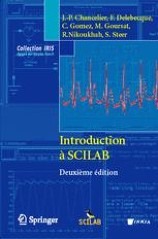
Introduction à SCILAB
Ce livre est organisé en deux parties. La première partie est consacrée au langage Scilab et à son environnement. Dans la seconde partie, les fonctionnalités des grands domaines d'utilisation du calcul numérique sont décrites et illustrées par des exemples: calcul matriciel, simulation, optimisation, résolution d'équations, statistiques.

Introduction à la résolution des systèmes polynomiaux = Introduction to solving polynomial systems
This book is an introduction to algebraic methods for solving this type of equations. We show how the geometry of algebraic varieties defined by these equations, their dimension, their degree, or their components can be deduced from the properties of the corresponding quotient algebras. For this, we approach methods of effective algebraic geometry, such as Grobner bases, resolution by eigenvalues and vectors, resultants, bezoutians, duality, Gorenstein algebras and algebraic residues.

Introducing Robotic Process Automation to Your Organization : A Guide for Business Leaders
Enables you, a novice to RPA, to successfully implement an RPA program at your company. RPA is rapidly growing in use, but is only starting to be taught at a university level. Many mid-level managers will be tasked with introducing an RPA program at their organizations as senior management learns of its efficacy, but will be unfamiliar with how to do so. This book provides you with the skills and information you need to make an informed decision. You will learn: Know the benefits of robotic process automation (RPA) / Understand the limitations of RPA / Ask the right questions to determine whether a process is a good candidate for automation / Obtain buy-in from skeptics at the senior and middle manager levels, and from line workers Be familiar with the structure required for success
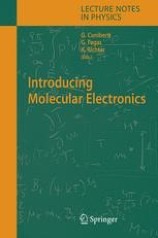
Introducing Molecular Electronics
This volume presents a summary of our current understanding of molecular electronics combined with selected state-of-the-art results at a level accessible to the advanced undergraduate or novice postgraduate. This single book comprises the basic knowledge of both theory and experiment underpinning this rapidly growing field. Concepts and techniques such as density functional theory and charge transport, break junctions and scanning probe microscopy are introduced step-by-step and are subsequently used in specific examples. The text addresses a wide range of systems including molecular junctions made of single-molecules, self-assembled monolayers, carbon nanotubes and DNA.

Introducing competition into the piped water market : A theoretical analysis of common carriage and franchise bidding
Water scarcity is not exclusively a concern of the poor. Developed countries are increasingly facing problems related to higher per capita consumption and pollution so that enhancing the efficiency of the water supply ranks among the main global challenges of the future. The necessary improvements are not only a matter of technical progress but also of institutional design.

Introducing Blockchain with Java : Program, Implement, and Extend Blockchains with Java
Includes numerous exercises and test questions to help you solidify what you have learned as you progress through the book, and provides ideas on expanding the codebase to make it your own. You will have access to a fully-functioning repository with Java code. You will have the knowledge necessary to program your own blockchains with Java and you will have a completed project for your portfolio. You will: Know the most important theoretical concepts of the blockchain / Code the blockchain in Java / Create a user interface with JavaFX / Implement SQLite DB using JDBC Driver / Create a P2P multi-threaded app / Create your own cryptocurrency app with full functionality / Implement blockchain technology on a P2P network from scratch using Java, JavaFX, and SQL

Introducing Blockchain Applications : Understand and Develop Blockchain Applications Through Distributed Systems
Deepen your understanding of blockchain technology and develop your own blockchain applications. This book provides a thorough review of distribution-based systems on blockchain technology, starting from the fundamental concepts that underlie it, all the way through the implementation of a blockchain network for business purposes. ou will: Learn the concept of blockchains by way of a practical example Grasp the connection between distributed systems and blockchain technology Learn the design of blockchain with hyperledger fabric Learn the design of cyber-physical systems in a distributed environment
