


Refine Results
Sort By
From
To

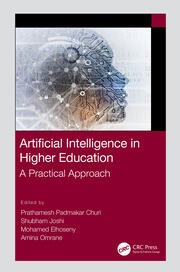
Highlights the broad field of artificial intelligence applications in education, regarding any type of artificial intelligence that is correlated with education. It discusses learning methodologies, intelligent tutoring systems, intelligent student guidance and assessments, intelligent education chatbots, and artificial tutors and presents the practicality and applicability implications of AI in education. The book offers new and current research along with case studies showing the latest techniques and educational activities. Will find interest with academicians which includes teachers, students of various disciplines, higher education policymakers who believe in transforming the education industry, research scholars who are pursuing their Ph.D. or Post Doc. in the field of Education Technology, Education, and Learning, etc. and those working in the area of Education Technology and Artificial Intelligence such as industry professionals in education management and e-learning companies

Artificial intelligence technologies are also actively applied to broadcasting and multimedia processing technologies. A lot of research has been conducted in a wide variety of fields, such as content creation, transmission, and security, and these attempts have been made in the past two to three years to improve image, video, speech, and other data compression efficiency in areas related to MPEG media processing technology. Additionally, technologies such as media creation, processing, editing, and creating scenarios are very important areas of research in multimedia processing and engineering. This book contains a collection of some topics broadly across advanced computational intelligence algorithms and technologies for emerging multimedia signal processing as: Computer vision field, speech/sound/text processing, and content analysis/information mining.
Discusses the future possibilities of AI with cloud computing and edge computing. Aims to conduct analyses, implementation and discussion of many tools (of artificial intelligence, machine learning and deep learning and cloud computing, fog computing, and edge computing including concepts of cyber security) for understanding integration of these technologies. Readers can quickly get an overview of these emerging topics and get many ideas of the future of AI with cloud, edge, and in many other areas. Topics include machine and deep learning techniques for Internet of Things based cloud systems; security, privacy and trust issues in AI based cloud and IoT based cloud systems; AI for smart data storage in cloud-based IoT; blockchain based solutions for AI based cloud and IoT based cloud systems.This book is relevent to researchers, academics, students, and professionals. Presents fusion of cloud computing services and AI technology for bringing a significant change in the technology industry; Includes self-assessment problems for increasing knowledge of real world problems, i.e., how AI and cloud/edge computing can change business for the better; Provides innovative results of integrations of AI in other applications such as healthcare, finance, manufacturing, transportation, agriculture, etc.
This book proposes a novel approach to Artificial Intelligence (AI) ethics. AI offers many advantages: better and faster medical diagnoses, improved business processes and efficiency, and the automation of boring work.
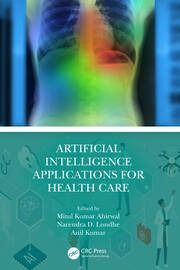
Covers topics on health care and artificial intelligence. Data sets related to biomedical signals (ECG, EEG, EMG) and images (X-rays, MRI, CT) are explored, analyzed, and processed through different computation intelligence methods. Applications of computational intelligence techniques like artificial and deep neural networks, swarm optimization, expert systems, decision support systems, clustering, and classification techniques on medial datasets are explained. Survey of medical signals, medial images, and computation intelligence methods are also provided.
Analyses the implications of the technical, legal, ethical and privacy challenges as well as challenges for human rights and civil liberties regarding Artificial Intelligence (AI) and National Security. It also offers solutions that can be adopted to mitigate or eradicate these challenges wherever possible. As a general-purpose, dual-use technology, AI can be deployed for both good and evil. The use of AI is increasingly becoming of paramount importance to the governments mission to keep their nations safe. However, the design, development and use of AI for national security poses a wide range of legal, ethical, moral and privacy challenges. This book explores national security uses for Artificial Intelligence (AI) in Western Democracies and its malicious use. This book also investigates the legal, political, ethical, moral, privacy and human rights implications of the national security uses of AI in the aforementioned democracies. It illustrates how AI for national security purposes could threaten most individual fundamental rights, and how the use of AI in digital policing could undermine user human rights and privacy.
Offers solutions to the problems of security, outlining the concepts behind allowing computers to learn from experience and understand the world in terms of a hierarchy of concepts, with each concept defined through its relation to simpler concepts. provides state of the art approaches of artificial intelligence and data mining in these areas. It includes areas of detection, prediction, as well as future framework identification, development, building service systems and analytical aspects. In all these topics, applications of AI and data mining, such as artificial neural networks, fuzzy logic, genetic algorithm and hybrid mechanisms, are explained and explored. This book is aimed at the modeling and performance prediction of efficient security framework systems, bringing to light a new dimension in the theory and practice. This groundbreaking new volume presents these topics and trends, bridging the research gap on AI and data mining to enable wide-scale implementation. Whether for the veteran engineer or the student, this is a must-have for any library. This groundbreaking new volume: Clarifies the understanding of certain key mechanisms of technology helpful in the use of artificial intelligence and data mining in security frameworks ; Covers practical approaches to the problems engineers face in working in this field, focusing on the applications used every day ; Contains numerous examples, offering critical solutions to engineers and scientists ; Presents these new applications of AI and data mining that are of prime importance to human civilization as a whole
It's about the science of artificial intelligence (AI). AI is the study of the design of intelligent computational agents. This book provides a valuable resource for researchers, scientists, professionals, academicians and students dealing with the new challenges and advances in the areas of AI and innovations. This book also covers a wide range of applications of machine learning such as fire detection, structural health and pollution monitoring and control. Provides insight into prospective research and application areas related to industry and technology / Discusses industry- based inputs on success stories of technology adoption / Discusses technology applications from a research perspective in the field of AI / Provides a hands- on approach and case studies for readers of the book to practice and assimilate learning
Introduction The PARA workshops in the past were devoted to parallel computing methods in science and technology. There have been seven PARA meetings to date: PARA’94, PARA’95 and PARA’96 in Lyngby, Denmark, PARA’98 in Umea, ? Sweden, PARA 2000 in Bergen, N- way, PARA 2002 in Espoo, Finland, and PARA 2004 again in Lyngby, Denmark. The ?rst six meetings featured lectures in modern numerical algorithms, computer science, en- neering, and industrial applications, all in the context of scienti?c parallel computing. This meeting in the series, the PARA 2004 Workshop with the title “State of the Art in Scienti?c Computing.
The math that you'll learn in this book will put you above the level of understanding of most database professionals today. You'll better understand the technology and be able to apply it more effectively. You'll avoid data anomalies like redundancy and inconsistency. Understanding whats in this book will take your mastery of relational technology to heights you may not have thought possible.
Building effective and user-friendly transportation systems is one of the big challenges for engineers in the 21st century. There is an increasing need to understand, model, and govern such systems at both the individual (micro) and the society (macro) level. Still, this raises significant technical problems, as transportation systems may contain thousands of autonomous, "intelligent" entities that need to be simulated and/or controlled. Therefore, traffic and transportation scenarios are extraordinarily appealing for Distributed Artificial Intelligence, and (multi-) agent technology in particular. This book gives an overview of recent advances in agent-based transportation systems. It includes both a state-of-the-art survey and reports on cutting-edge research in the field.
Introduces the latest developments in electromagnetic computing and artificial intelligence technology. Artificial intelligence technology can be applied to the modeling, analysis, and optimization design of microwave equipment, solving the routing problem of self-organizing networks in small unmanned aerial vehicle systems, calculating the radiation characteristics of antenna arrays on large electrical platforms, analyzing the impact of electromagnetic wave coupling on electronic devices, simulating the field distribution characteristics of electronic devices, and so on. With the help of artificial intelligence, designers can more conveniently, quickly, and accurately solve engineering problems.

Focuses on the applications of Power Electronics Converters in smart grids and renewable energy systems. The topics covered include methods to CO2 emission control, schemes for electric vehicle charging, reliable renewable energy forecasting methods, and various power electronics converters. The converters include the quasi neutral point clamped inverter, MPPT algorithms, the bidirectional DC-DC converter, and the push–pull converter with a fuzzy logic controller.

Consists of a collection of peer-reviewed published papers on various advanced technology researches related to signal processing applications and theories for multimedia systems using machine learning or advanced methods. Multimedia signals include image, video, audio, character recognition, and communication channel optimization for networks. The specific contents included in this book are data hiding, encryption, object detection, image classification, and character recognition.
Analyzing computer system performance is often regarded by most system administrators, IT professionals and software engineers as a black art that is too time consuming to learn and apply. Finally, this book by acclaimed performance analyst Dr. Neil Gunther makes this subject understandable and applicable through programmatic examples. The means to this end is the open-source performance analyzer Pretty Damn Quick (PDQ) written in Perl As the epigraph in this book points out, Common sense is the pitfall of performance analysis. The performance analysis framework that replaces common sense is revealed in the first few chapters of Part I. The important queueing concepts embedded in PDQ are explained in a very simple style that does not require any knowledge of formal probability theory. Part II begins with a full specification of how to set up and use PDQ replete with examples written in Perl. Subsequent chapters present applications of PDQ to the performance analysis of multicomputer architectures, benchmark results, client/server scalability, and Web-based applications.
Discusses existing conventional radio frequency (RF)-based wireless access technology and presents the challenges that can impact the requirements of the future wave of new wireless services in the context of artificial intelligence (AI) driven autonomous systems and machine-type communications. The relationship between visible light communications (VLC) and light fidelity (LiFi), is explored, and the major advantages of VLC and LiFi such as security and data density, and discuss existing research challenges are also introduced. Channel modeling techniques are provided for mobile multiuser scenarios, and will introduce key building blocks to achieve LiFi cellular networks achieving orders of magnitude improvements of area spectral efficiency compared to state-of-the-art. Challenges that arise from moving from a static point-to-point visible light link to a LiFi network that is capable of serving hundreds of mobile and fixed nodes are discussed. An overview of recent standardization activities and the commercialization challenges of this disruptive technology is also provided.

Ambient Intelligence is one of the new paradigms in the development of information and communication technology, which has attracted much attention over the past years. The aim is the to integrate technology into people environment in such a way that it improves their daily lives in terms of well-being, creativity, and productivity. Ambient Intelligence is a multidisciplinary concept, which heavily builds on a number of fundamental breakthroughs that have been achieved in the development of new hardware concepts over the past years. New insights in nano and micro electronics, packaging and interconnection technology, large-area electronics, energy scavenging devices, wireless sensors, low power electronics and computing platforms enable the realization of the heaven of ambient intelligence by overcoming the hell of physics.

Provides a concise explanation of the fundamentals and background of the surround sound recording and playback technology Ambisonics. It equips readers with the psychoacoustical, signal processing, acoustical, and mathematical knowledge needed to understand the inner workings of modern processing utilities, special equipment for recording, manipulation, and reproduction in the higher-order Ambisonic format. The book comes with various practical examples based on free software tools and open scientific data for reproducible research. The book includes an extensive mathematical appendix. The book offers readers a deeper understanding of Ambisonic technologies, and will especially benefit scientists, audio-system and audio-recording engineers.

Ambient Intelligence (AmI) is an integrating technology for supporting a pervasive and transparent infrastructure for implementing smart environments. Such technology is used to enable environments for detecting events and behaviors of people and for responding in a contextually relevant fashion. AmI proposes a multi-disciplinary approach for enhancing human machine interaction. The authors start with a description of the iDorm as an example of a smart environment conforming to the AmI paradigm, and introduces computer vision as an important component of the system. Other computer vision examples describe visual monitoring for the elderly, classic and novel surveillance techniques using clusters of cameras installed in indoor and outdoor application domains, and the monitoring of public spaces. Face and speech recognition systems are also covered as well as enhanced LEGO blocks for novel educational purposes. The book closes with a provocative chapter on how a cybernetic system can be designed as the backbone of a human machine interaction.
Thousands of mini computers (comparable to a stick of chewing gum in size), equipped with sensors, are deployed in some terrain or other. After activation the sensors form a self-organized network and provide data, for example about a forthcoming earthquake. The trend towards wireless communication increasingly affects electronic devices in almost every sphere of life. Conventional wireless networks rely on infrastructure such as base stations; mobile devices interact with these base stations in a client/server fashion. In contrast, current research is focusing on networks that are completely unstructured, but are nevertheless able to communicate (via several hops) with each other, despite the low coverage of their antennas. Such systems are called sensor or ad hoc networks, depending on the point of view and the application. Wireless ad hoc and sensor networks have gained an incredible research momentum. Computer scientists and engineers of all flavors are embracing the area. Sensor networks have been adopted by researchers in many fields: from hardware technology to operating systems, from antenna design to databases, from information theory to networking, from graph theory to computational geometry.

Daraa Highway - Ghabagheb - Syria
+963-15 2050 - 15 860 380 /1/2/3 - 11 662 3900